Not hot, not cold – just right.

After years of buying, trying and refining I have pretty much found clothing and kit that suits me, my needs and the environment I’m likely to walk in. I prefer to do my walking in fair weather because I find it more enjoyable but am equally prepared for the worst weather the UK can dispense when alone on the top of a hill.
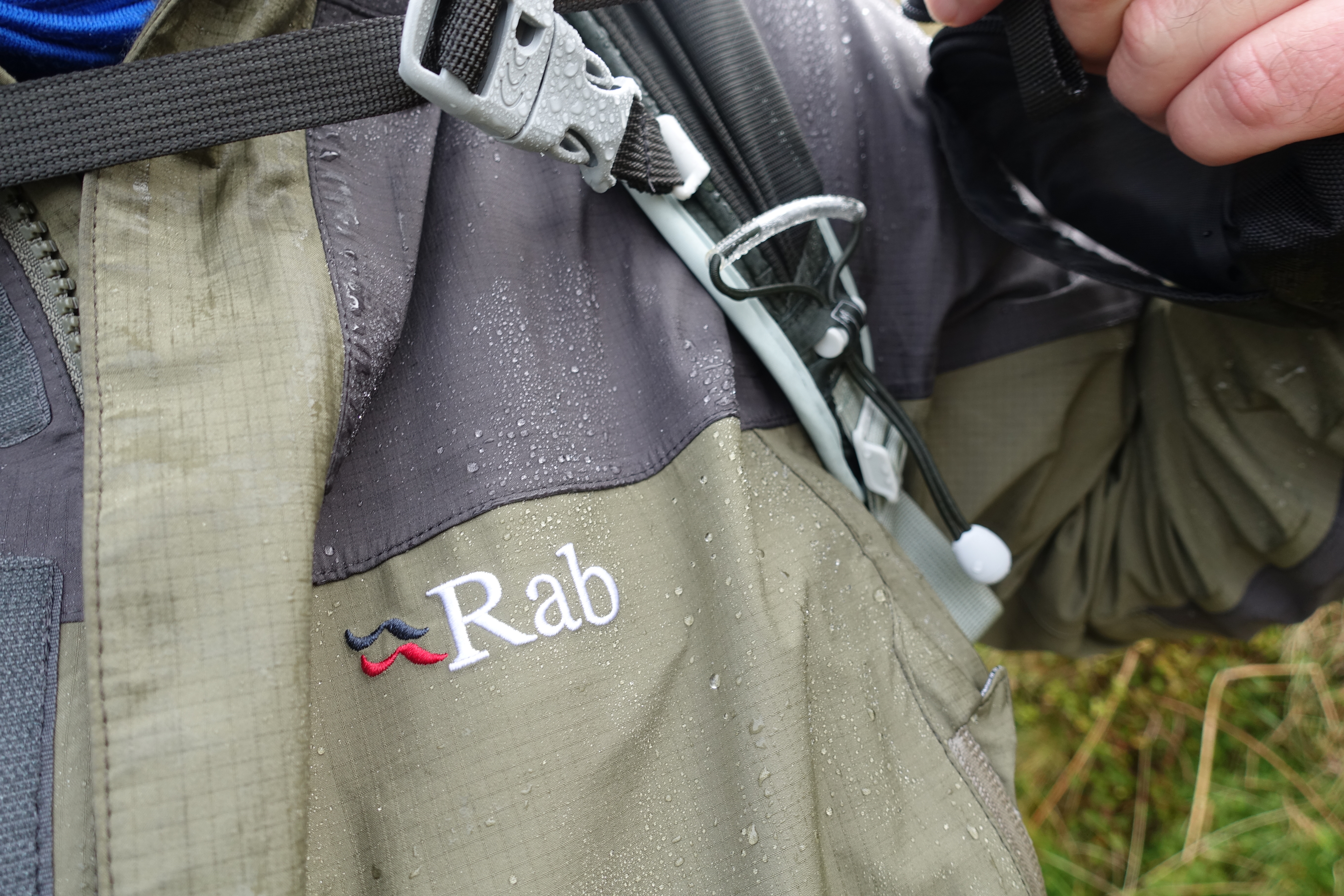
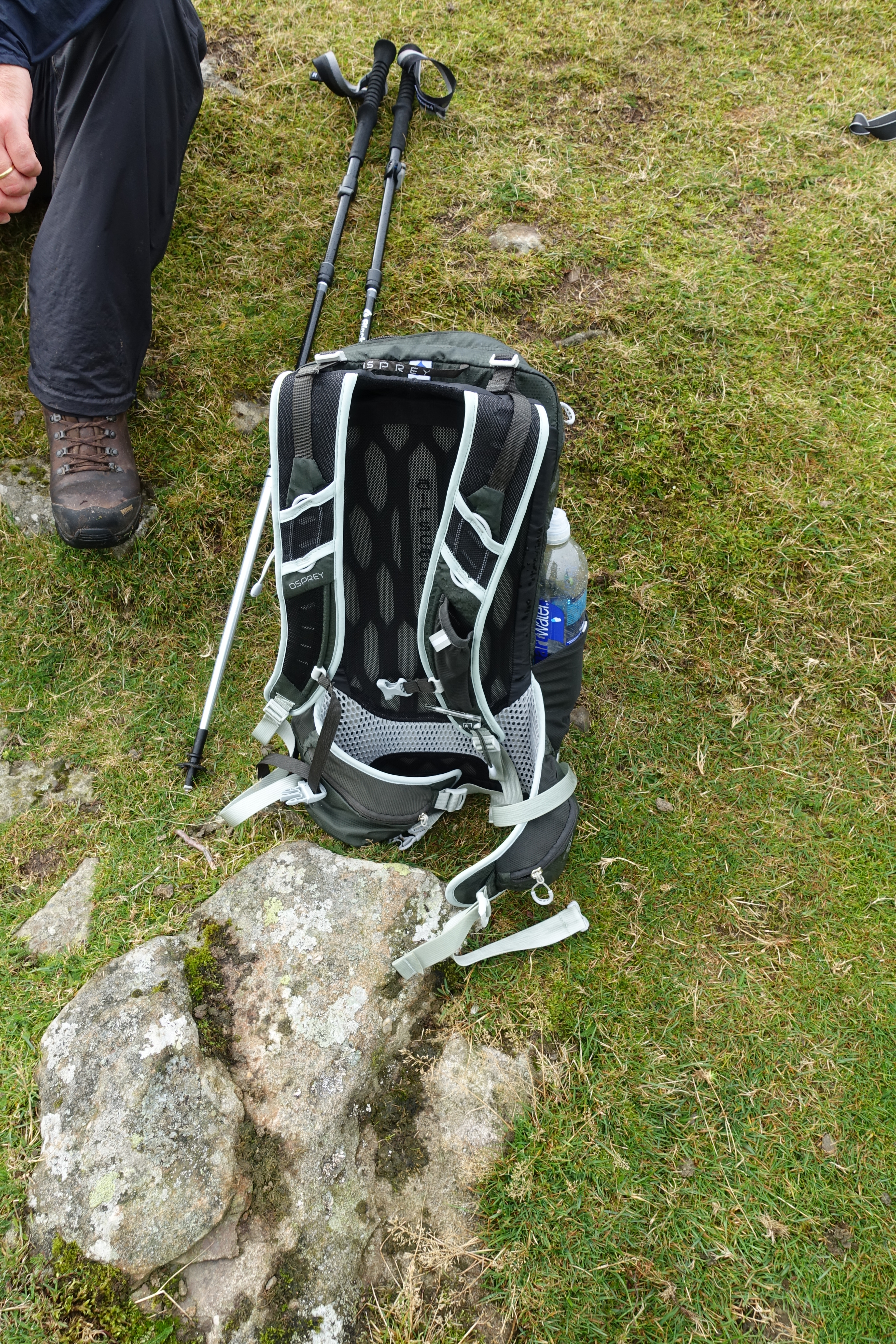
Over the years my pack has got lighter and my gear more minimal. That said, I have gear that is heavier that does a really good job when it’s needed. For the average mixed UK day outside of real Summer heat or the coldest Winter days, my kit stays much the same with options depending where I am walking and the weather on the day. I run quite hot and seldom have cold fingers or feet. I am 1.8m in height and weigh 95 kg with a 36″ waist (most of the time) and these choices reflect my body type. I look for discontinued or second hand stock. I think this a great way of buying tried and tested kit at bargain prices without always buying new. The following is a ramble about my preferred clothing and gear for day walks. It’s not a kit list and I appreciate that some of my stuff is no longer available but similar products exist which would equally fulfil the role. To quote Julie Andrews: “these are a few of my favourite things”.

Socks
Darn Tough Mid-Calf Light Cushion merino socks
These are excellent and I wear these on colder days well into Winter. Really well made, tough and they don’t shrink (47% Nylon 46% Merino Wool 7% Lycra mix). The cushion is perfect for a little more comfort. I also have some Teko socks which seem pretty good with good eco-credentials.

Base layers
Berghaus 2.0 Long Sleeve Zip T-Shirt
Good value, comfortable as an XL, light at 195g, stretchy and adaptable the Zip T has to be the one piece of kit I wear most including the Summer. The neck is comfortably high for chilly days but also shields from the Sun and the wicking is excellent. Argentium also stops it getting stinky. sleeves can be pulled up and the zip is long enough to properly vent around the neck. I also have the thermal version of the Zip T – which is slightly thicker, has a micro waffle inner, thumb loops and deeper zip as well as a small zip chest pocket. It’s an old model but is also a fabulous base layer and they still make a similar product. I also have a couple of old Lowe Alpine Dryflo base layers which are a tad warmer than the Berghaus.

Montane Power Up Hoodie mountain mid-layer
If it’s colder still I’ll wear this as a base layer. At 380g it adds real jacket warmth with a waffle inner and the hood is excellent as another cover for a thinning pate. It also makes for a good mid layer on days that aren’t too cold. It also has a chest pocket which will accommodate a phone. One of my favourite pieces of kit. Montane stuff comes up small on me so I wear an XXL. In combination with a wind shirt it’s really effective.
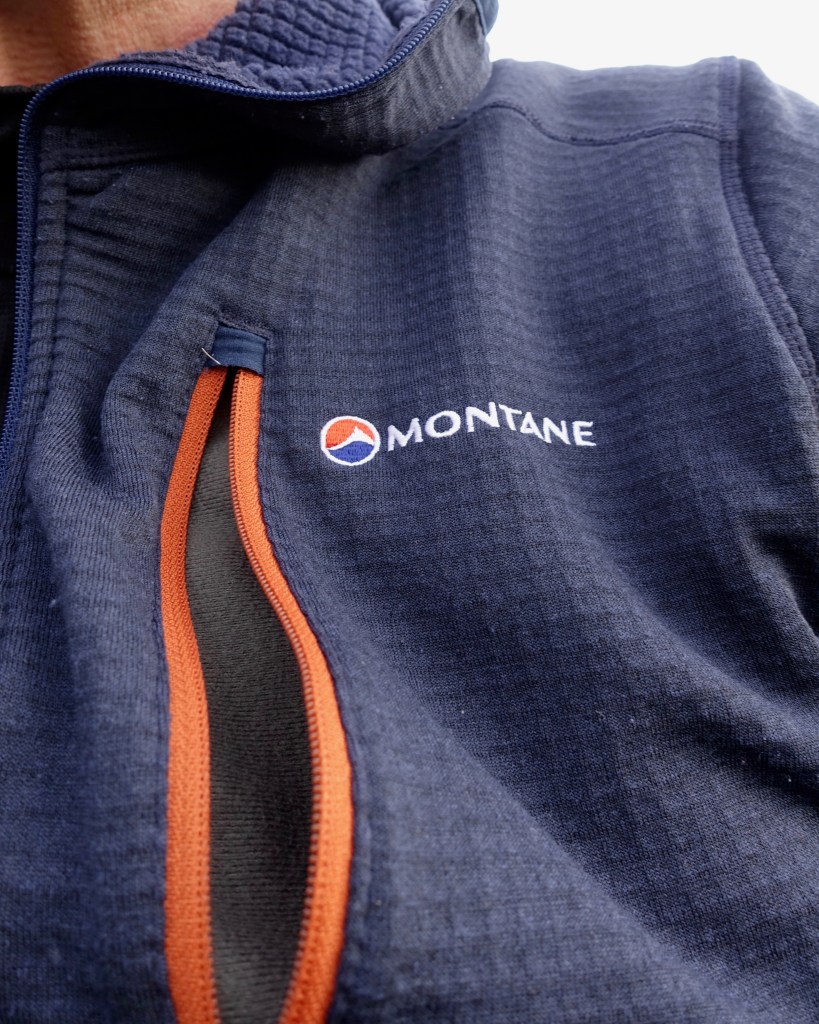
Montane Power Up Hoody – excellent as a base or midlayer

Rab Dryflo 120 Briefs
54% polyester, 46% Cocona, these are great but I believe discontinued. Wicking and quick drying as all base layers should be, they are very comfortable with enough warmth for all but the coldest days and feature Polygiene for less stink. I prefer these to Merino.

Mid layer
I used to wear Polartec micro fleece all the time as my midlayer and still do but find it isn’t always great at dissipating moisture and not windproof in the slightest. I often find it’s the combination of base and mid layer that I wear most of the time, supplemented by either a wind shirt or hardshell dependent on the conditions. Most recently I’ve been wearing the:

Arc’teryx Atom SL Hoody
This is a lovely hoody and fits perfectly as XL. Light at 260g and highly packable, it’s a lightly insulated jacket with Coreloft front and back with air permeable panels that run from the inside of the wrist to the waist, this really is effective at keeping the torso warm while venting well, while having a DWR finish where it’s needed. The neck gaps a little and isn’t adjustable but I usually wear a buff so if anything the design allows for this. The hood has no insulation and features a brim and simple adjustability but is a bit flappy. Arc’teryx products are beautifully made and built to last and this has been a revelation. I love it and wear it as my fleece meets windshirt/light rain shell. It’s also somewhat stretchy and not baggy so I can happily slide a second wind/waterproof layer or additional warm layer on top.
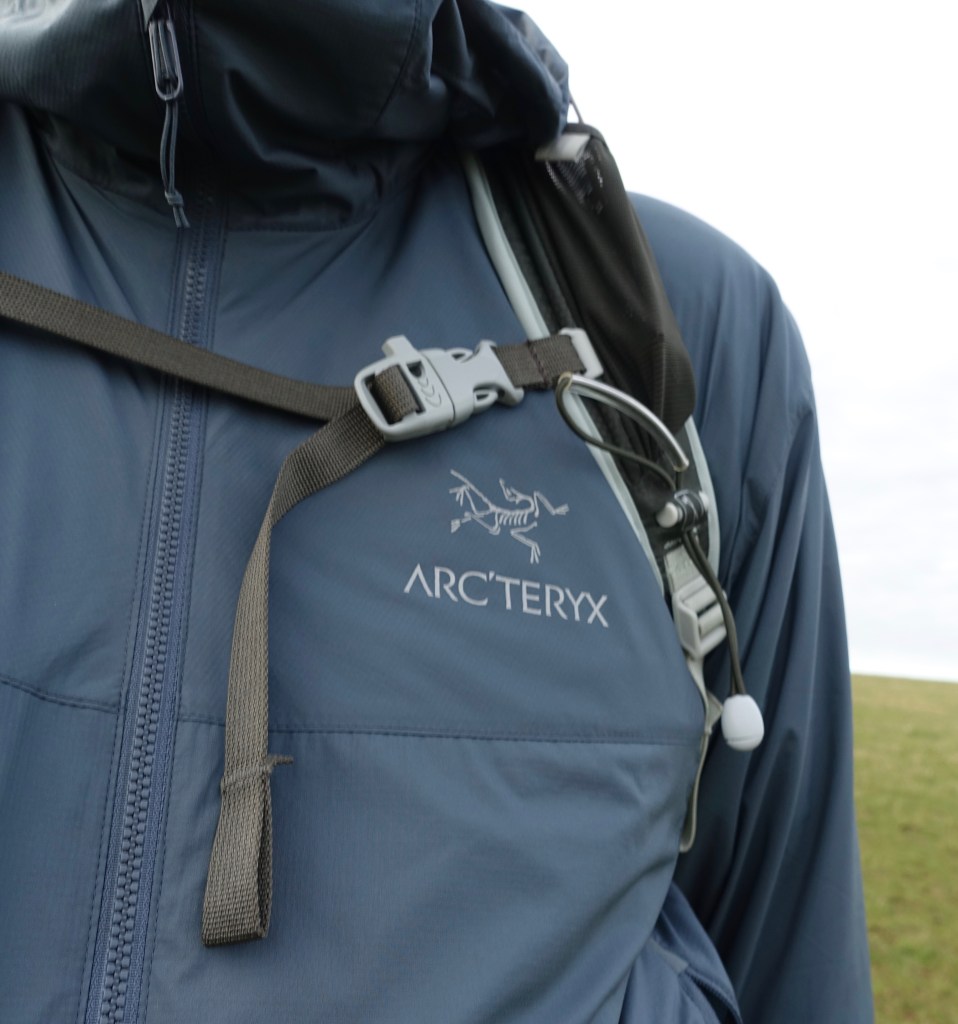
The SL Hoody – warmth with good venting. Excellent zipper

Marmot Alpha 60 Jacket/hoody
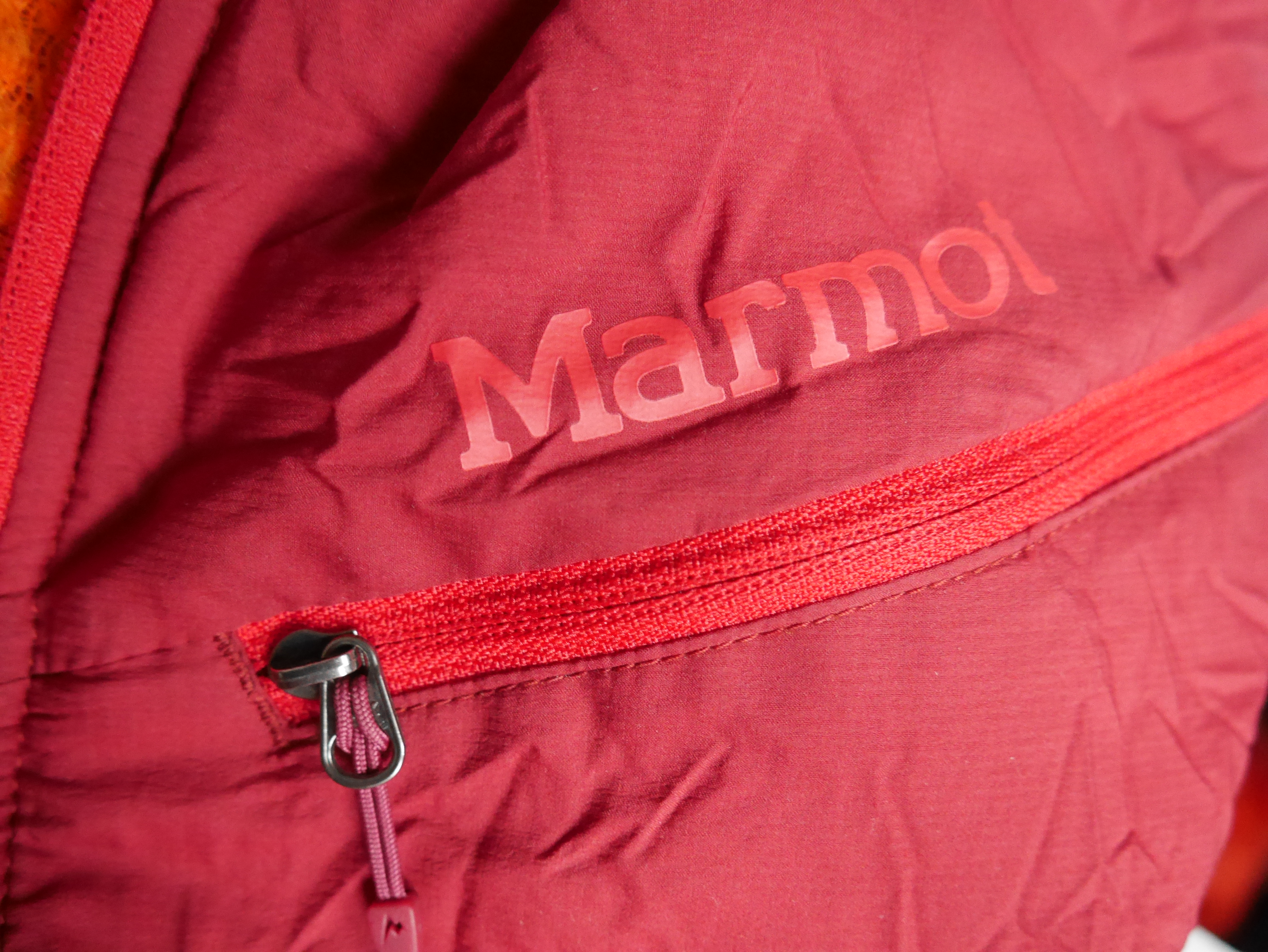
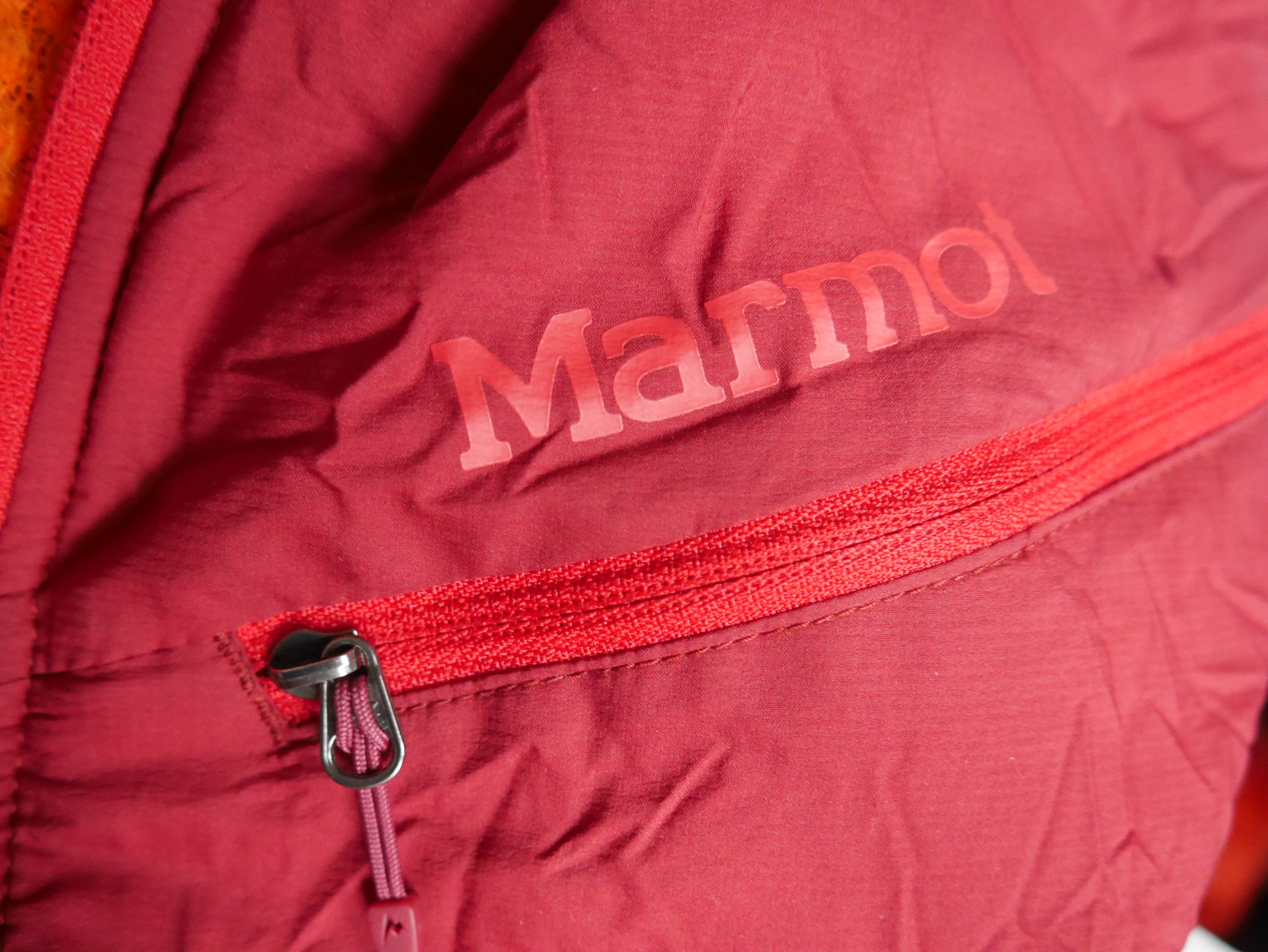
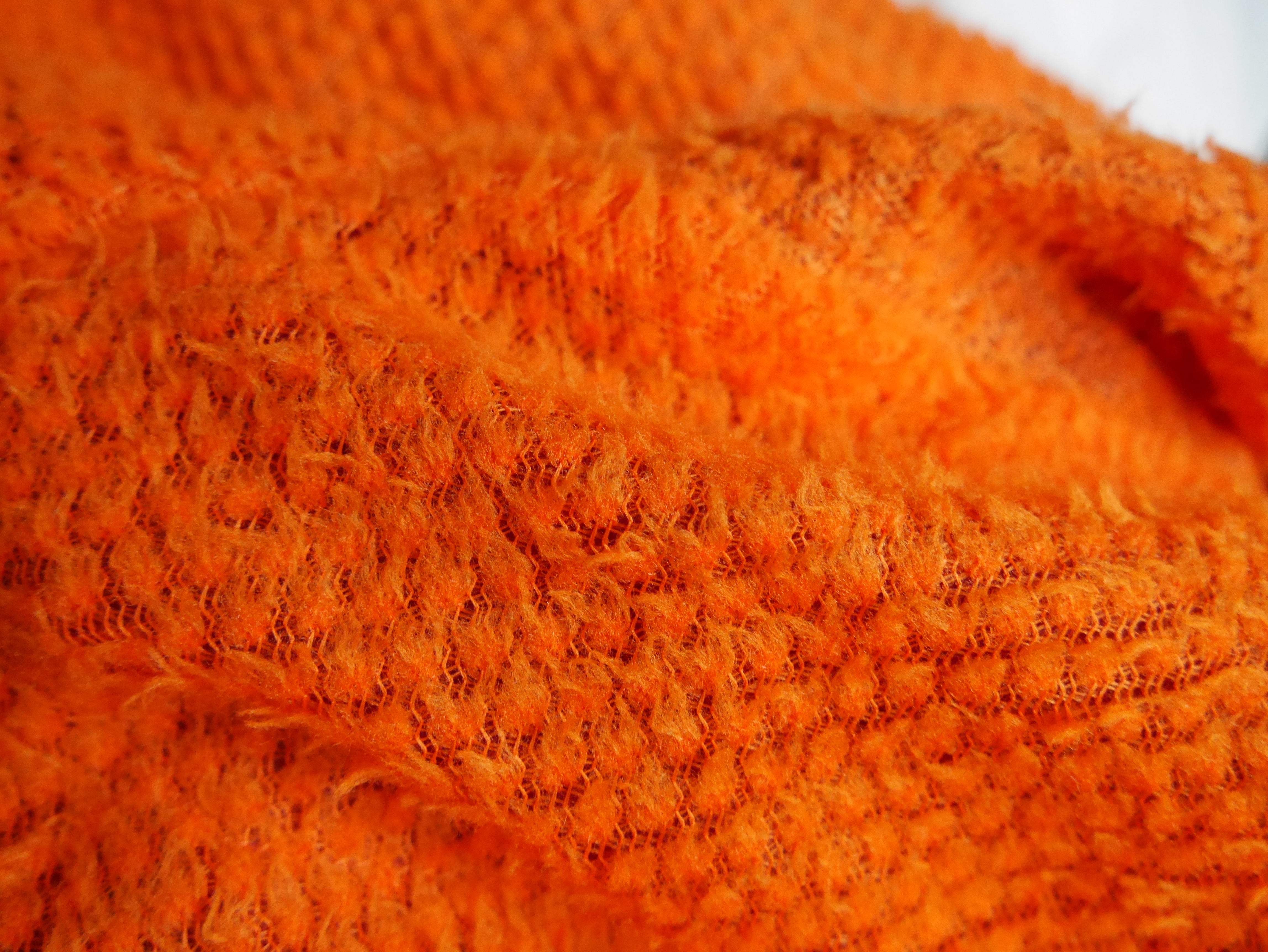
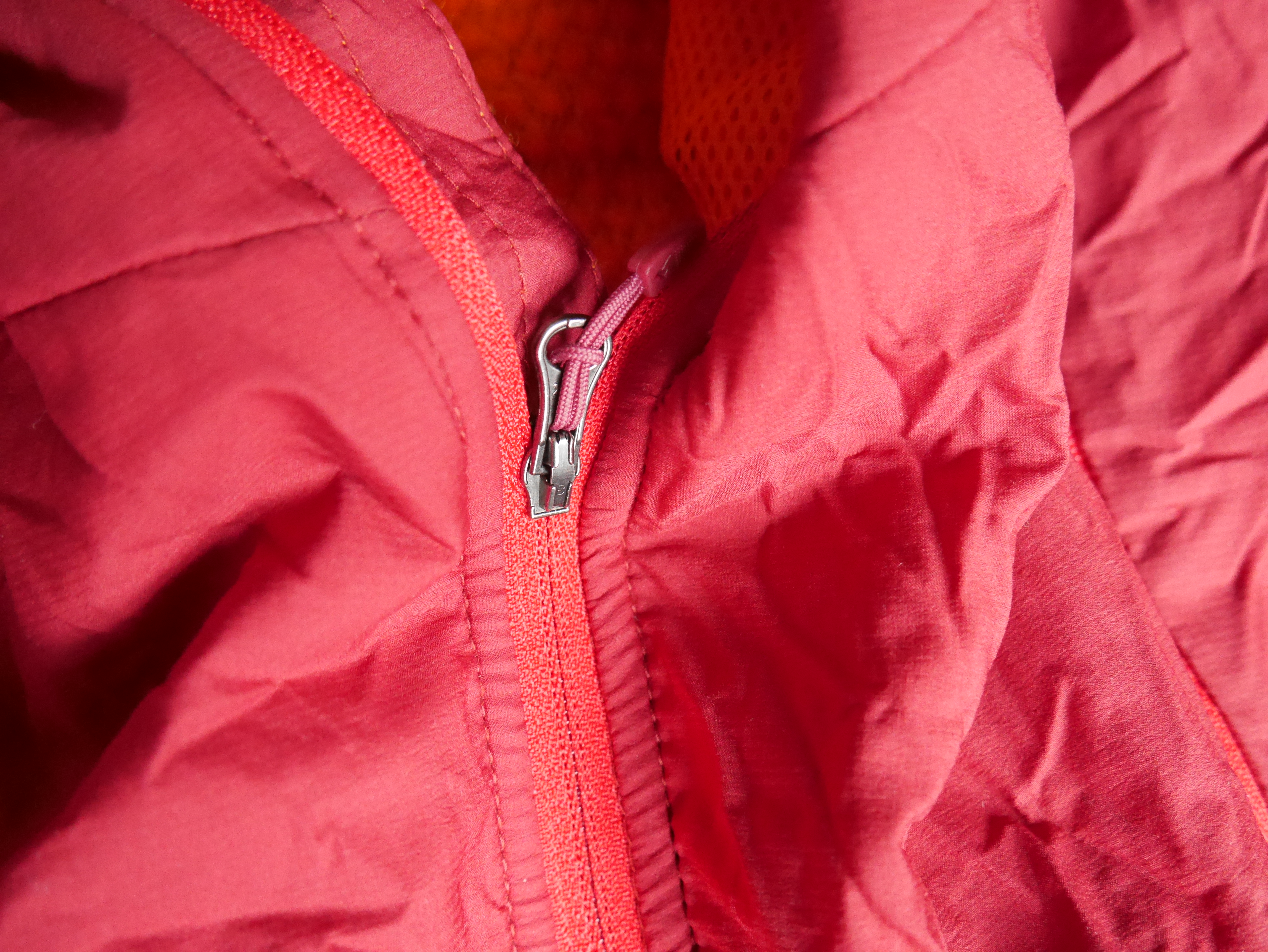
When it’s colder I have been wearing the Alpha jacket (pics below). It has Polartec Alpha Direct Insulation 60g/sqm throughout designed with both warmth and wicking in mind. And it is really warm on its own as the Pertex outer does a decent job in moderate wind and showers. The hood is a a useful scuba design and the three pockets help venting, though Marmot have adopted the crazed ‘let’s put the pockets precisely where the backpack belt sits’ system. The hem isn’t adjustable but as it is cinched at the waist by the backpack it’s not an issue. The micro zip is meagre as compared to the Atom SL but it does provide lovely warmth at just 280g for the XL.
Berghaus VaporLight Hydroloft Reversible Hoody
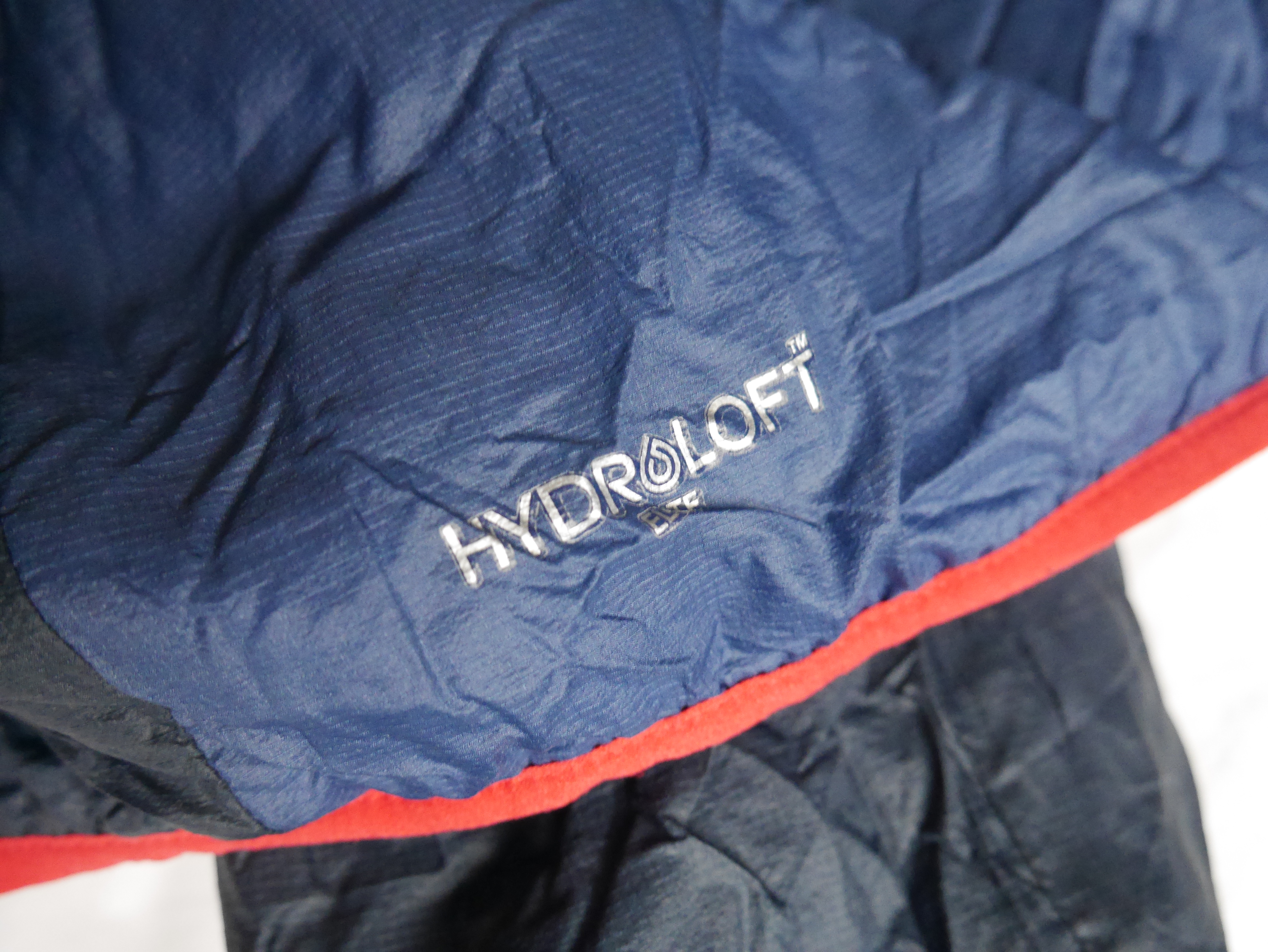
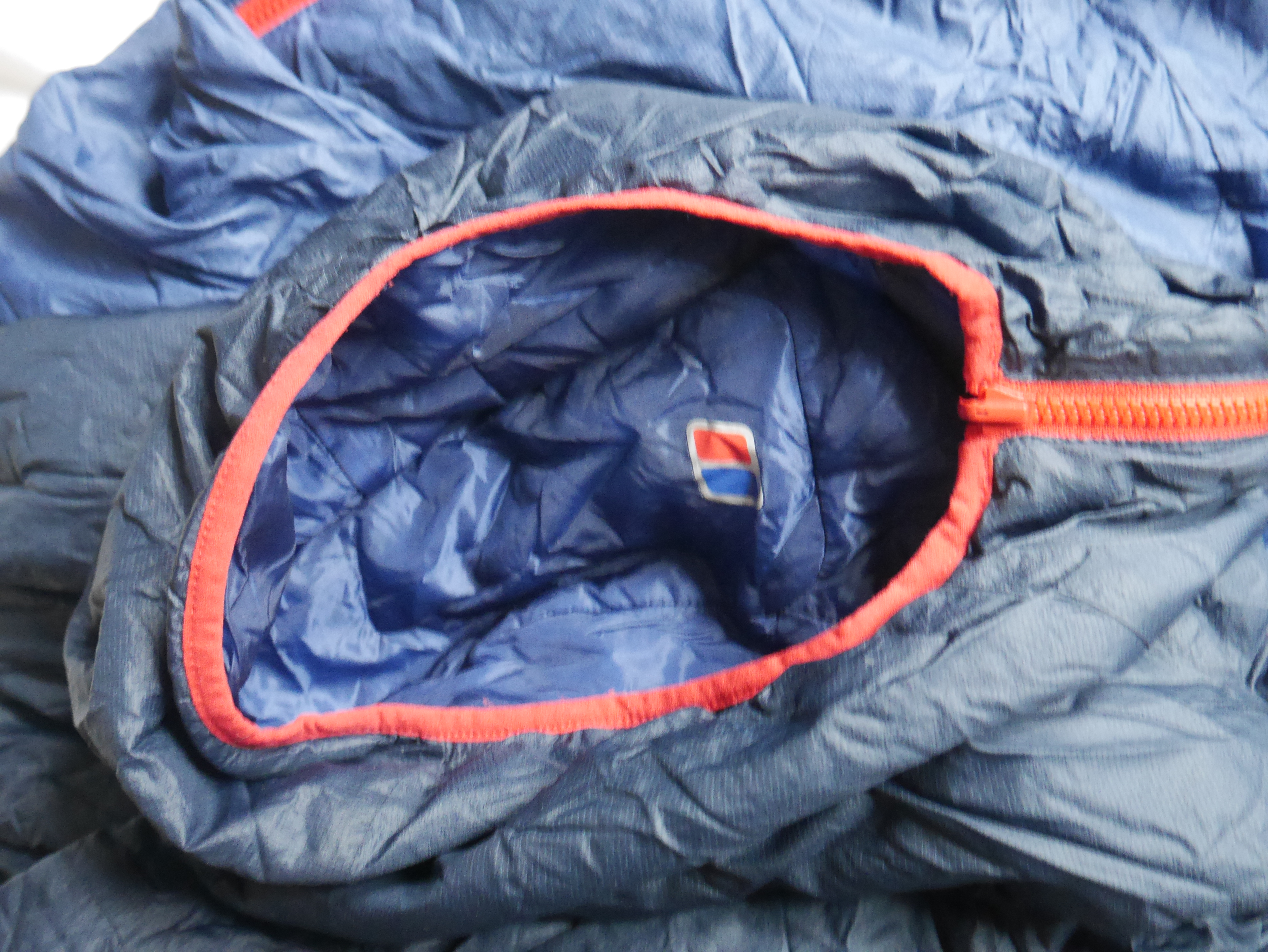
This is a versatile lightweight alternative to the Marmot Alpha 60. Worn one way it retains warm and cuts out a fair amount of wind and features pockets. Reverse it and it is much more breathable. It packs small and weighs 225g. The hood is a decent fit (pics below) and the jacket is sheer enough to go over a layer or be worn under a waterproof.
Wind shirt
Montane Lite-Speed Jacket
At 175g for the latest version it doesn’t get much better. Packs down well yet provides fantastic shelter from strong wind. Probably the piece I have used for the longest time without ever thinking of replacing it. A classic worthy of its peerless reputation, as recommended by Chris Townsend, goes everywhere.

Trousers
Mountain Equipment Ibex Mountain Pant
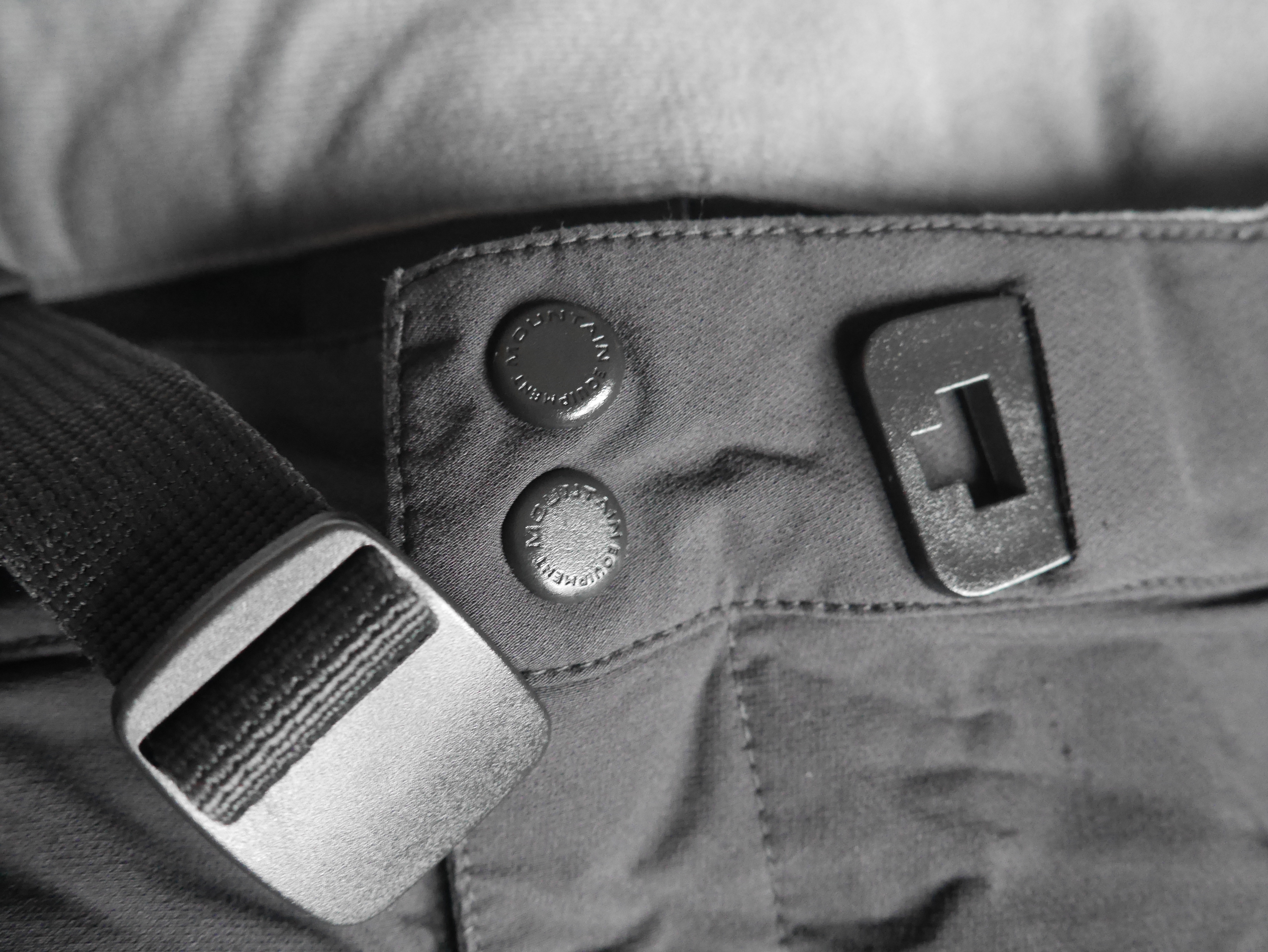
I am so glad I came across these (pics below). My first pair were bought second hand on Ebay, I spent £30 and found a perfect home for my legs. They just do it all so well. The fit is good for me (36″ Reg), the length nearly perfect, the no loop belt and waist fit is really good and the pockets and vent pockets all add up to the best pants for colder weather outings. The fabric is tough but stretchy and resists the wind well. Zipped gusseted ankles provide options on comfort depending on footwear and a slim fit which is pretty much ideal being more athletic in the latest iteration. Probably my favourite piece of clothing. I buy a pair whenever they are stupidly cheap in the sales.

Wet weather gear: Trousers
I’m not a fan of over trousers but have had to use them this past few months as 2019 has been a wet Autumn and winter. As technology has changes with ever more breathable, stretch waterproof materials I’m hopeful I’ll find a pair that breathe well without the sack of potatoes quality inherent in most. Otherwise it’s a kilt for me. I have two pairs of overtrousers that have served pretty well.

Rab Kinetix Pertex Shield+
At 180g these are the over trousers that live in my backpack. An old model with 2.5L and a reasonably slim fit, they do a pretty good job of keeping the worst of the weather out. Rab’s latest offering looks even better being stretchy but as I use these only occasionally I’ll stick with these. My second pair is a Montane ‘Event’ trouser (possibly the ‘Venture’ model) which comes up larger/baggier but breathes better. More robust, I use these as a second string if the weather is looking really rough. I like Event waterproofs. I think they breathe better than older Gore-tex fabrics (though I can’t comment on more recent developments).

Wet weather gear: Jackets
The holy grail of staying dry! I have a selection of waterproofs that I take for a day out. I originally bought a Mountain Hardwear waterproof that was just awful as it barely breathed at all. I then followed this up with a cheaper ‘Gore-tex’ jacket from Tog 24 that was equally poor for similar and other reasons. These have now gone and I have a hardcore of worthy jackets which I rely on. I like eVent, I think it breathes better than other offerings and is the better system. It requires a little more care but I look after my gear and don’t stress it if I can avoid doing so.

OMM Cypher eVent Jacket (2012)
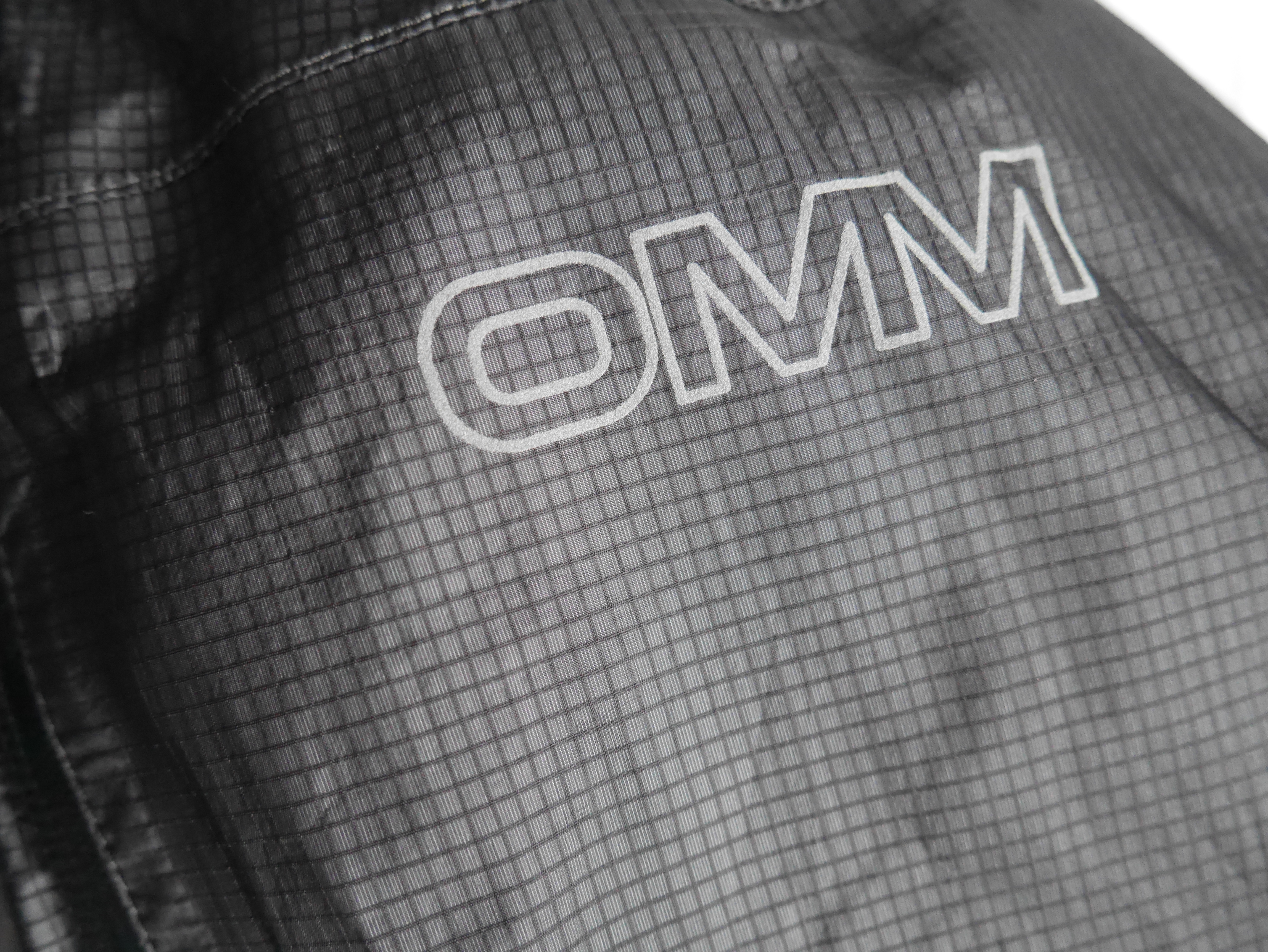
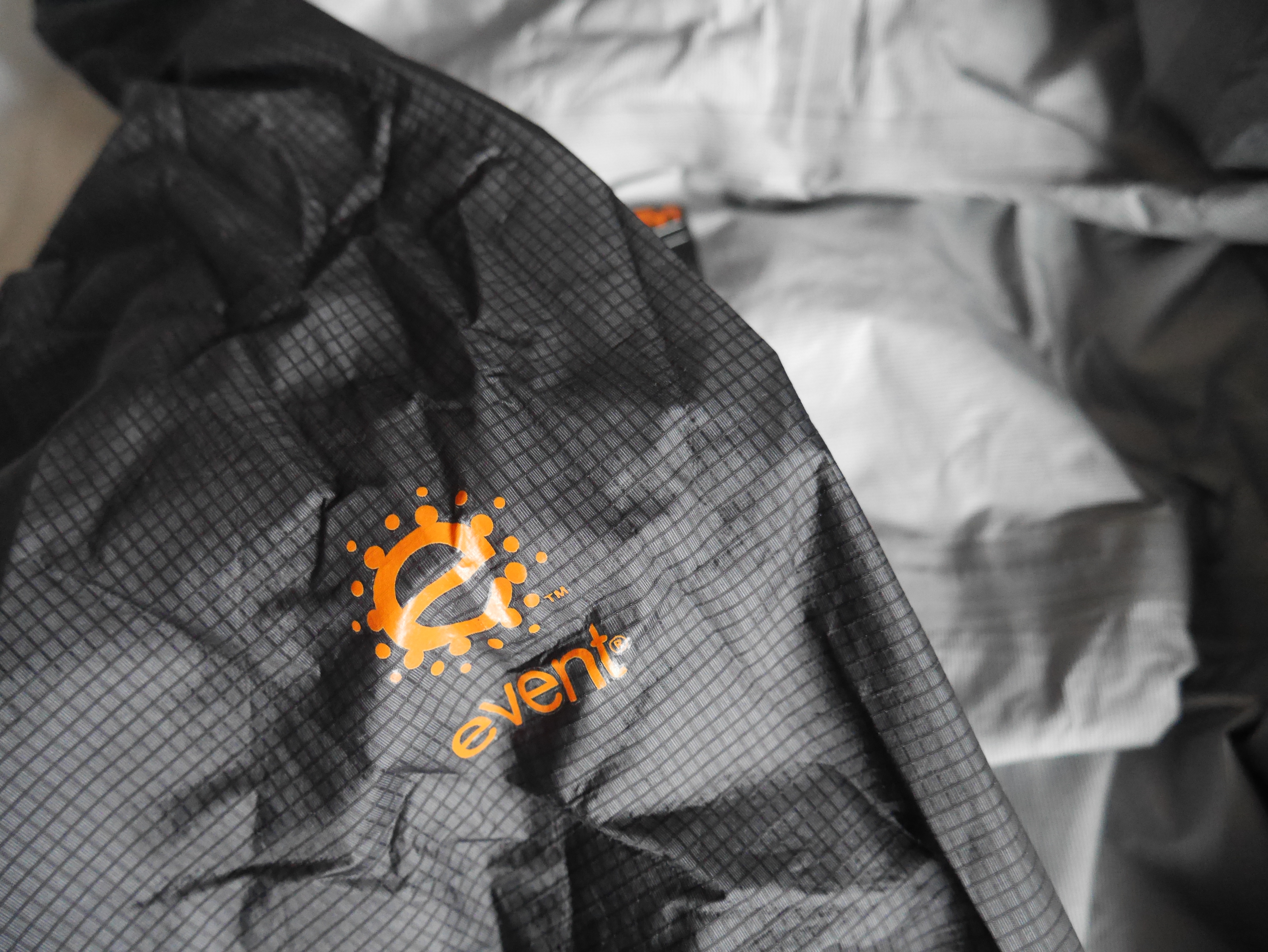
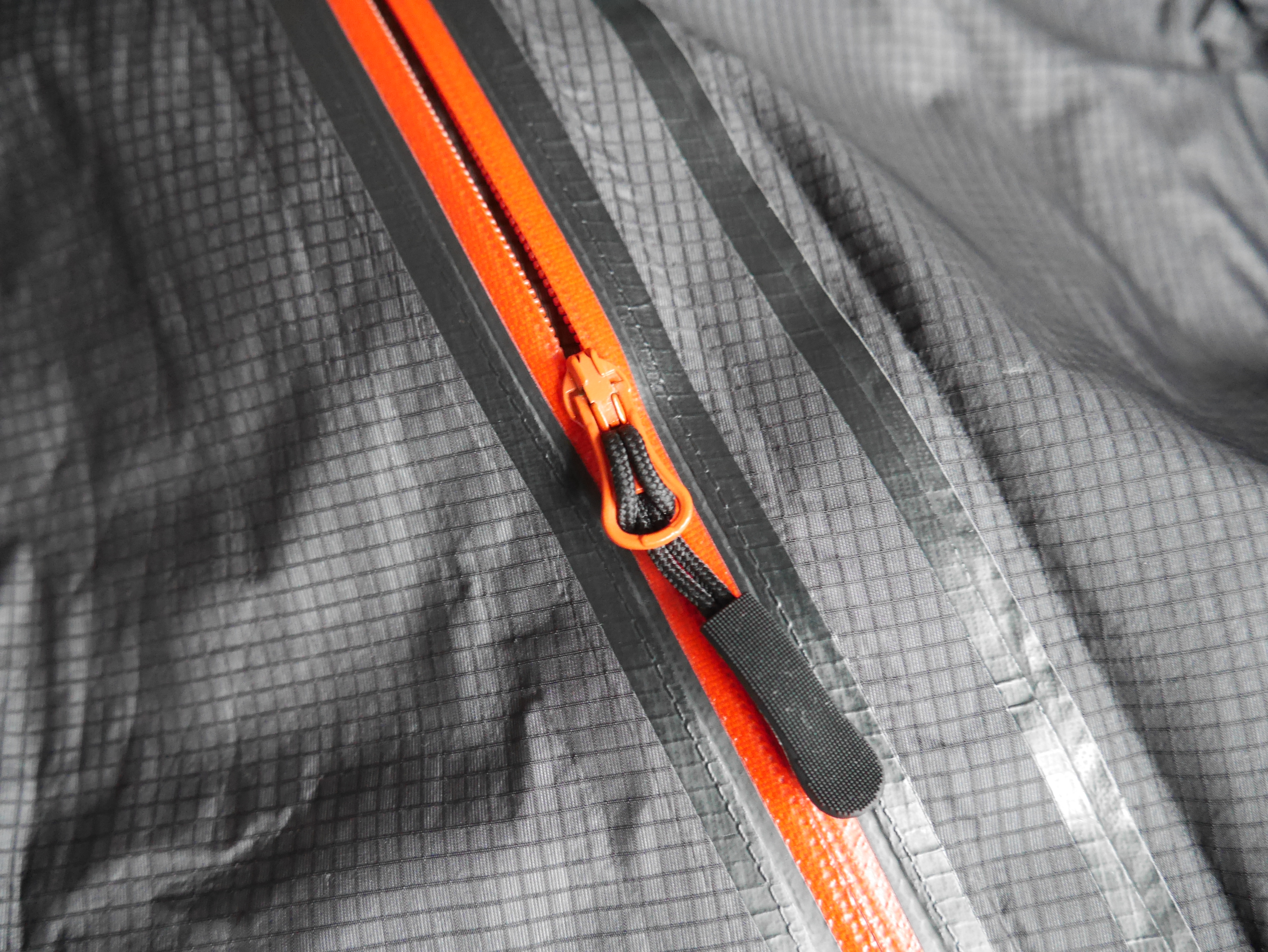
At 300g for a 3L jacket, this has to be one of the best lightweight jackets I have owned (pics below). I have read reviews of it failing but so far this has proved to be an excellent waterproof. It has 2 large waterproof zips and the length is ideal – covering the backside. The hood is great and it beads extremely well. Probably the most useful for the weight, it’s the one I keep in my pack.
Rab Bergen eVent jacket (2010)
At over 500g, the Bergen is a really tough waterproof and wholly reliable. You can still get these on Ebay for a decent price and being a tough 3L eVent are a good deal. The storm proof pockets and deep, wired, rigid hood are excellent. It’s been a haven in the past.

Montane Further Faster Neo Waterproof Jacket (2017)
This comes in at about 440g for the XL so falls between the other two jackets I use most. I would say it is reasonably robust and feasures Polartec 3L NeoShell which breathes brilliantly. Storm proof zippers and a great hood make it a good alternative to either of my other two jackets. Being Montane this is a little more athletic in fit which helps maximises convection of vapour to the outside while allowing for a layer of insulation beneath.

Warm layer
Rab Xenon Hoodie
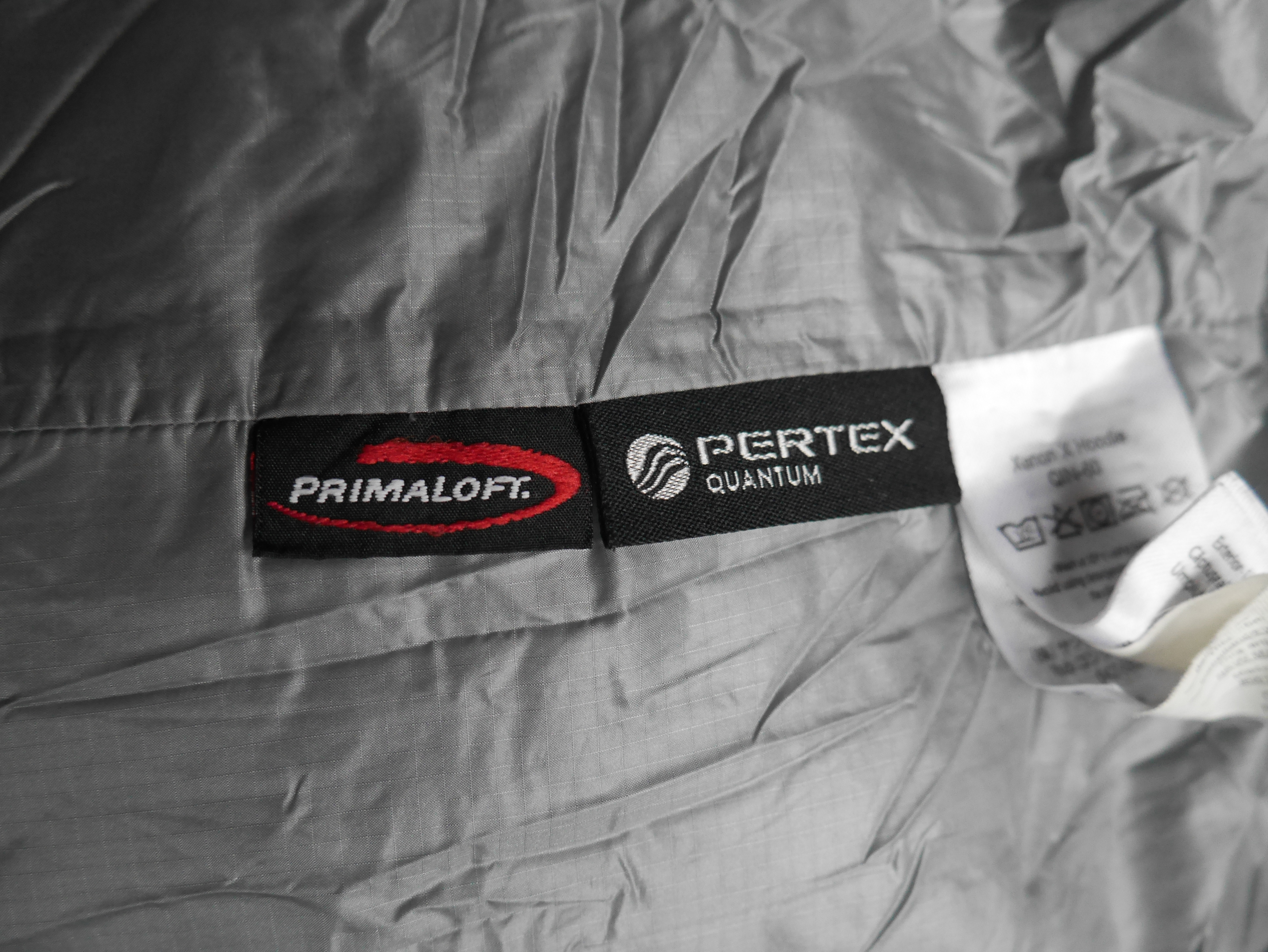
A lovely warm layer which goes with me when it’s going to be really windy/cold on the hill. Insulated with Primaloft (in my older version) with a Pertex Quantum Shell it’s a cosy layer with DWR and good pockets for staying warm over a mid layer when having a break. The hood is capacious enough for a helmet and does the job. It packs almost as well as down and at 350g makes for a better weather resistant option.
Gloves
Rab Polartec Power Stretch Pro Gloves
These are excellent. Light, stretchy and reasonably warm, they cut out a great deal of wind while you don’t get too hot. A classic. I recently bought Mountain Hardwear’s version with the conductive finger-tips the ‘Stimulus‘ glove which also features a grippy pattern to the palm. They are both an excellent all rounder for not a lot of money.

On top of these I have bought some very light, cheap (£10) waterproof trekking over-mitts by Forclaz. Not breathable but perfect for keeping the hand dry and warmer in cool/cold weather while giving them some room. I don’t know how they will stand up to wear but they seem ideal for what I need outside of Winter. I also have some Outdoor Research combination insulated mitts with a matched over-mitt in eVent similar to these but would only ever expect to use these in very cold/wet weather though the overmitt was my previous waterproof over my Rab gloves.

Headwear
I wear a mix of merino beanies – thick and thin, light baseball caps if warm, a Gore sweat band and a combination two or three depending on the conditions. I wear a Buff most of the time. Merino in the colder months and a smaller polyester version when warmer. A really versatile item that can be used for warming and wicking around the neck or on the head.
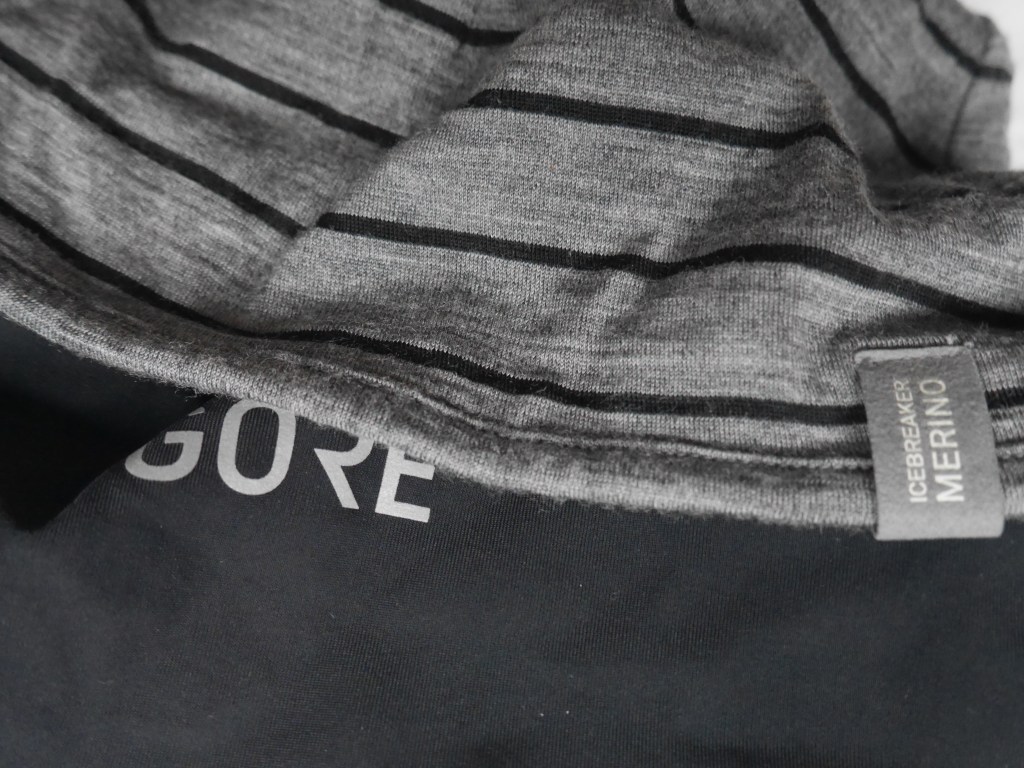
A merino Beany and wicking headband – excellent for warmth on the ears and wicking

Footwear
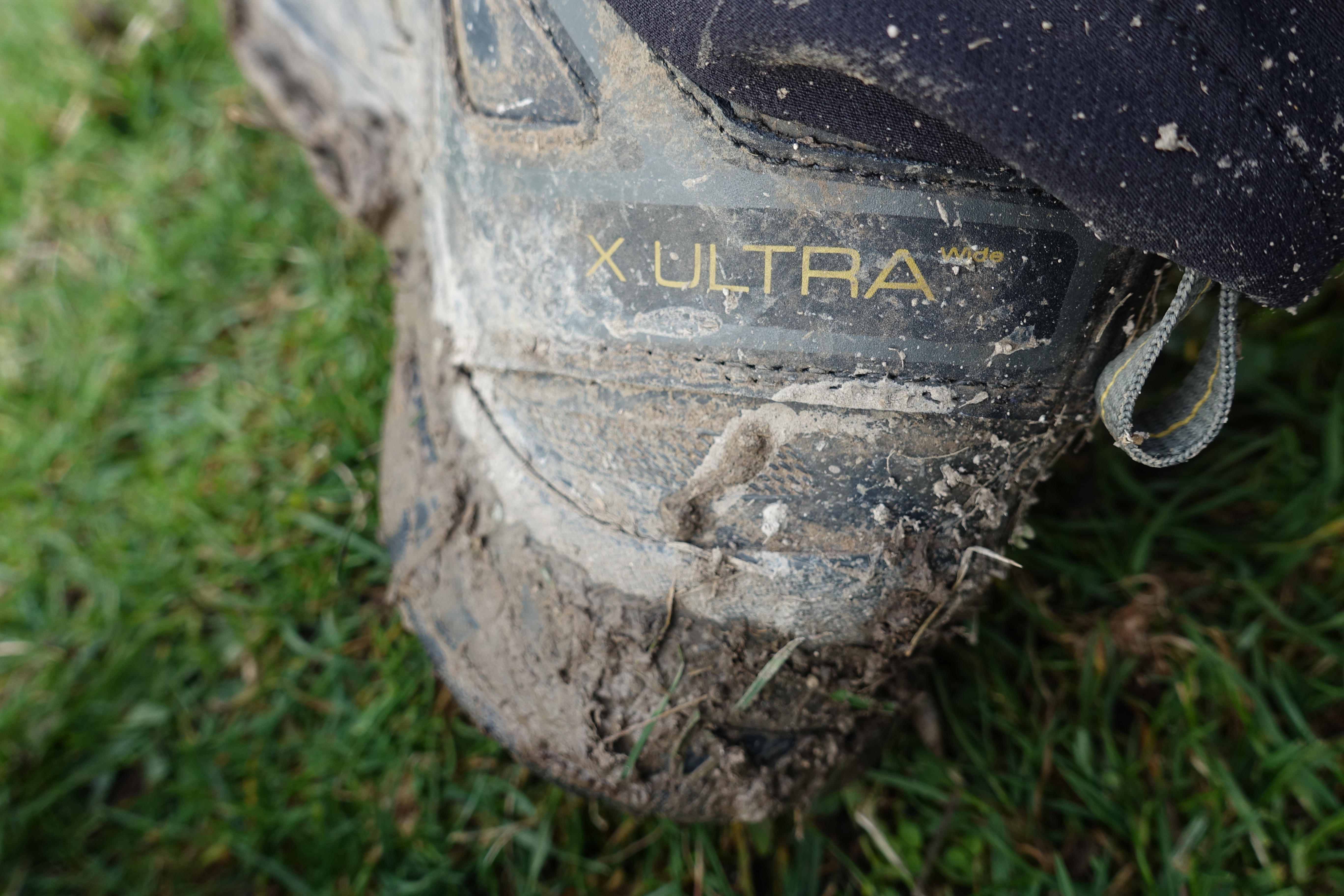
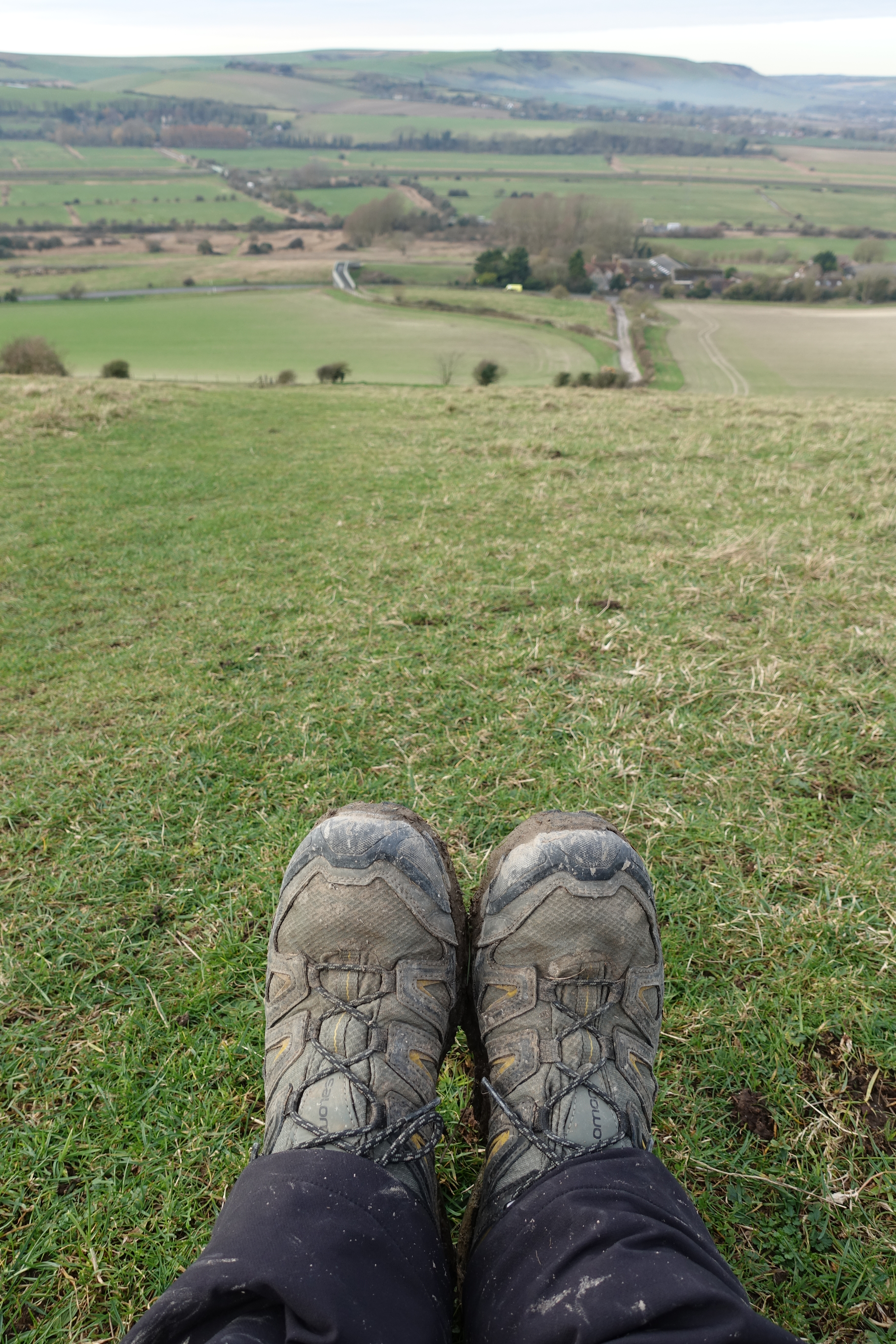
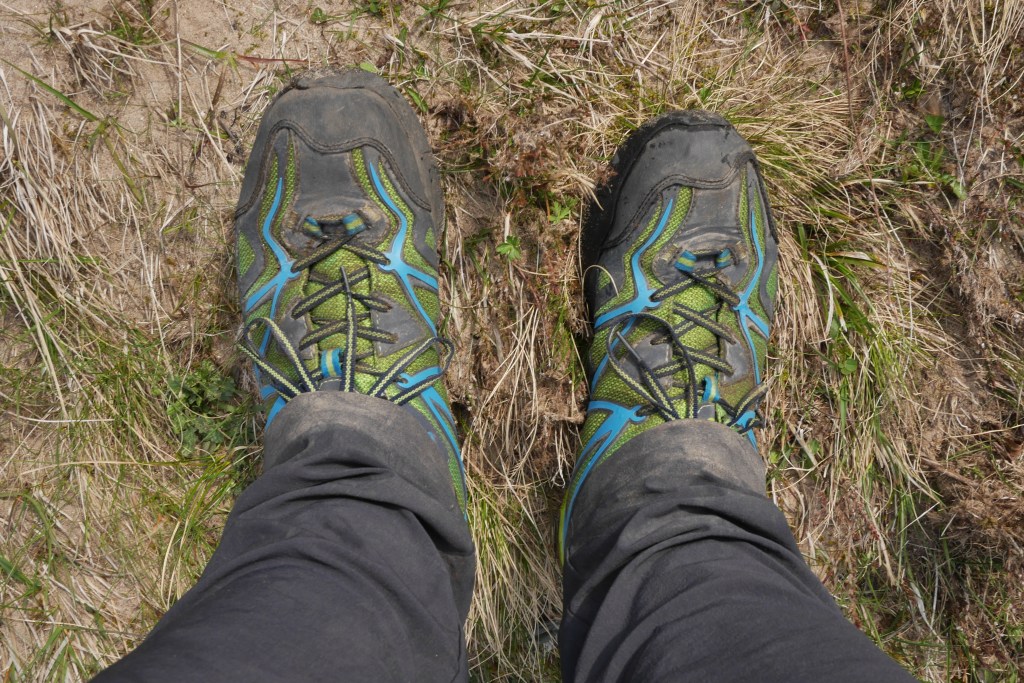
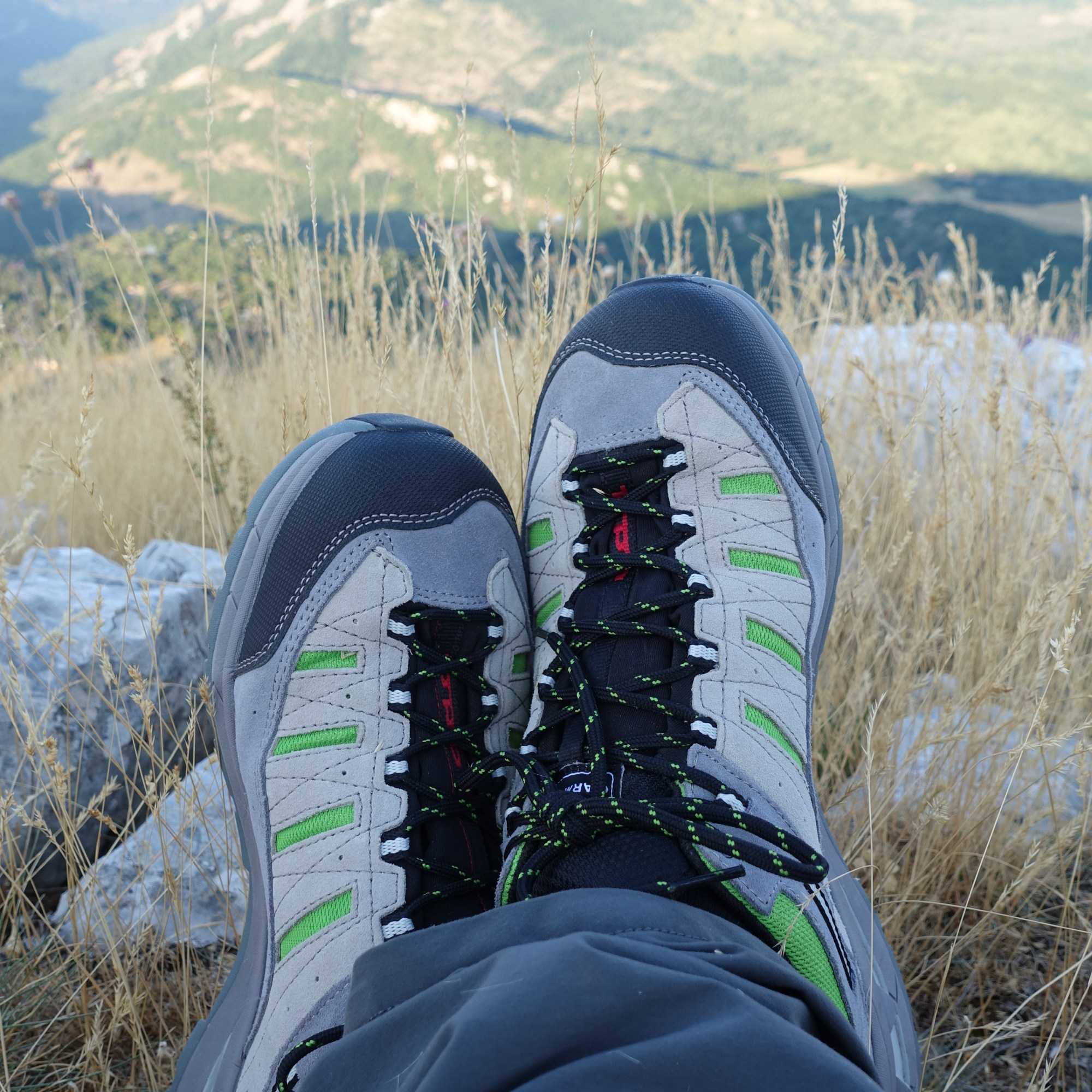
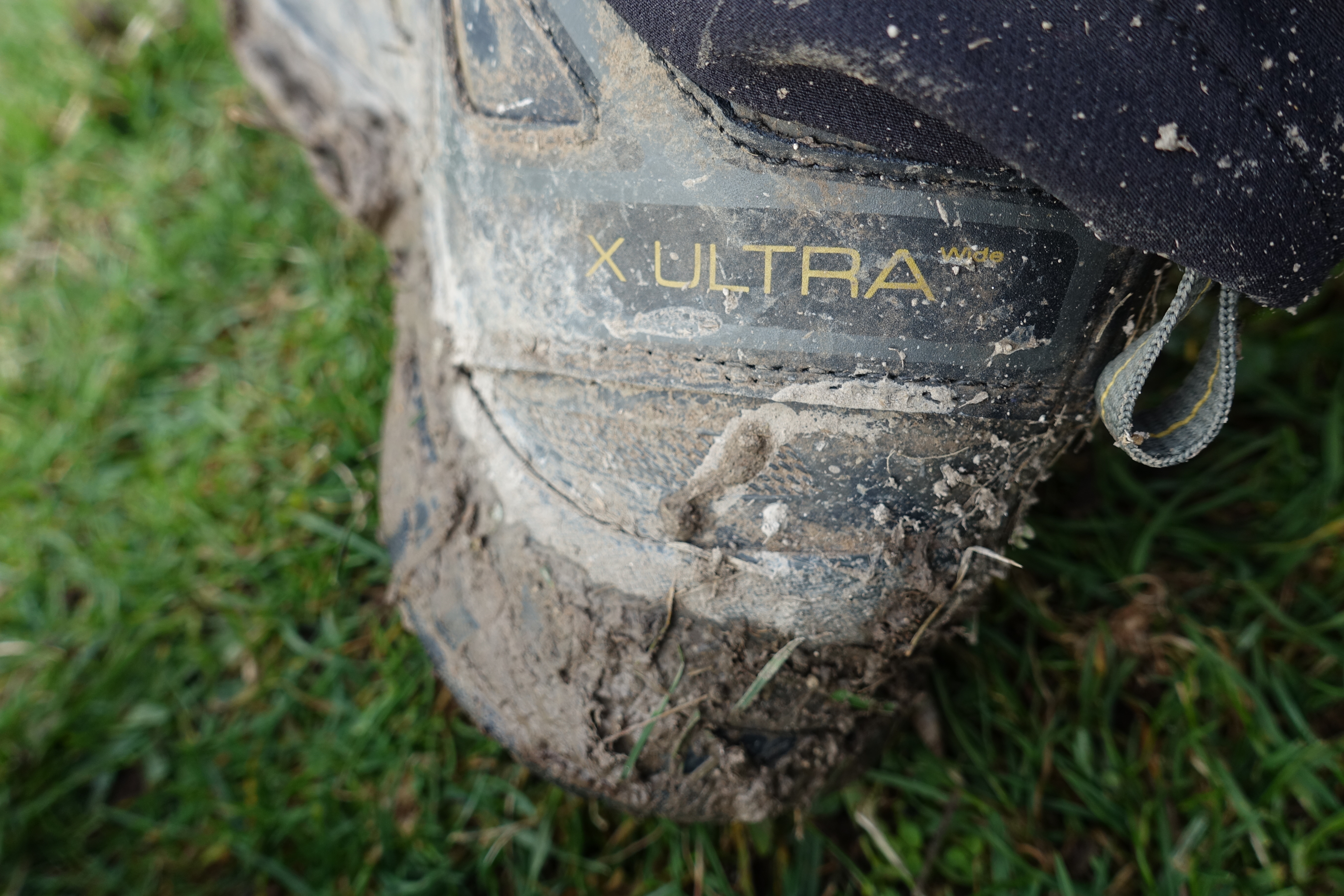
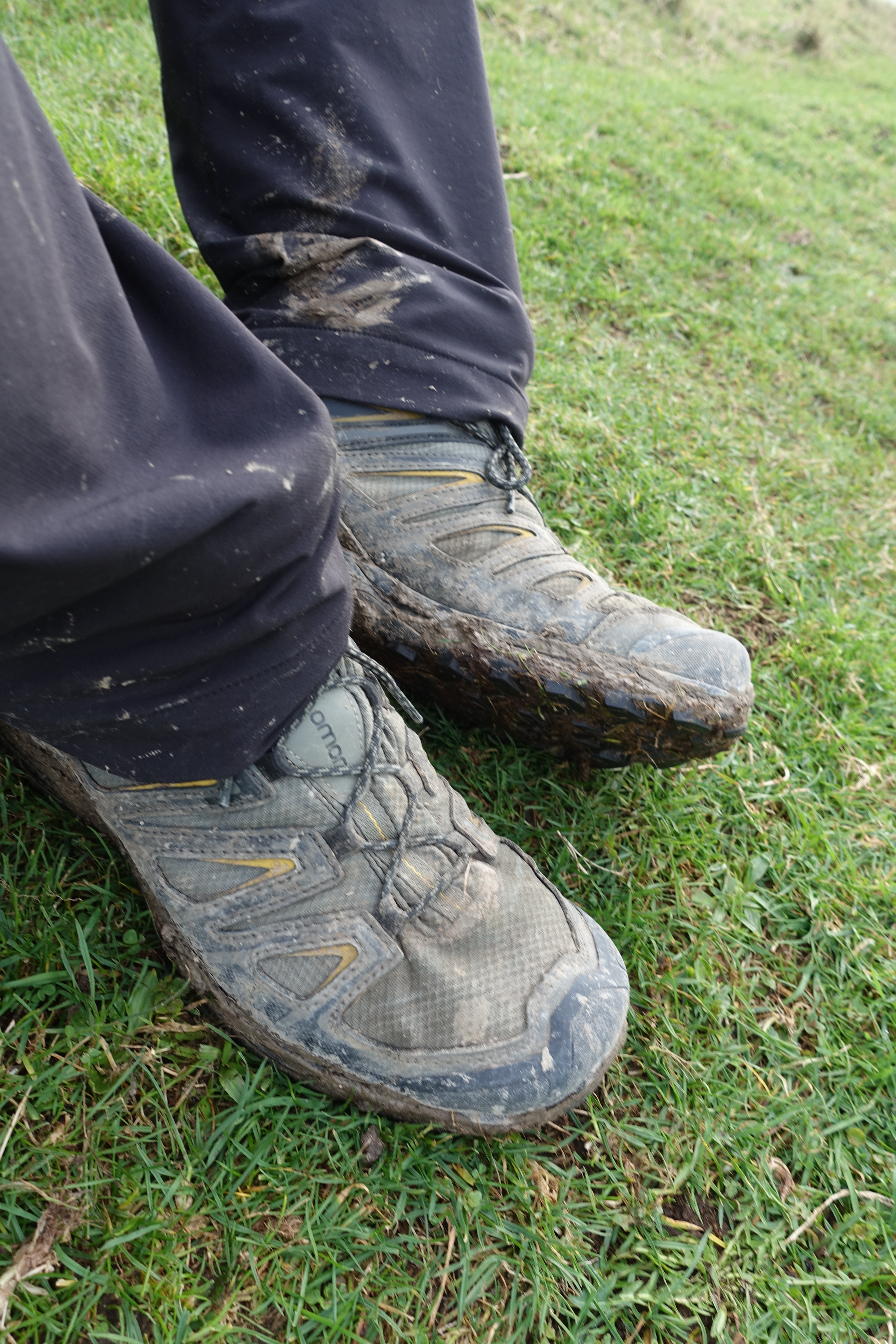
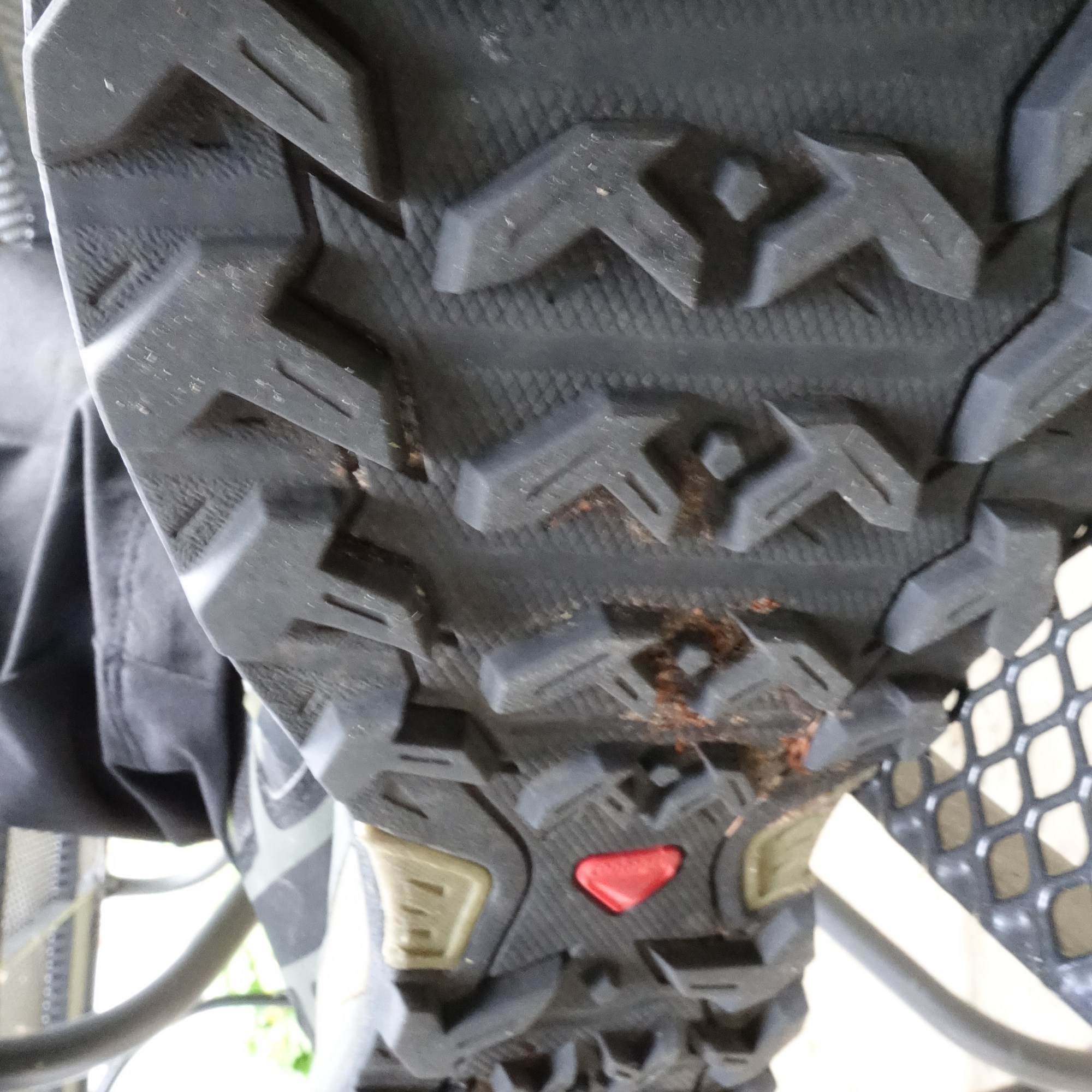
I have bought a lot of shoes and boots in order to find which work best for me. I started well by buying a pair of Meindl Respond mid boots. They were fine until it got wet and slippy, in which conditions they were dreadful. The Gore-tex liner also failed quite quickly so I thought I would go up a grade and moved on to a heavier boot the all leather Meindl Kansas. A lovely bit of footwear, really robust but heavy and which just wasn’t what I wanted for most of my trips. So I started using Trail shoes – Merrell’s Chameleon which I really liked and when discontinued, Merrell’s Capra which I liked less. Then I started wearing Garmont’s Trail Beast which was by far the best shoe I had worn, being tough, supportive and roomy. Subsequently I discovered Salomon’s X Ultra 3D in a wider fit (pics below). These are by far the best shoes (and mids) I have used for mixed walking. They make for pain free treks and easy descents – their key benefit – though they don’t have a sticky sole so aren’t great on slippy/slimy surfaces. They have a GTX lining which still works but if it fails so be it, it’s expected, I do find the lining keeps the feet warmer. 14 miles in the Black Mountains confirmed their effectiveness and comfort. I won’t be looking to replace these in a hurry.
Backpack
I used to carry all this stuff in a variety of light packs with few features and no consideration of comfort other than weight. Finally I succumbed to the marketing and reviews of those I respected and bought an Osprey Talon 22.
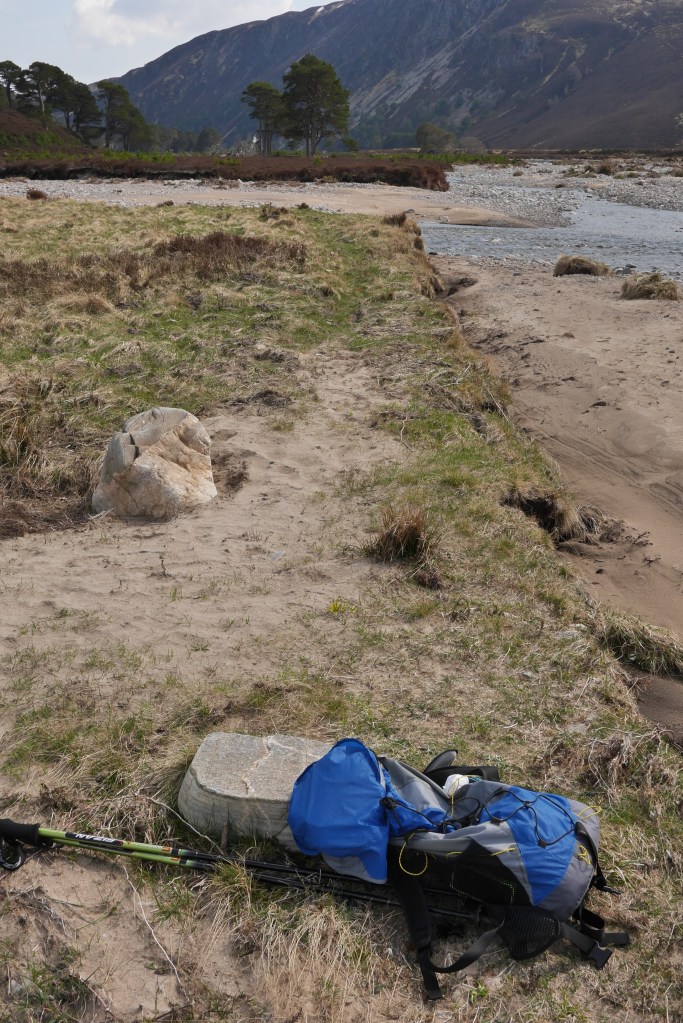
It isn’t particularly light but it really is very good and 22 litres is just about right for a mixed day of UK weather. The Talon torso length is adjustable and it features a venting mesh back panel which works brilliantly in heat or when pounding up hill. The shoulder straps and seamless back/waist pads/belt are comfortable and supportive and breathable. Two small pockets at the hips are useful if not that capacious but will take an iphone, chapstick and a small amount of food or compact camera – though they aren’t at all water resistant. There is one small pocket on the shoulder strap which I use for my glasses and stretchy mesh pockets on each side and on the front are ideally sized for the pack. Osprey have designed a stowage system for poles and added a decent compression system. There is a small pocket behind the head and an inner pocket in the main pack and an external hydration pocket which houses my sit mat and map. It’s a well thought through pack and the quality is really very good. I love it. I don’t over stuff my pack as the pack’ inbuilt comfort is compromised. I would rather go up a size. There is an excellent review of the Talon here.
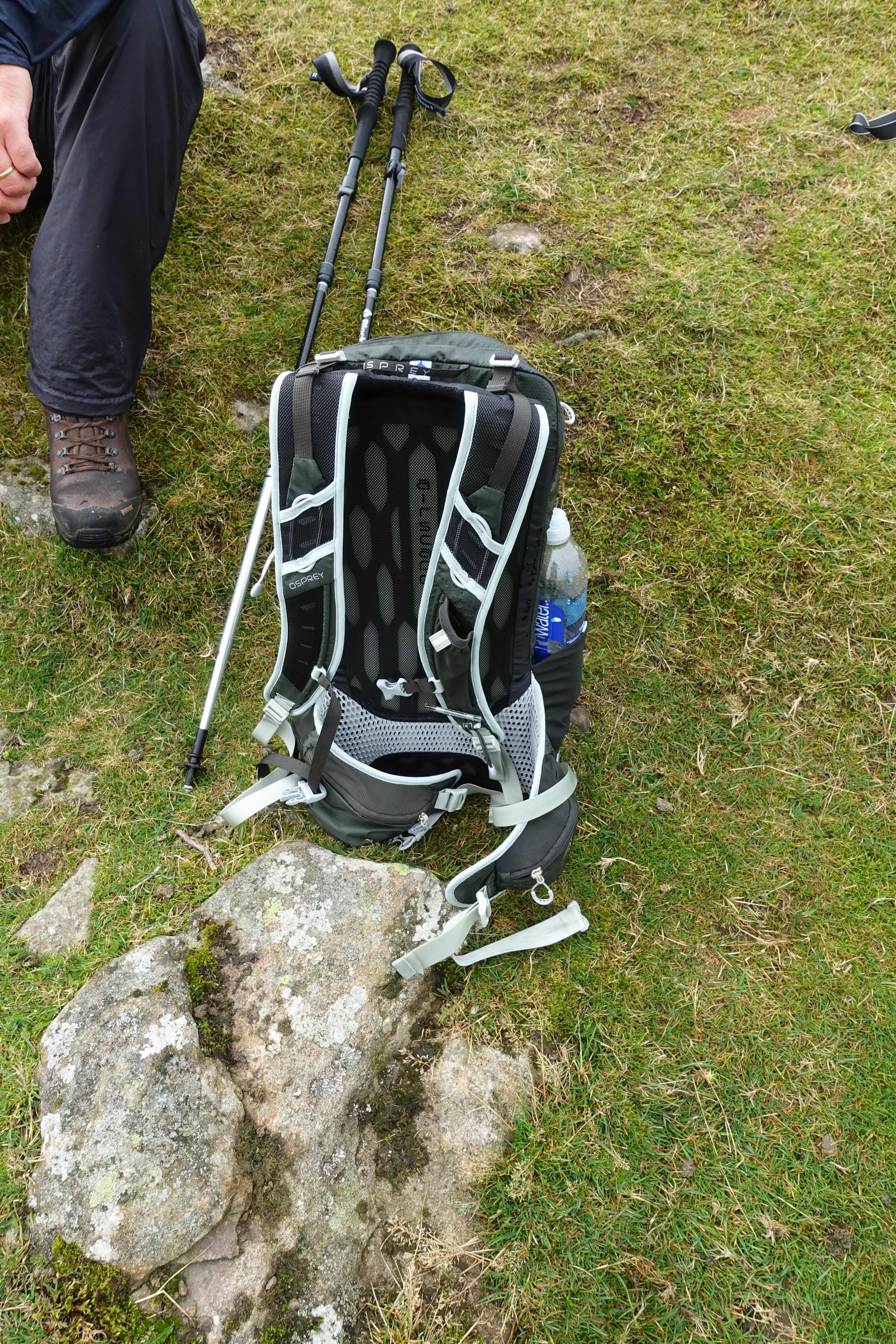
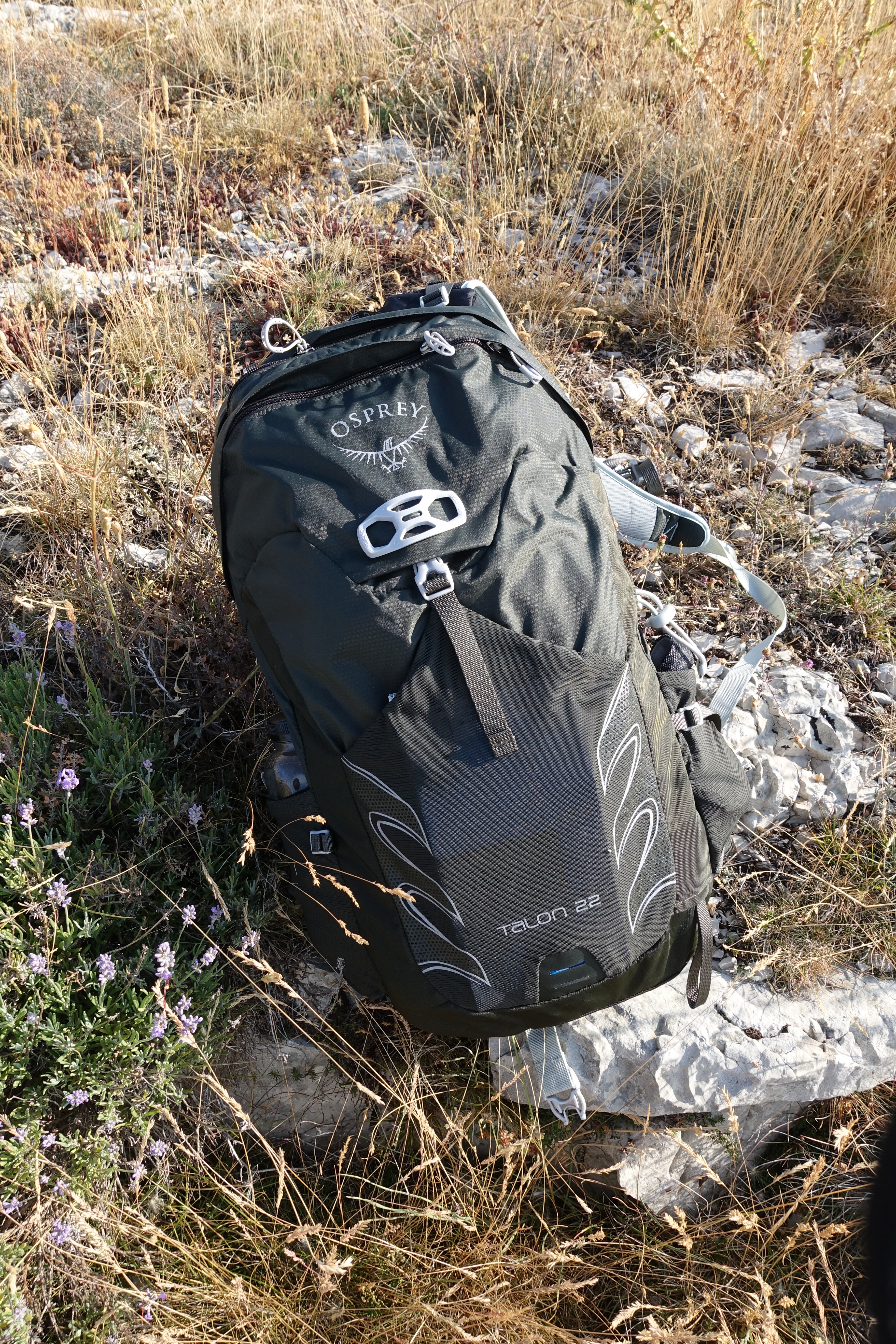
I generally pack my gear in stuff sacks within the pack primarily to organise the contents with the added benefit of keeping things dry and sometimes use a liner/bin liner to ensure things stay dry. I have an ill-fitting pack cover (the Talon doesn’t come with one) and the Talon’s zips and nominal flaps will allow ingress.

Walking Poles
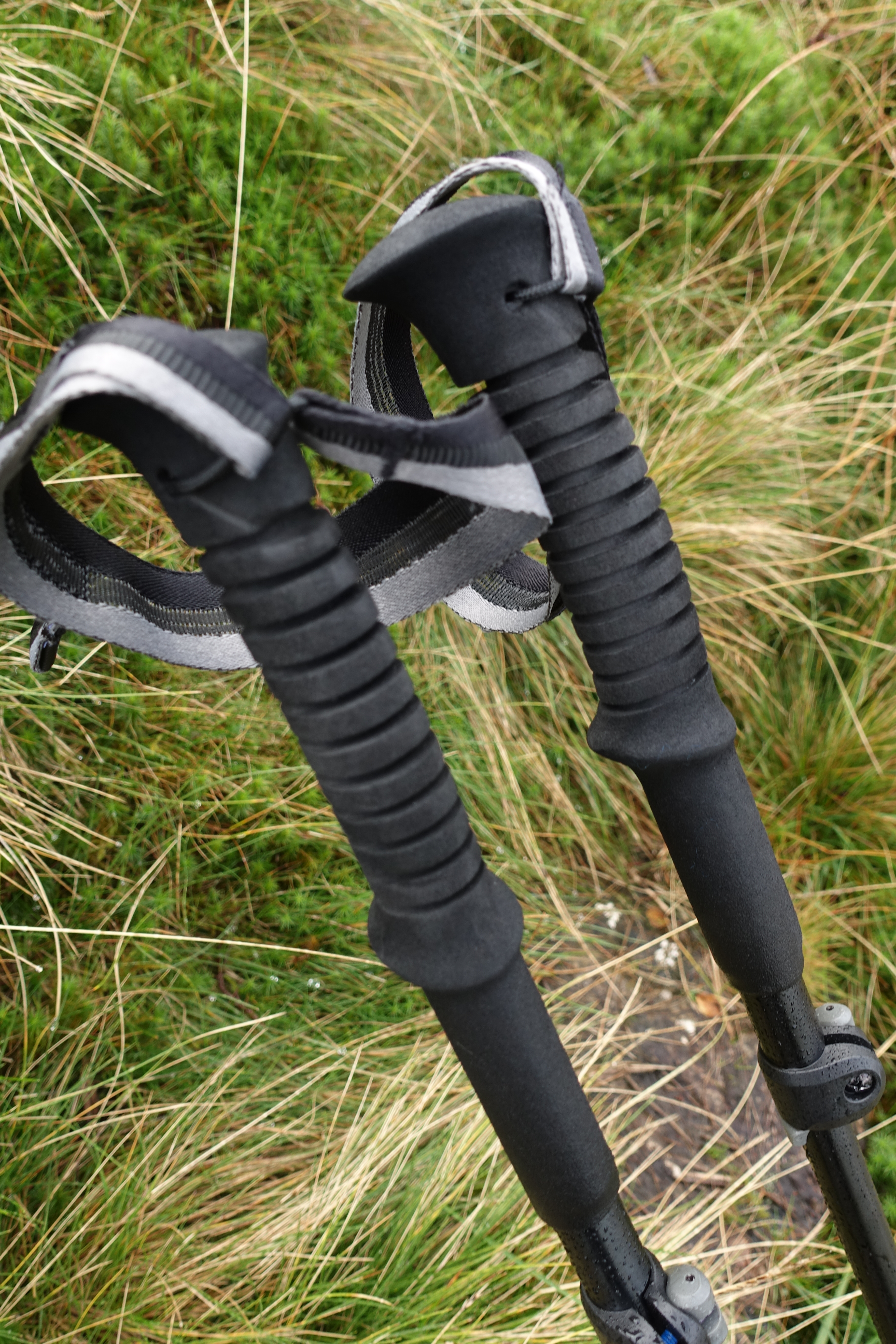
My first walking poles were a pair of very light Fizan Ultralight compact poles. I loved the fact that they nested into a relatively small tube. That said, they seemed a little flimsy if compact. They worked well for a few years until I started on an overnight trip in Scotland and they just wouldn’t slide out – or at least one wouldn’t. The aluminium had corroded a bit and that and some grit and they suddenly became useless, the twist mechanism wouldn’t work. As I was changing my shelter to one which relied on trekking poles to support it, I did a little research and found an excellent review of the Black Diamond Distance FLZ poles. The joy of the community is the trouble people take passing on knowledge, it’s incredible. The reviewer had a similar experience with the Fizan poles and settled on the FLZ poles as a good, robust compromise. They break down into three parts and make a compact 350mm length package which comfortably sits in the side pocket of the Talon with the pack’s elastic securing them. They are strong and adjustable up to 20cm ensuring they can be used by me being average height and to support either of my two shelters, the Tarptent Notch and Durston X-mid. The wrist straps are excellent and the handles comfortable. I also have a pair of Leki CF poles which I like but I just think the FLZ poles are tougher.

‘Lewes to Alfriston’ walk – River and Downs.

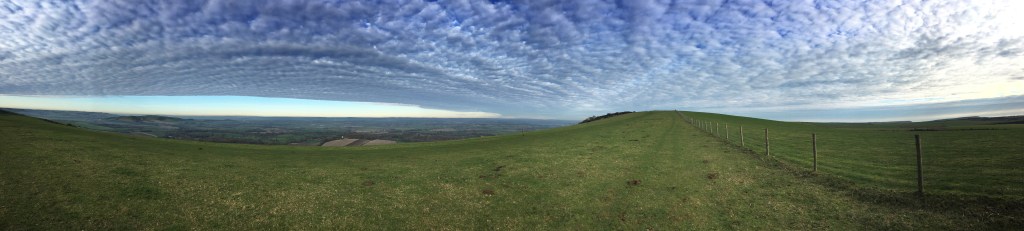
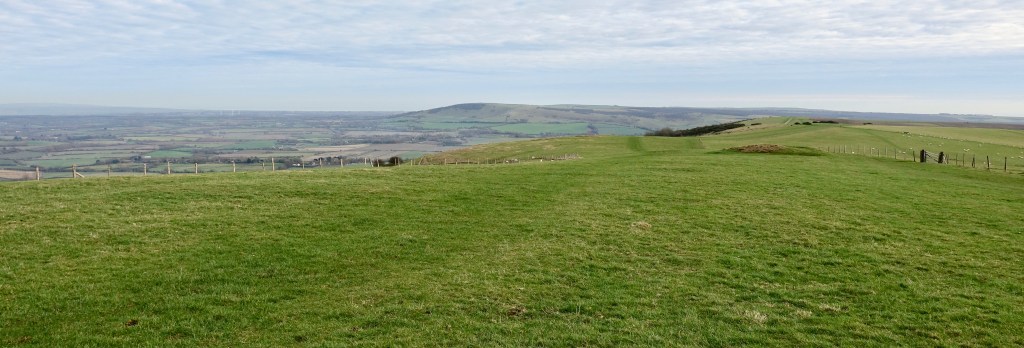
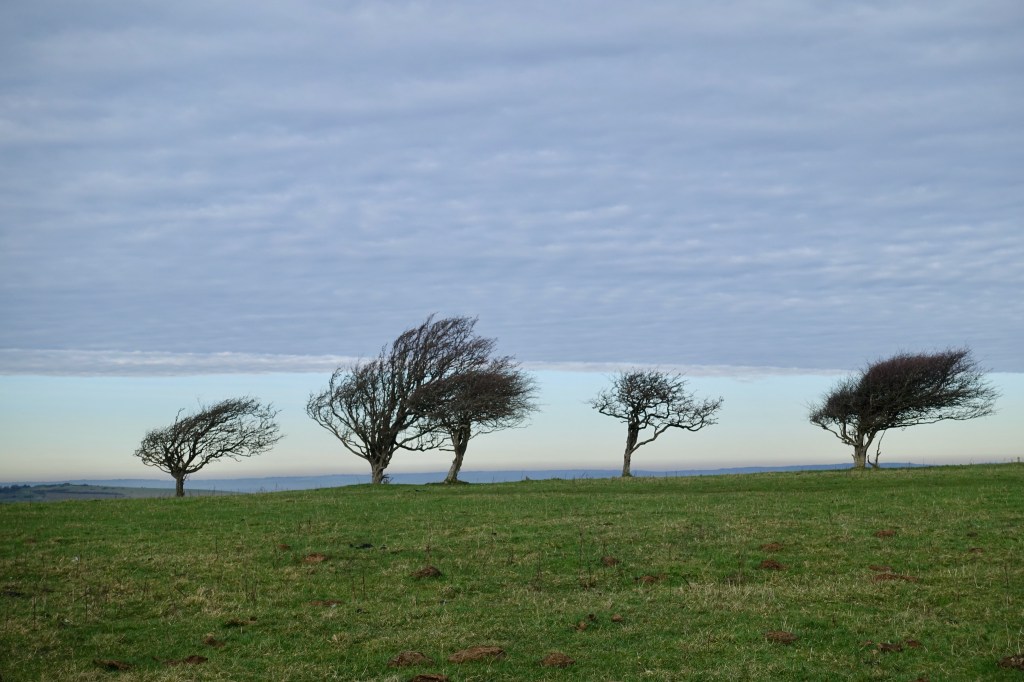
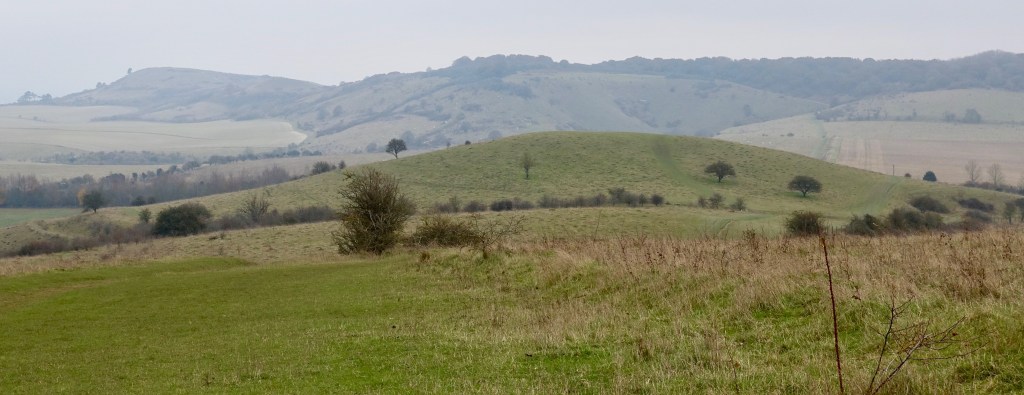
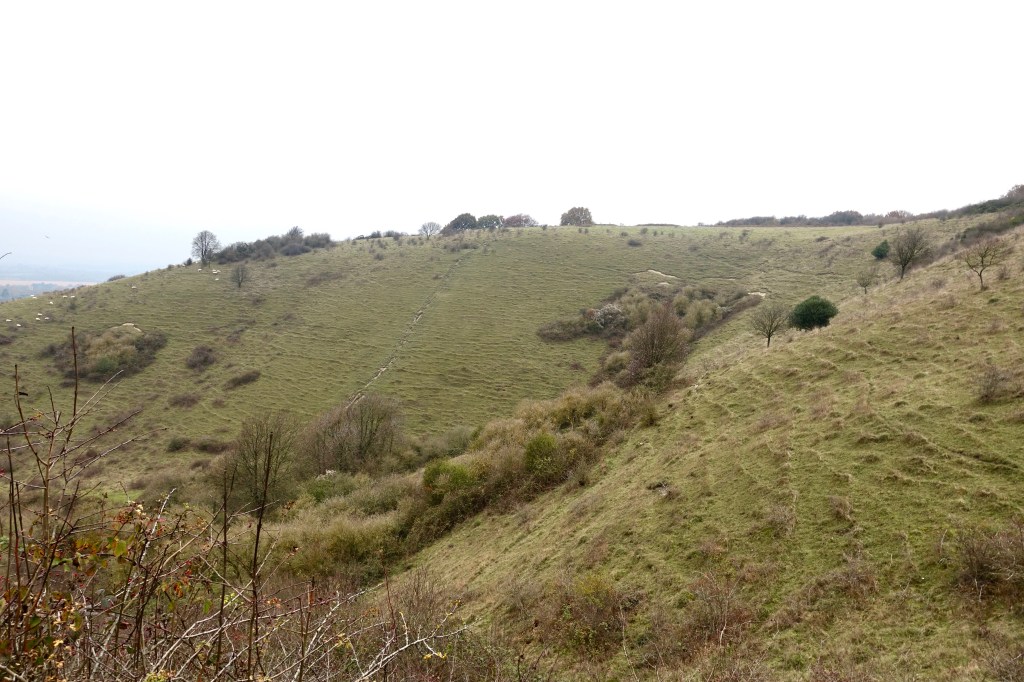
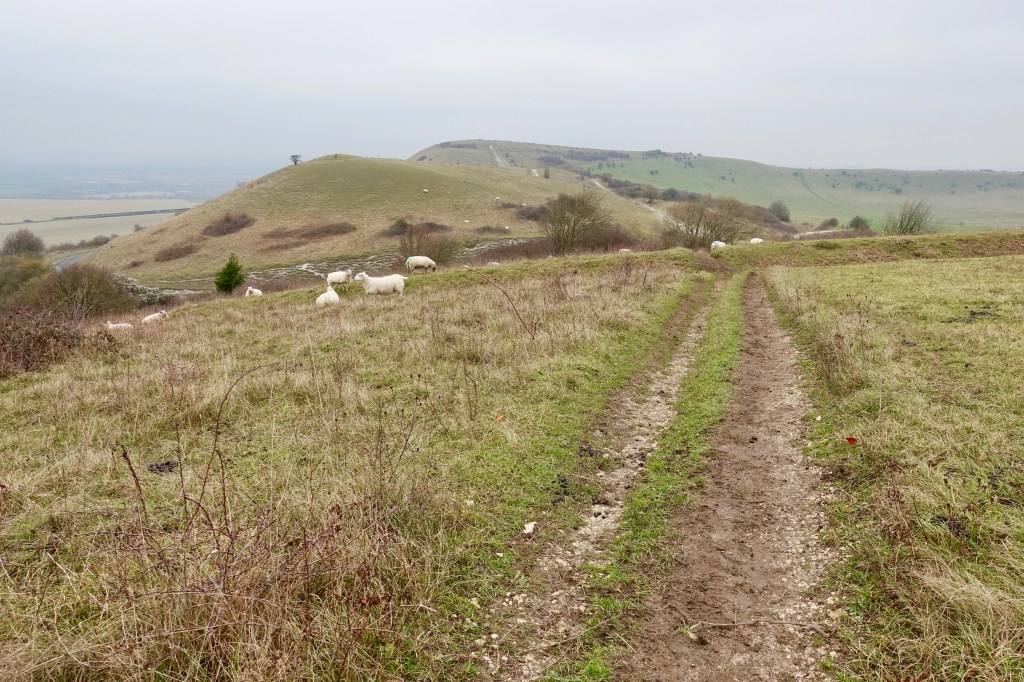
Looking East near Firle Beacon

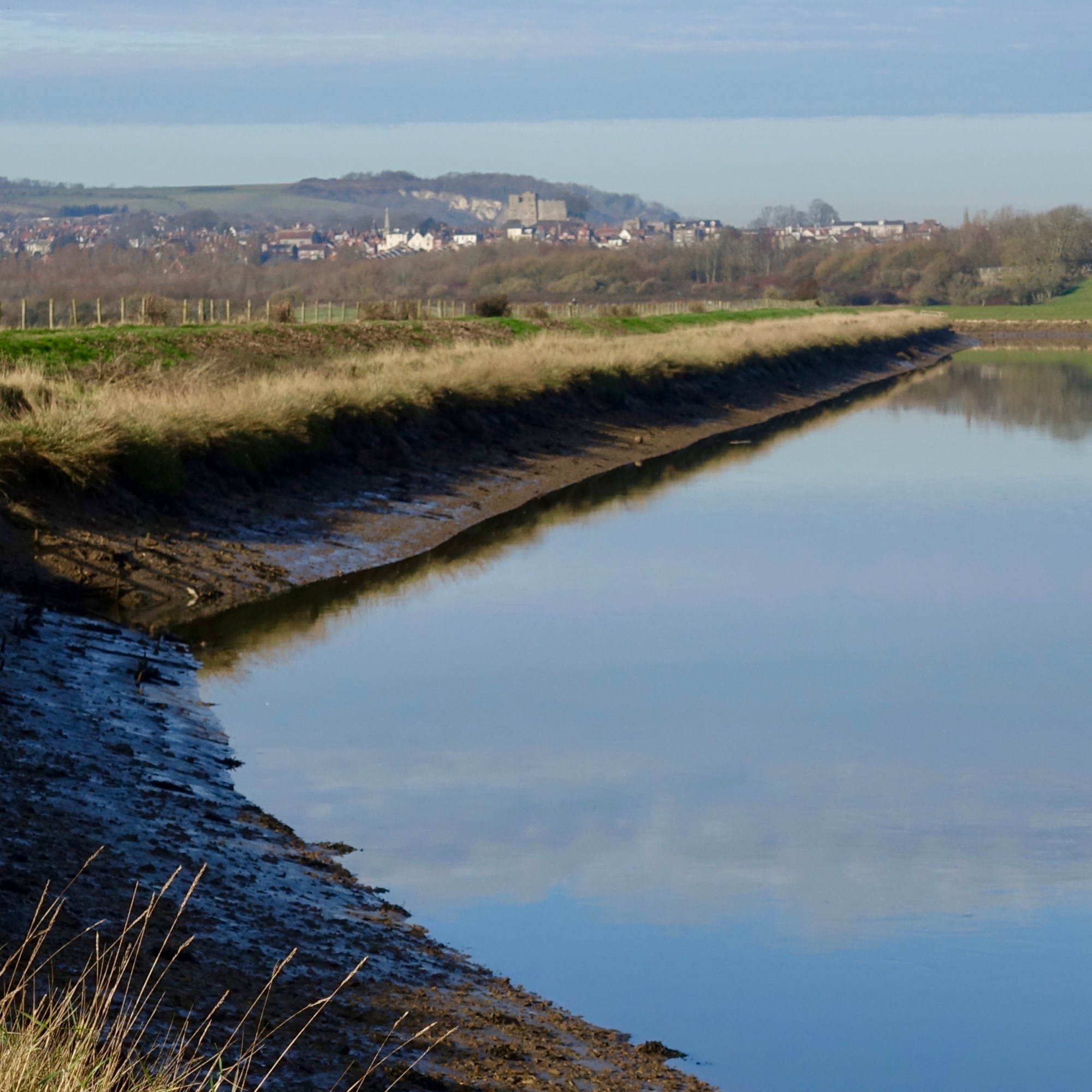
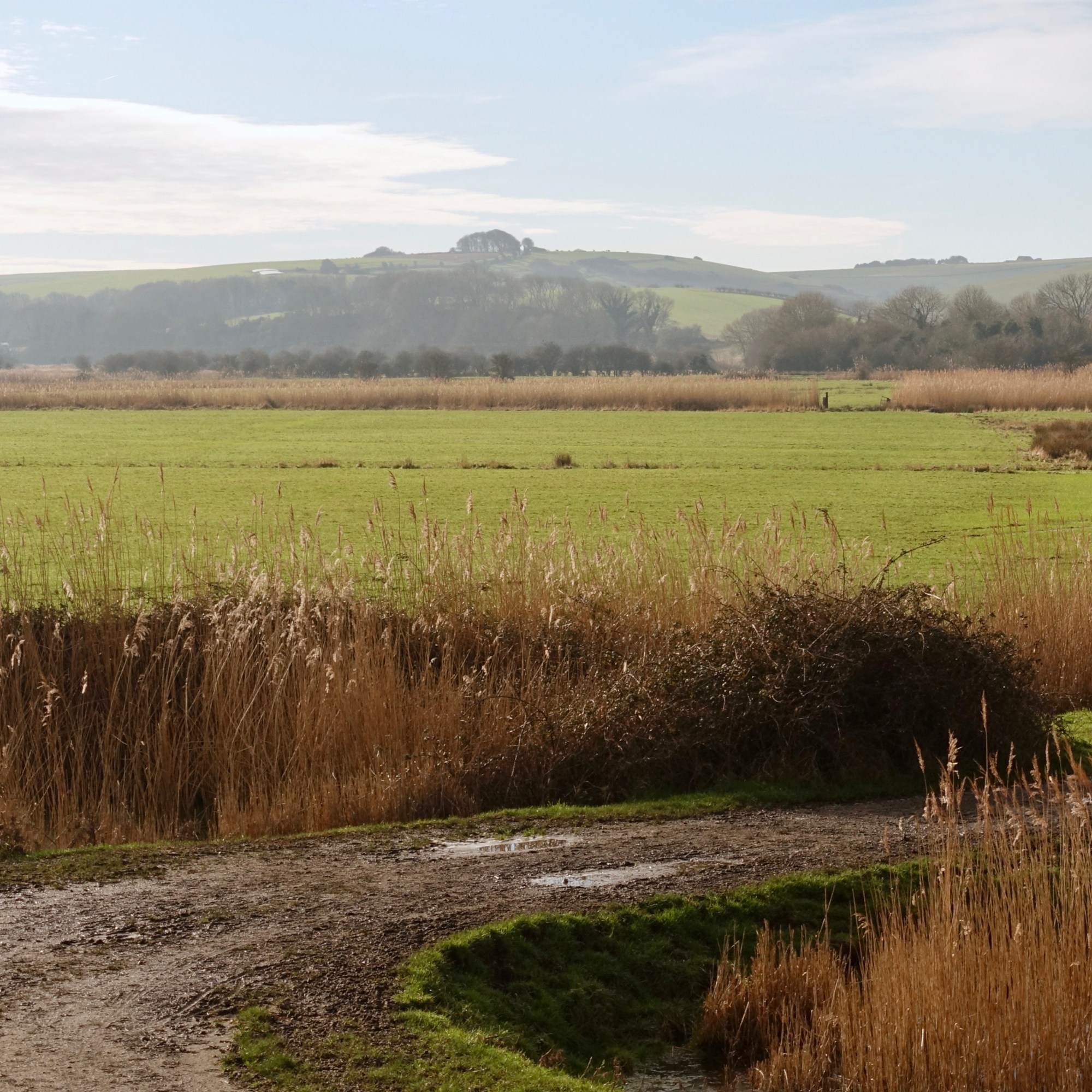
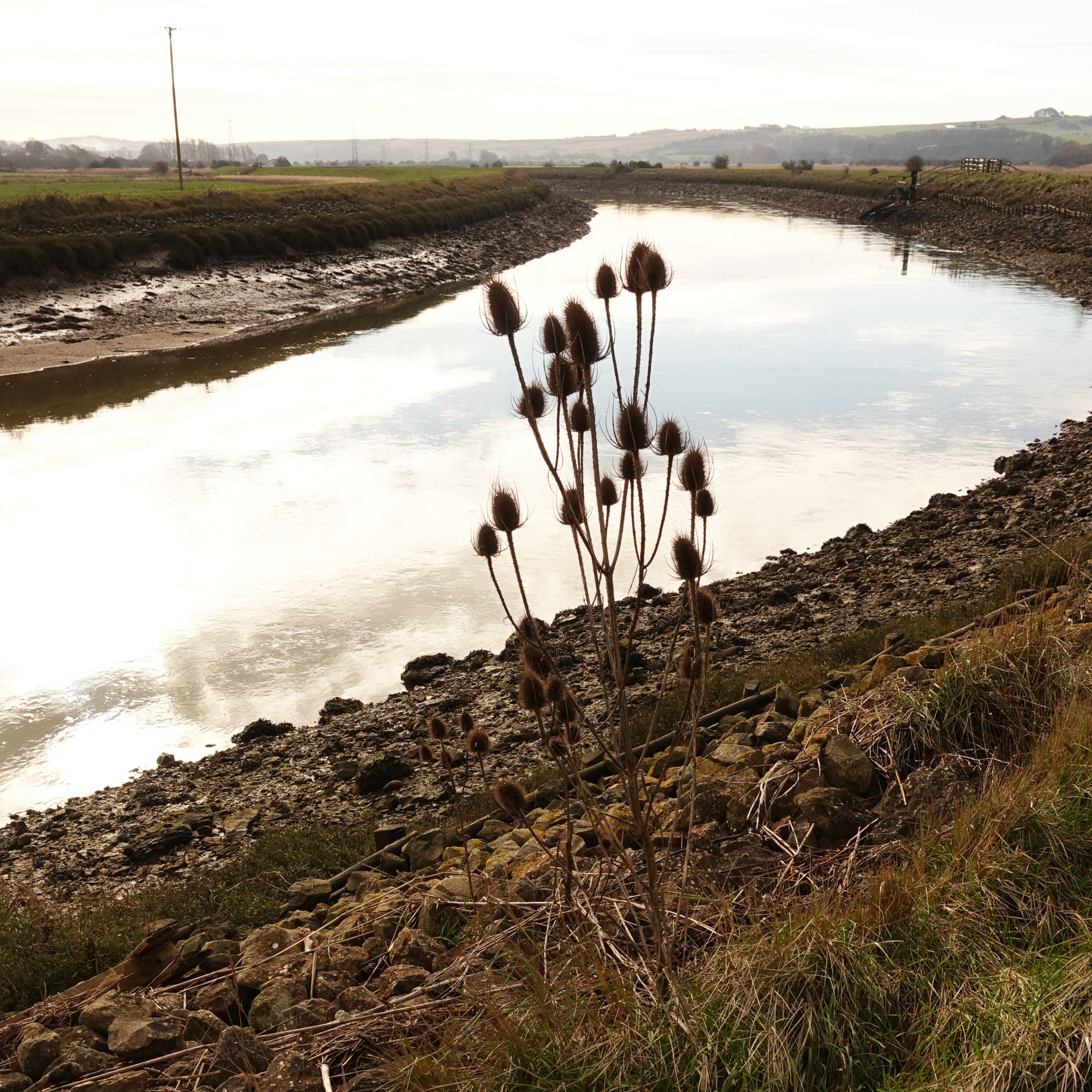
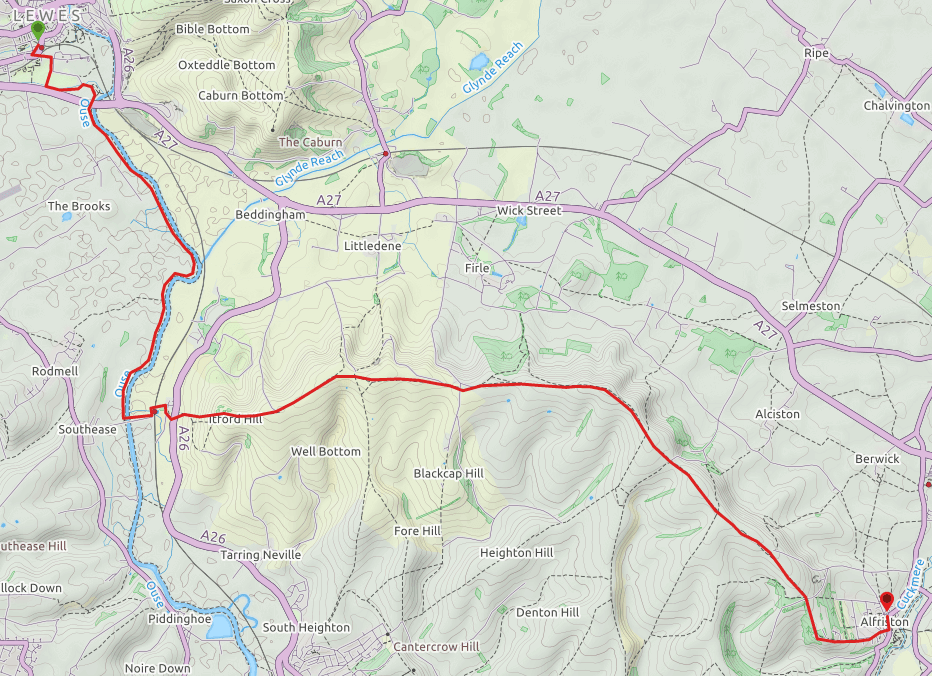
The first fine week of 2020 and I was keen to get out and enjoy some sun on a cold and frosty morning so decided to get out of London and revisit an 11 mile walk from Lewes in East Sussex to Alfriston. From Victoria Station, Lewes is just an hour away by train and added to that 20 mins on the Overground and I could be there by mid-morning. I use Trainline for tickets and, with a discount card could get there and back for £14. A bargain. A quick loo stop at Lewes station and packed lunch bought at the excellent cafe on platform 2 and I was on my way. The walk (map below). Come out of the upper part of the station and turn left towards the ruined Lewes Priory adjacent some playing fields. Cross diagonally to the right across these (or take an alternative route past the college to the left) go through a small gate and over a bridge that crosses a small river, turn left onto a metalled road which winds past a couple of houses and round the local recycling depot and ultimately under a large road bridge and finally onto the banks of the River Ouse, a large, navigable, tidal river which meanders its way S to Newhaven on the coast. The river does flood and there are levees on each bank which can be used as your path if the river is high. Given this was January after a wet, wet Winter the path was claggy in parts but frustratingly slow to begin with, the path narrow and occasionally very muddy. Thankfully it does improve after a mile or so, the path becoming wider and drier. The expansive scenery also improves – A mix of road, rail and river and some attractive pylons but beyond these the beautiful inviting downs to to the E and W. There is interesting birdlife – seashore dipper types, Swans, Starlings, Egrets and various reed loving little birds.

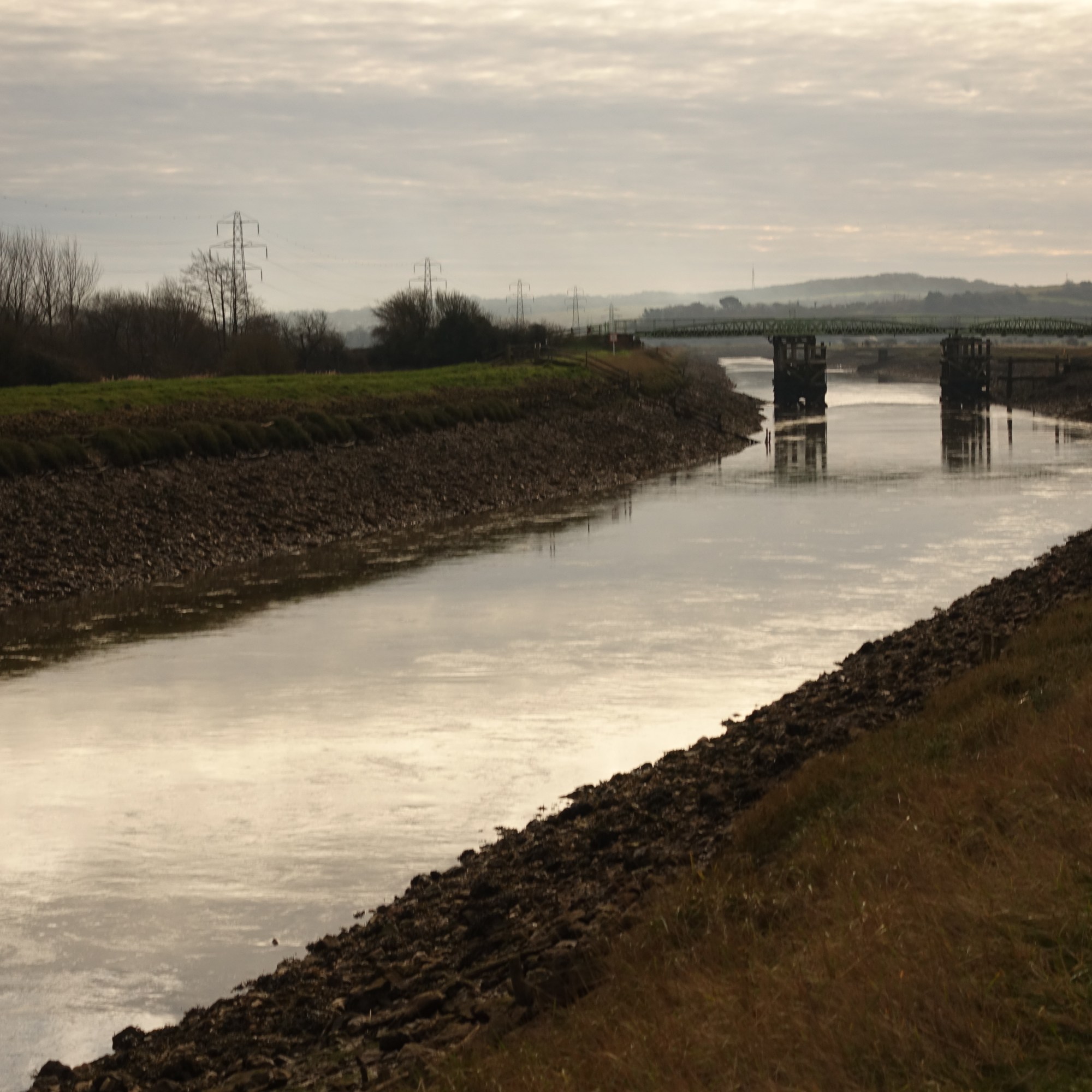
The path meanders with the river until it reaches an old swing bridge (pic above). Cross this to the E and continue along the lane until you get to Southease station. Use the railway crossing and continue until a group of buildings which include the YHA at Itford farm. Turn right immediately before the buildings (signposted South Downs Way) and follow the path over the footbridge that crosses the busy A26. Once you are over the bridge the Downs come down to meet you. Take the long path snaking up the hill or go straight up the grassy hill to the top of Itford Hill and continue E on the SD Way past Red Lion Pond. The views really open up here with Newhaven to the S and the Ouse valley N with views of Lewes and its prominent castle. The walking up here is really enjoyable, easy and freeing. Continue E for another mile or so, cross a track and head for the monolithic radio masts. Then, in less than a mile, cross another small road and car park and continue for approx. 1 mile till you reach Firle Beacon (217m 711 ft.) The views are vast – N to the Weald and S across rolling downs to the sea.

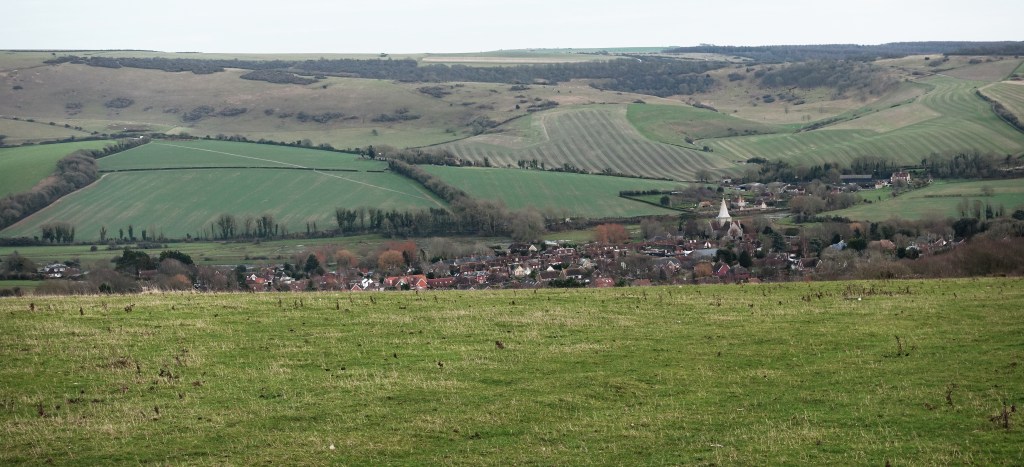
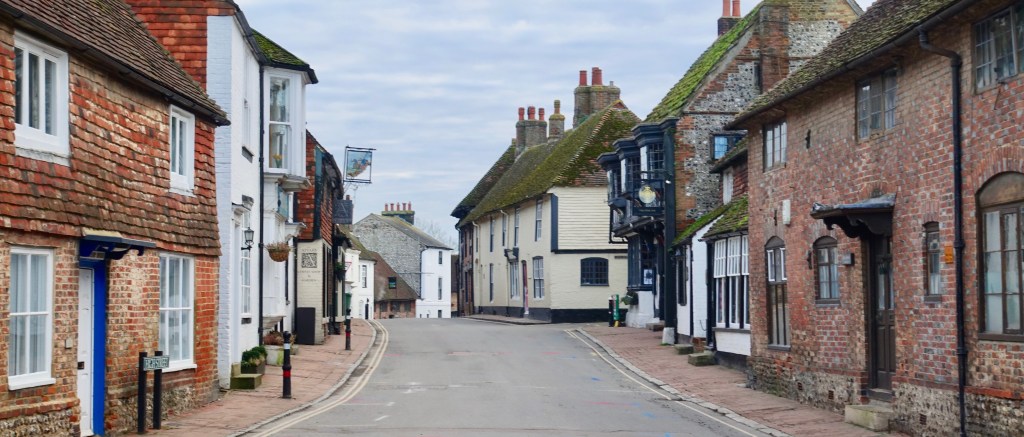
The route now heads SE towards Alfriston past another car park through farmland until see the village and come to a gate with three routes to the village. Take the one directly in front (not the two to the left) this being the SD Way which winds down a hedged lane into the village. There are places for coffee/tea and pubs in Alfriston (the George Inn is open early afternoon and very cosy) and an incredibly beautiful church and Green. It’s worth spending a few hours exploring the beautiful architecture. I needed to get back to Lewes and there are alternatives. There is a bus (just the one) at 16.00 or Berwick station with an hourly service three miles to the N on footpaths. The alternatives are a taxi to Lewes or the cheaper option (as suggested by a local in the George) a Seaford taxi to Seaford railway station then a quick train to Lewes.

Alfriston from Cross Dyke
Alfriston Village
11 miles in total with nearly 1000ft of ascent/descent

Walks with Visorando

Choosing the right stuff – caveat emptor

About 10 years ago when I decided to start backpacking and walking seriously again, I had no gear to speak of. So I started buying both Trail and The Great Outdoors (TGO) magazines which (a little like a wedding magazine) were excellent in making recommendations on where to go season by season and what to take, as well as passing on really useful tips on how to do it all reasonably safely. They were critical for me in building my confidence that I could get fit enough and adequately equip myself do some of the routes I had enjoyed 40 years ago – and take on new challenges whatever the season or conditions.

There is a considerable amount of trial and error in the process of finding what gear that fits you, suits your approach to being outdoors and which works best for you, not least in what kind of walking you expect to do and crucially, what you want to spend. There is just soooo much stuff out there . The magazines have a remit to constantly review new products and this can overload the would-be buyer with a dozen choices for every new longed for shiny class of item every month! I fell into the trap of rushing the process. I wasn’t going to get to Scotland in the winter for a few years so didn’t need to buy ‘bombproof’ gear that was massively over-specced for the kind of walking I was going to do for the foreseeable and indeed for most of the time I’m out walking. I suppose I bought using ‘worst case’ thinking. Hence I ended up with a mountain tent that is too hot for three seasons of the year, boots that were too heavy and jackets that felt like armour. Put simply I was the safest I have ever been while beyond my front door but in most instances, hot, uncomfortable and burdened by heavy expensive, inappropriate equipment.

The realization that I was doing it wrong came when I started to wear trail shoes (Merrells’s Chameleon and Capra models, then Garmont’s Trail Beast). Very much influenced by the writings of backpacking guru, Chris Townsend. These had a freeing effect in more ways than one. I began to appreciate that the walking itself is a great deal of the enjoyment of being outdoors and trail shoes just allowed me to walk further and enjoy more with a lot less discomfort or pain. I also began to look at ways to tailor my kit around enhancing the process of enjoyment. Effectively I was going lightweight. I found other blogs and review sites (listed below) which further informed and advised, a great many from the US, where the ultralight movement is the pre-eminent philosophy for thru hikers tackling the immense national trails. I also began to feel less overly concerned about what might befall me in the UK. We have no bears wolves or large cats, water is abundant and you are never more than seven miles from a road anywhere in the UK. The point is to get out there whether on a brisk four miles on my local heath or 16 miles crossing the Black Mountains. Get fitter, know your kit and grow in confidence.

Merrell’s Capra Shoe – my first trail shoe and not the best.

This process takes time and your preferences change as your walking continues, your approach is developed and advice improved. I now have a kit list which includes options that suits me for ninety percent of the time. The hardest part was getting to know my feet. I am amazed that so little time is spent considering and understanding the very fundamentals of the activity. I am lucky to have found the shoes and boots that fit me perfectly – the Salomon X Ultra shoe and boot in a 2E width fitting. On reflection perhaps I should have had my feet measured correctly at the outset but given the limited width fittings available to the UK market I’m not sure I would have found the shoe that best suited my needs. I have bought new and second-hand gear. I generally wait for the sales and visit sites that offer decent discounts. I have also sold a lot of gear over the years and passed stuff on to friends I walk with as I have pared down to my favourite kit. There isn’t a right or wrong way to do all this but hopefully the following links will be of use. Hardly comprehensive but these are where I go to first when choosing equipment and gear, getting motivation or where and when to go.

Motivation, routes and reviews:
Chris Townsend Outdoors – www.christownsendoutdoors.com/
Walk highlands – www.walkhighlands.co.uk/
Carrot Quinn – https://carrotquinn.com/
Andrew Skurka – https://andrewskurka.com/
Philip Werner – Sectionhiker – https://sectionhiker.com/
Backpackingbongos – https://backpackingbongos.wordpress.com/
Terry Abrahams – https://terryabrahamlakedistrictvideo.wordpress.com/
Darwin on the trail – https://darwinonthetrail.com/
Blogpackinglight – https://blogpackinglight.wordpress.com/
Alex Roddie – www.alexroddie.com/
Clever Hiker – www.cleverhiker.com/
Backpacking Light – https://backpackinglight.com/
Outdoor Gear Lab – www.outdoorgearlab.com/
Blissful Hiker – https://blissfulhiker.com/bliss/gear/
My Open Country – www.myopencountry.com/
Brian Outdoors – https://brianoutdoors.blog/
Trailspace – www.trailspace.com/
Phoebe Smith – http://www.phoebe-smith.com/
London wlogger – https://londonwlogger.com/
Cool Hiking Gear – https://coolhikinggear.com
Peter Macfarlane – http://www.petesy.co.uk/category/gear-diary/

And not forgetting Youtube, a really good rabbit hole in which to start research – link is to a review of the excellent Tarptent Notch tent: https://www.youtube.com/watch?v=ck5SDP13OFM

Favourite sellers:
Backpacking Light – www.backpackinglight.co.uk
Ultralight Outdoor Gear – www.ultralightoutdoorgear.co.uk/
Anti Gravity Gear – https://antigravitygear.com/shop/
Backpackinglight.dk – https://backpackinglight.dk/
Sportpursuit –www.sportpursuit.com/
Gaynor Sports – https://www.gaynors.co.uk/

Favourite Brands:
Dan Durston: https://durstongear.com/
Tarptent – www.tarptent.com/
Treadlight Gear – www.treadlitegear.co.uk/
Mountain Equipment – www.mountain-equipment.co.uk/
Rab – https://rab.equipment/uk/
Osprey – www.ospreyeurope.com/gb_en/
Salomon – www.salomon.com/en-gb/outdoor
Darn Tough – https://darntough.com/collections/mens-hike-trek
Berghaus – www.berghaus.com/
JetBoil – https://www.jetboil.com/
Snow Peak – https://snowpeak.co.uk/collections/cookware
Soto – https://sotooutdoors.com/product/dealer-resources-3/
Arc’teryx – https://arcteryx.com/gb/en/
Black Diamond – https://eu.blackdiamondequipment.com/en
Western Mountaineering – www.westernmountaineering.com/
Montane – www.montane.co.uk/
Sea to Summit – www.seatosummit.co.uk/
Viewranger – www.viewranger.com/en-gb
Garmin (In-reach Mini) https://explore.garmin.com/en-GB/inreach/
Thermarest – https://www.thermarest.com/ie/products/sleeping-pads
MSR – https://www.msrgear.com/ie/water-treatment/filters-and-purifiers
Outdoor Research – https://www.outdoorresearch.com/us/hiking-backpacking

Glen Feshie

‘Chilterns’ walk – The Ridgeway and woods

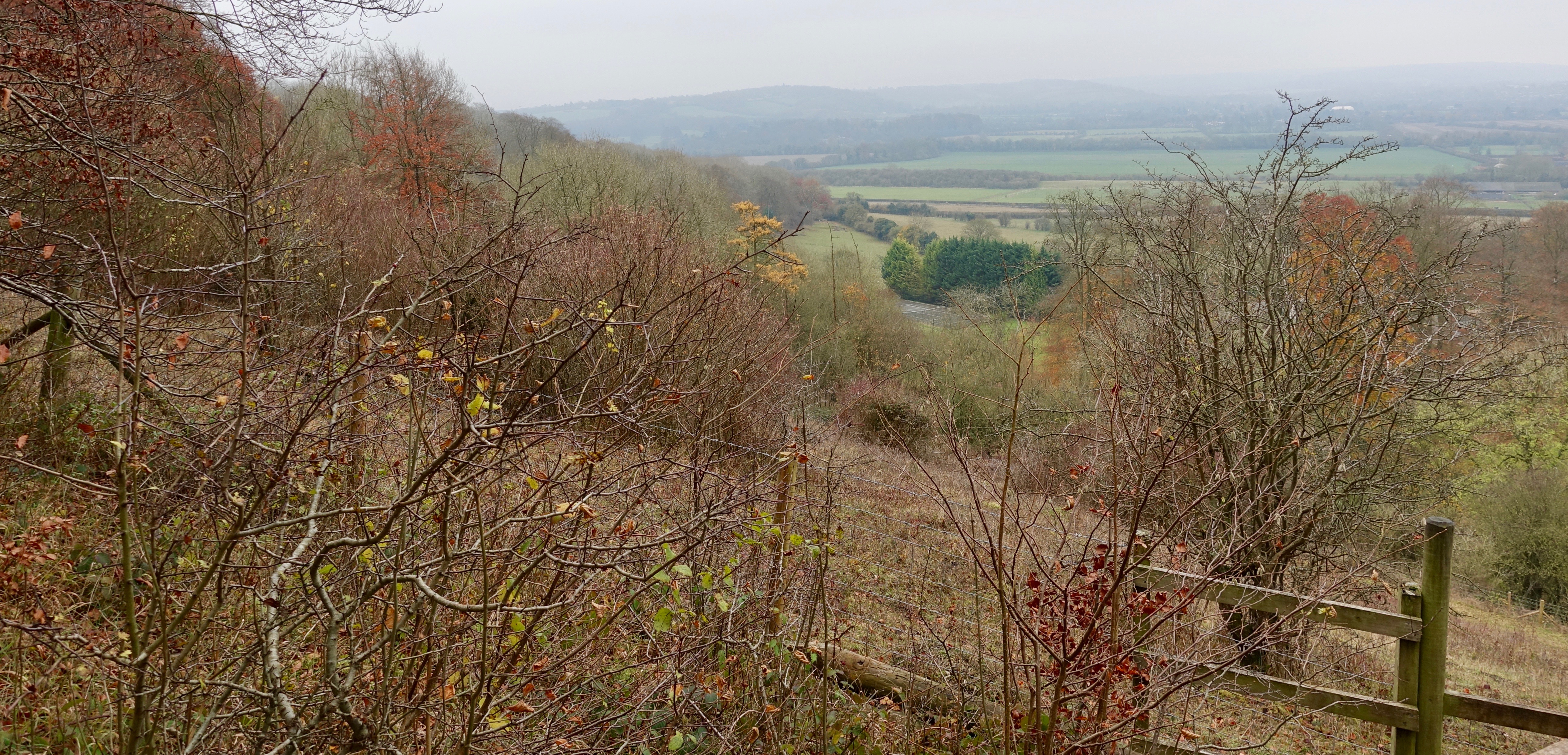
The Ridgeway looking N from Pitstone Hill

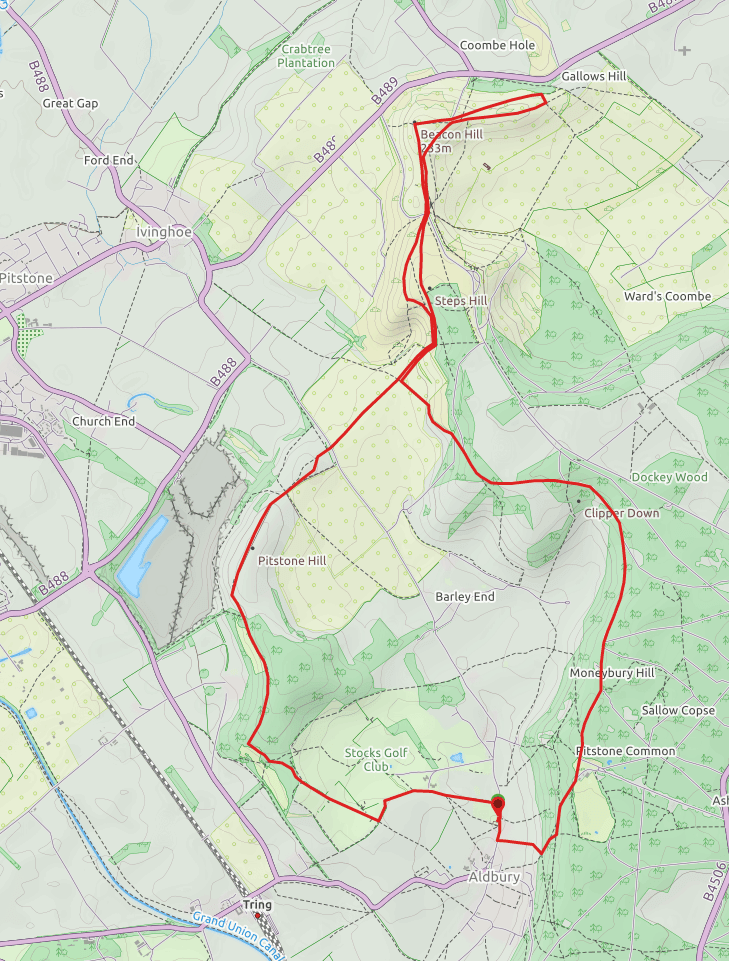
The challenge for the Londoner wanting a decent day hike is being able to find real countryside and decent walking within striking distance of the city. To the South there are the North and South Downs and to the North, the Chilterns, a beautiful area of woodland and open chalk ridge with far reaching views. I had to drive through the area so took my boots and stopped en route to take in an 8.5 mile walk that gave me a real sense of the area, its flora, fauna, and the stunning landscape (map below).

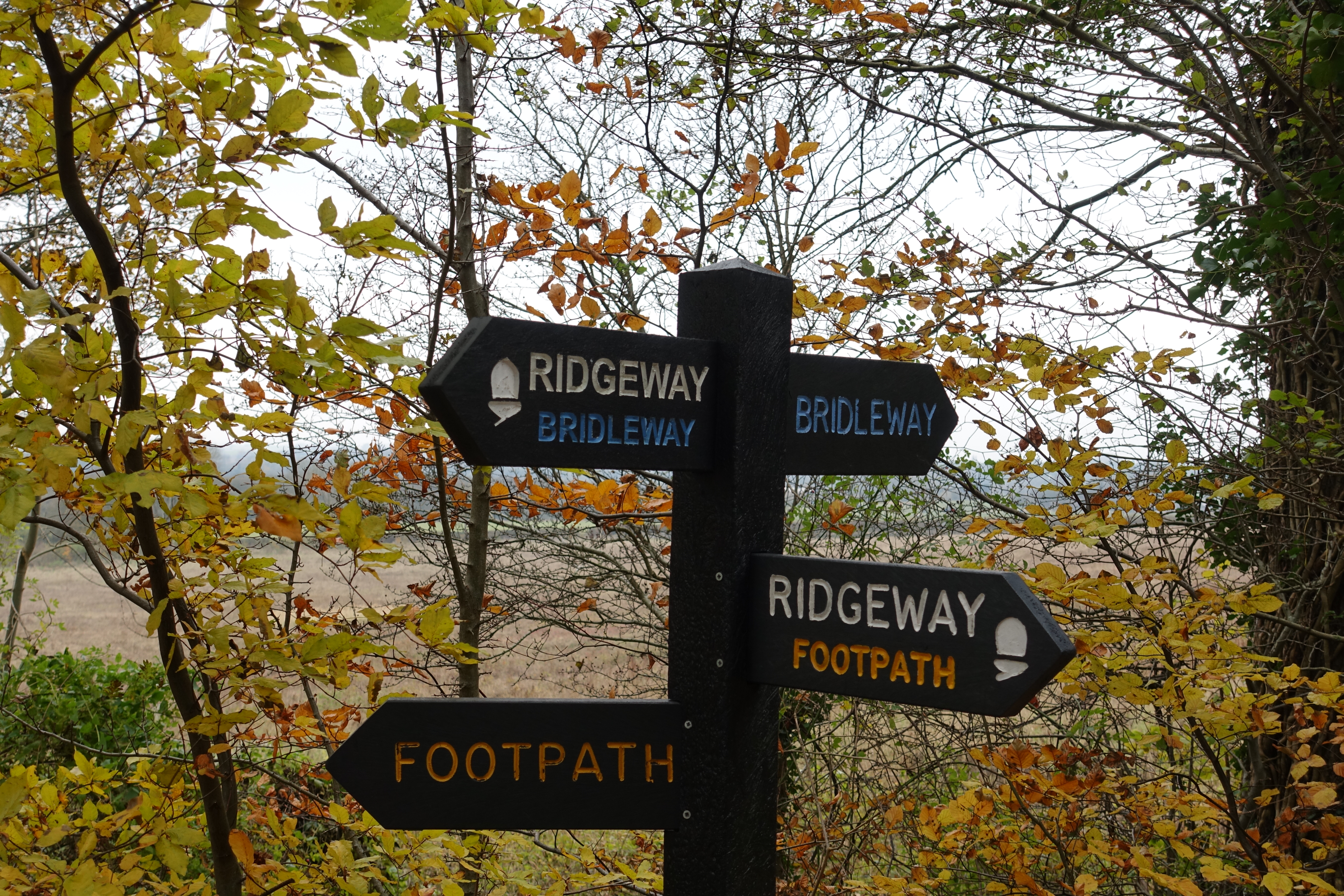
I parked in the car park in the pretty village of Aldbury (which has a pub) a mile or so to the East of Tring railway station and walked N on the small road for a couple of hundred metres before taking the well defined track/footpath to the W then SW. This path briefly becomes the ‘Hertfordshire Way’ before meeting the magical ‘Ridgeway‘. Turn right N onto the Ridgeway along another well defined and signposted track. I love the prehistoric Ridgeway, stretching from Wiltshire to Buckinghamshire following an ancient track, you are walking in the 5,000 year old footsteps of fellow travellers.

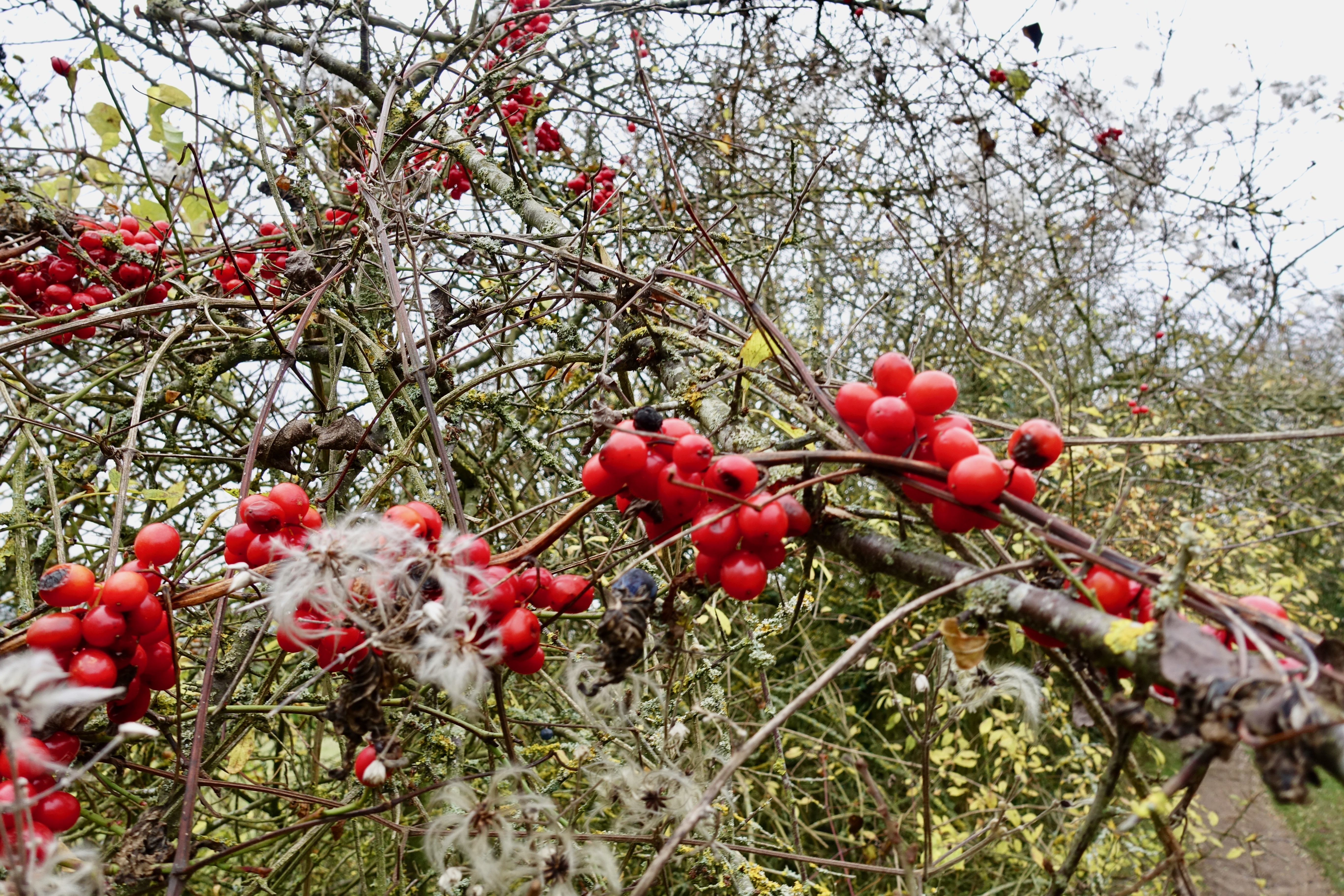
The flora lets you know this is now a downland environment, Wild Clematis ‘Travellers Joy’ climbing through Blackthorn hedges. The track enters woodland ‘Aldbury Nowers’ and climbs to the ridge edge. Just before reaching ‘Pitstone Hill’, the route turns NE having emerged into pleasing, open downland country with great views to the N.

Emerging onto the the Downs at Grim’s Ditch below Pitstone Hill

From here you get to see Ivinghoe Beacon. Still following the Ridgeway, the route descends to cross a minor road before rising into the pleasing shape of Incombe Hole and partially wooded Steps Hill.

Incombe Hole

The route turns N and descends again to cross a minor road before rising up white, worn chalk paths that take you to the trig point of the Beacon (233m/764ft) where the views are really expansive, a vantage point that has been enjoyed for millennia.

Descending Steps Hill looking N towards the Beacon

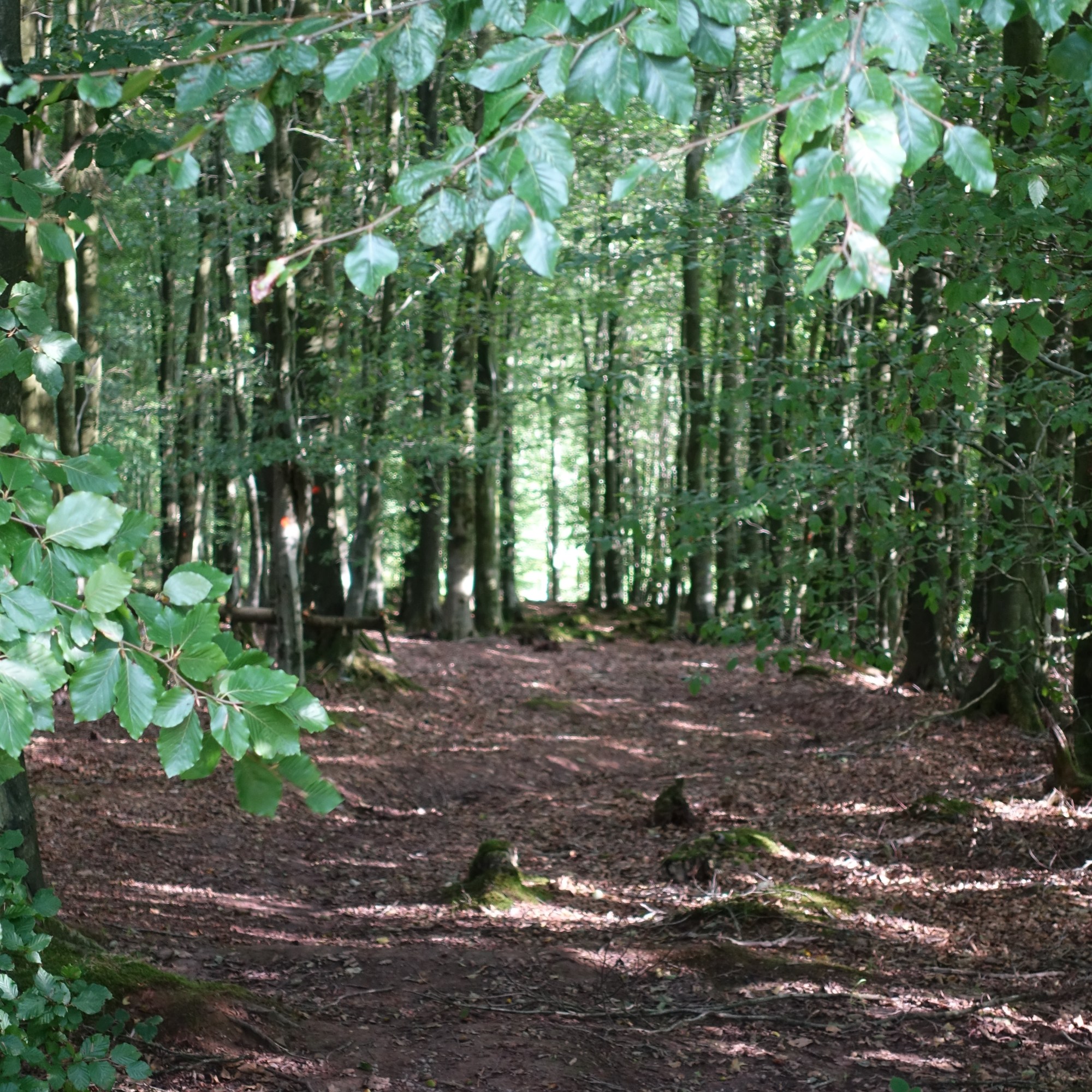
Walking East to Gallows Hill you get the real space of being at height with a panorama to enjoy. I had lunch here before roughly tracing my steps (there are options) returning to Incombe Hole. As the path begins to flatten take the path to the left. This rises slowly along the edge of a wood before you bear left and pass some houses and continue towards Duncombe Terrace. The route becomes a woodland walk through the heart of the Ashridge Estate, 5,000 National Trust acres which encompasses the Beacon and the remainder of the route back to Aldbury. It’s an easy level track which turns to the S before reaching the ‘Bridgewater Monument which you can climb up (172 steps). There are also a visitor centre, food stop here and loos. With the centre to your left walk past the monument into more woodland, then bear right where there are a couple of paths to the W back to Aldbury, the first to the car park, the second to the centre (aka the pub).

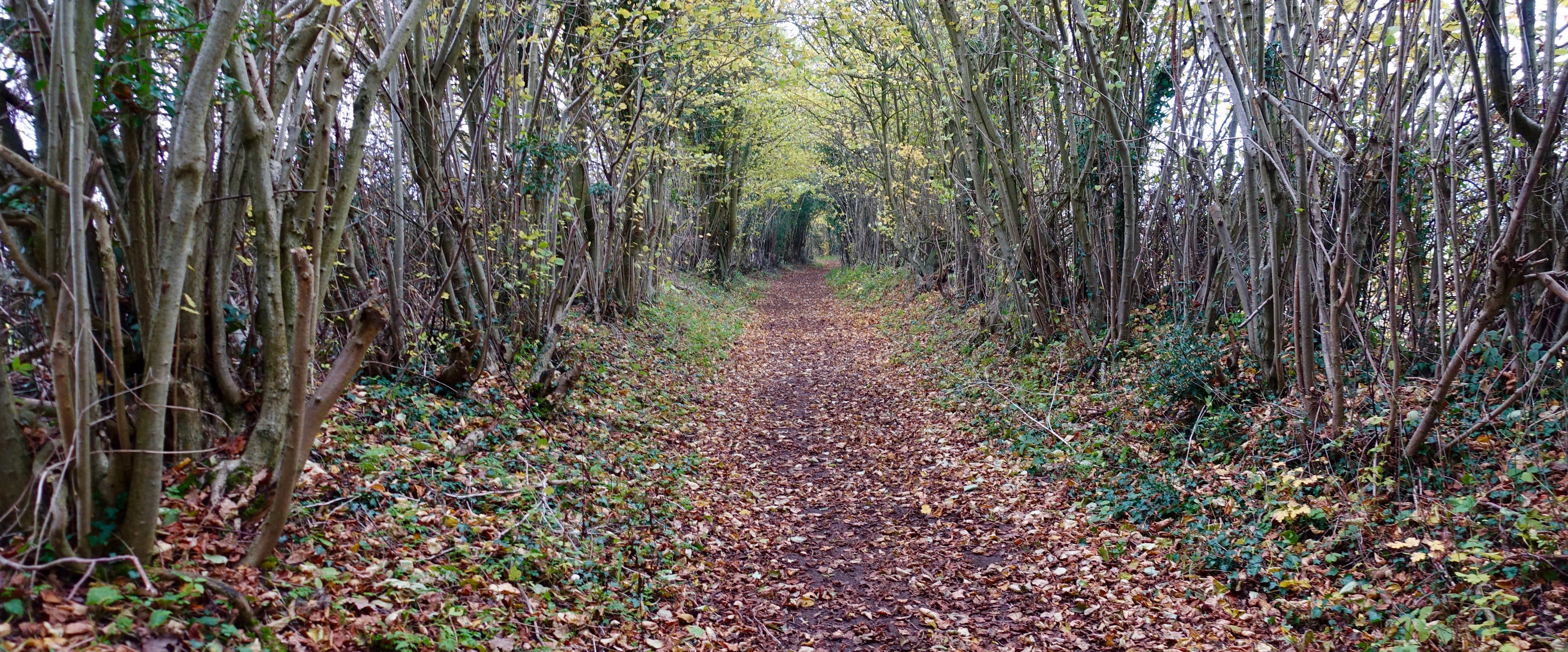
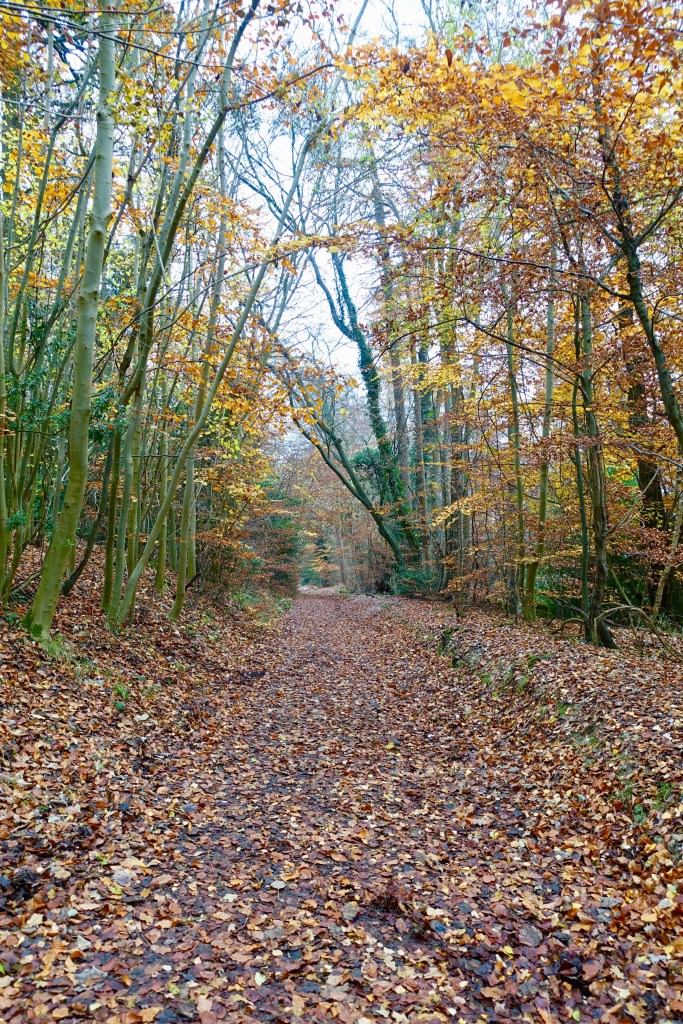
The track nearing Aldbury having passed the Bridgewater Monument.

I walked this on a blustery November day and while there were some muddy bits, it’s a generally dry route with decent paths. There is a 45 minute train from Euston to Tring station which is just a few hundred metres from the Ridgeway path below Aldbury Nowers. I use ‘Trainline‘ to buy tickets, they offer decent discounts and a decent app to make the process easier when collecting tickets.

‘Black Mountains’ walk – Welsh English border

Another few days off with good friends and we chose the Black Mountains on the England Wales Border as the area we enjoyed last year and in which wanted to do some more exploring. Again we stayed in Hay-on-Wye which is just magical. Can’t think of anywhere better to spend an evening after a day on the hills.

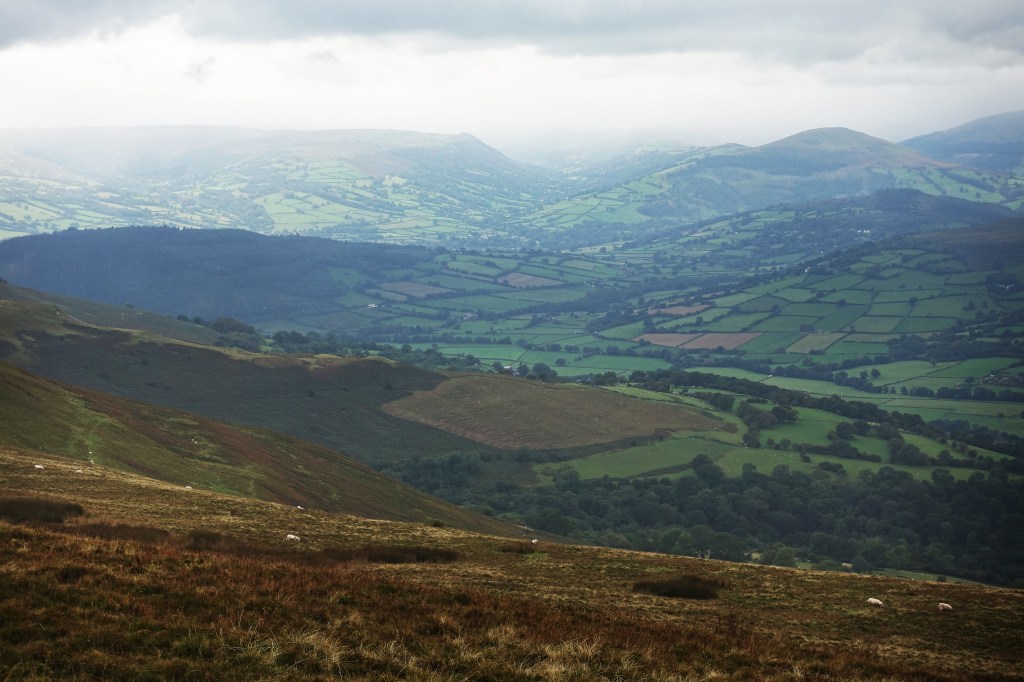
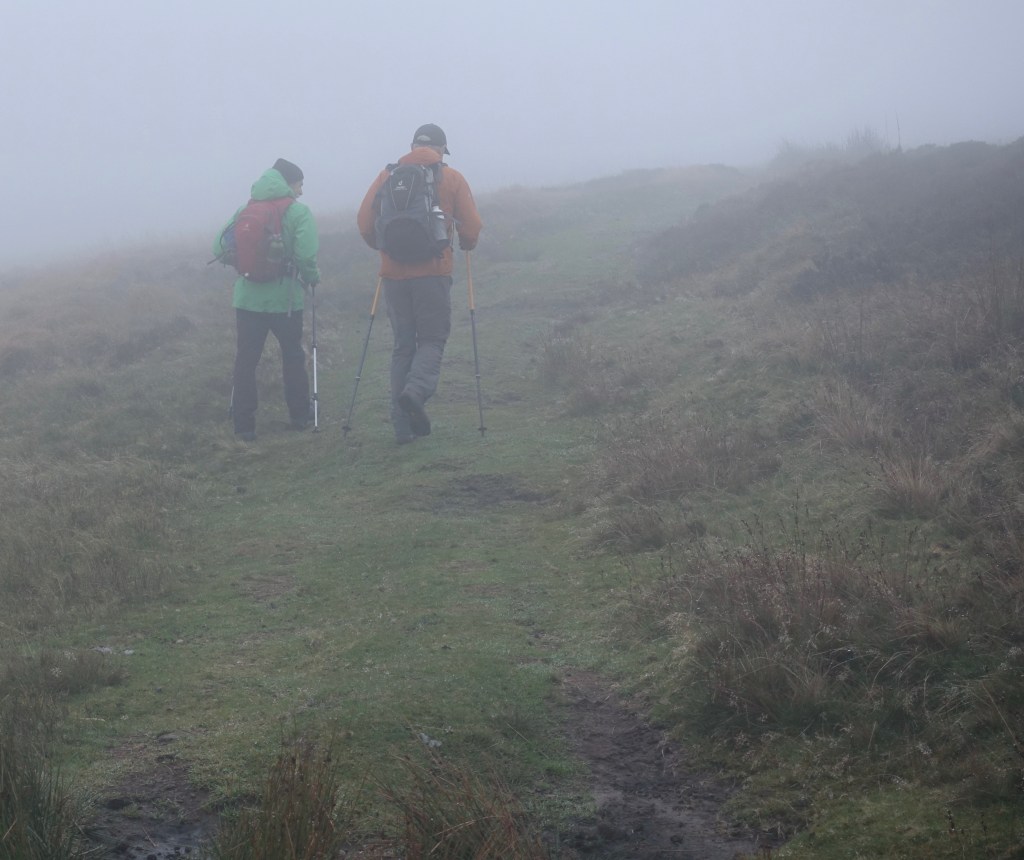
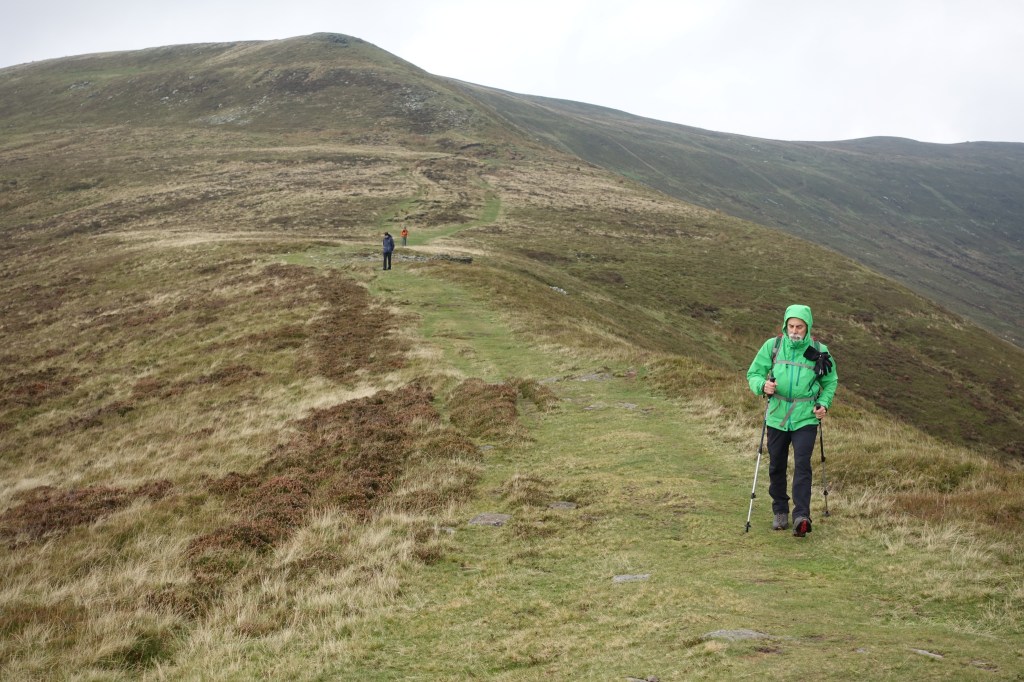
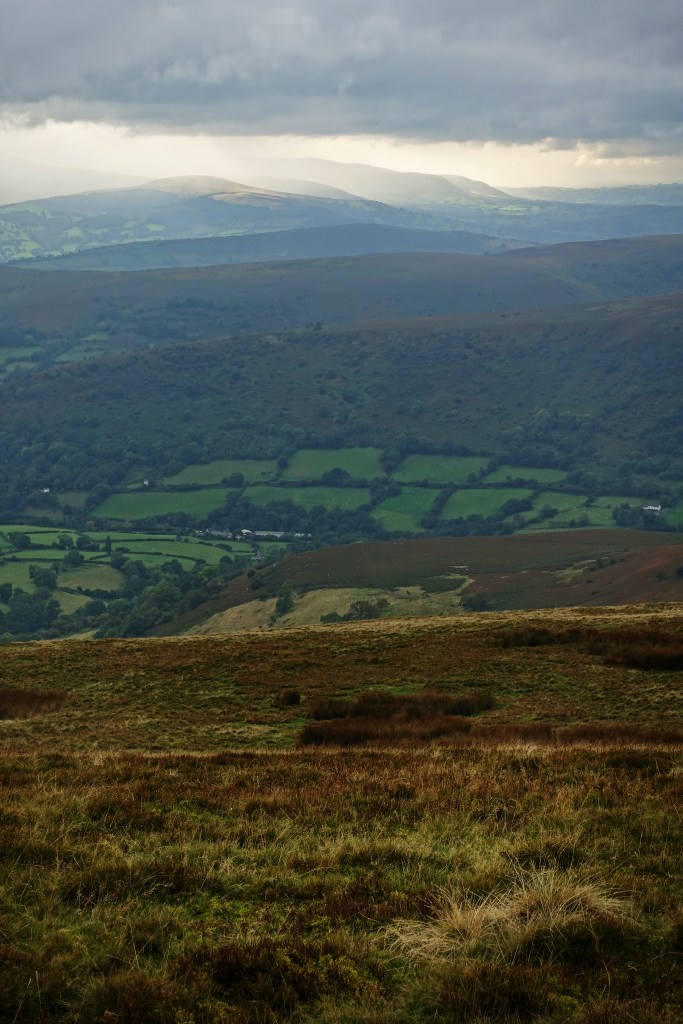
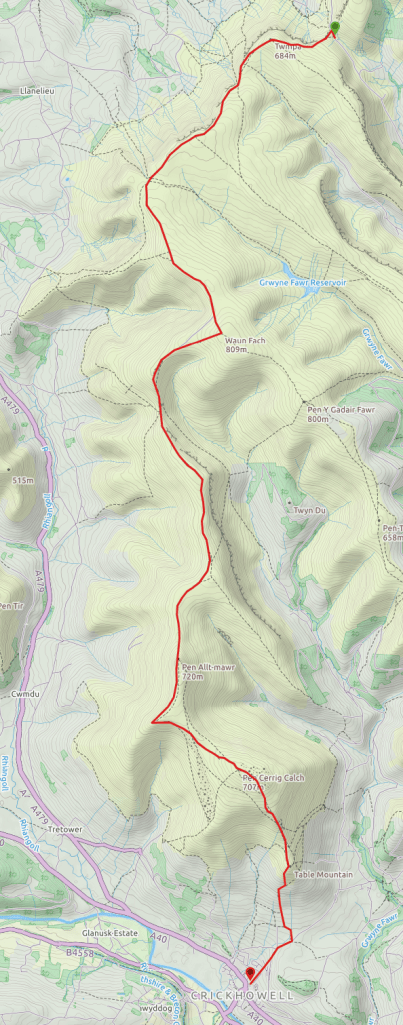
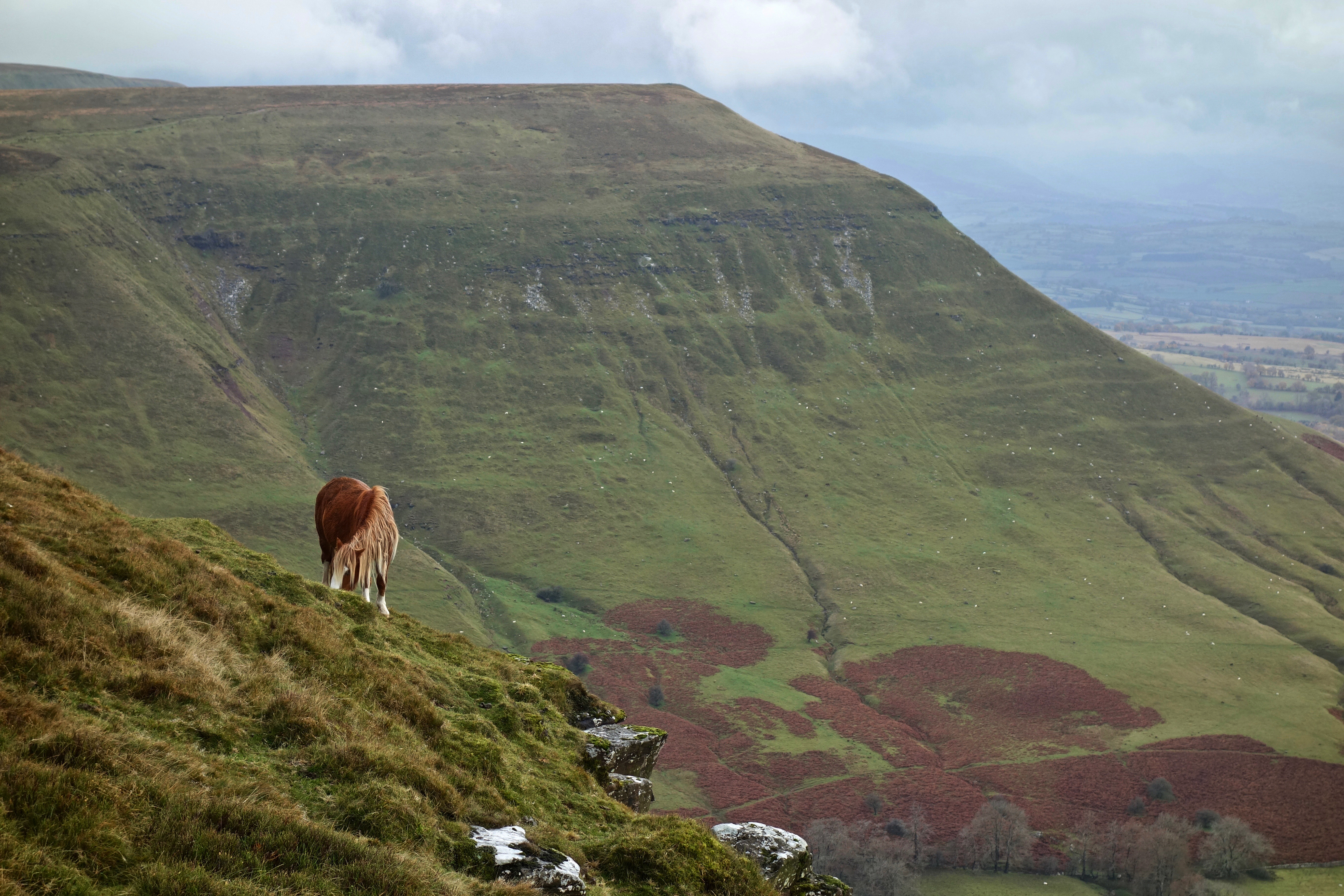
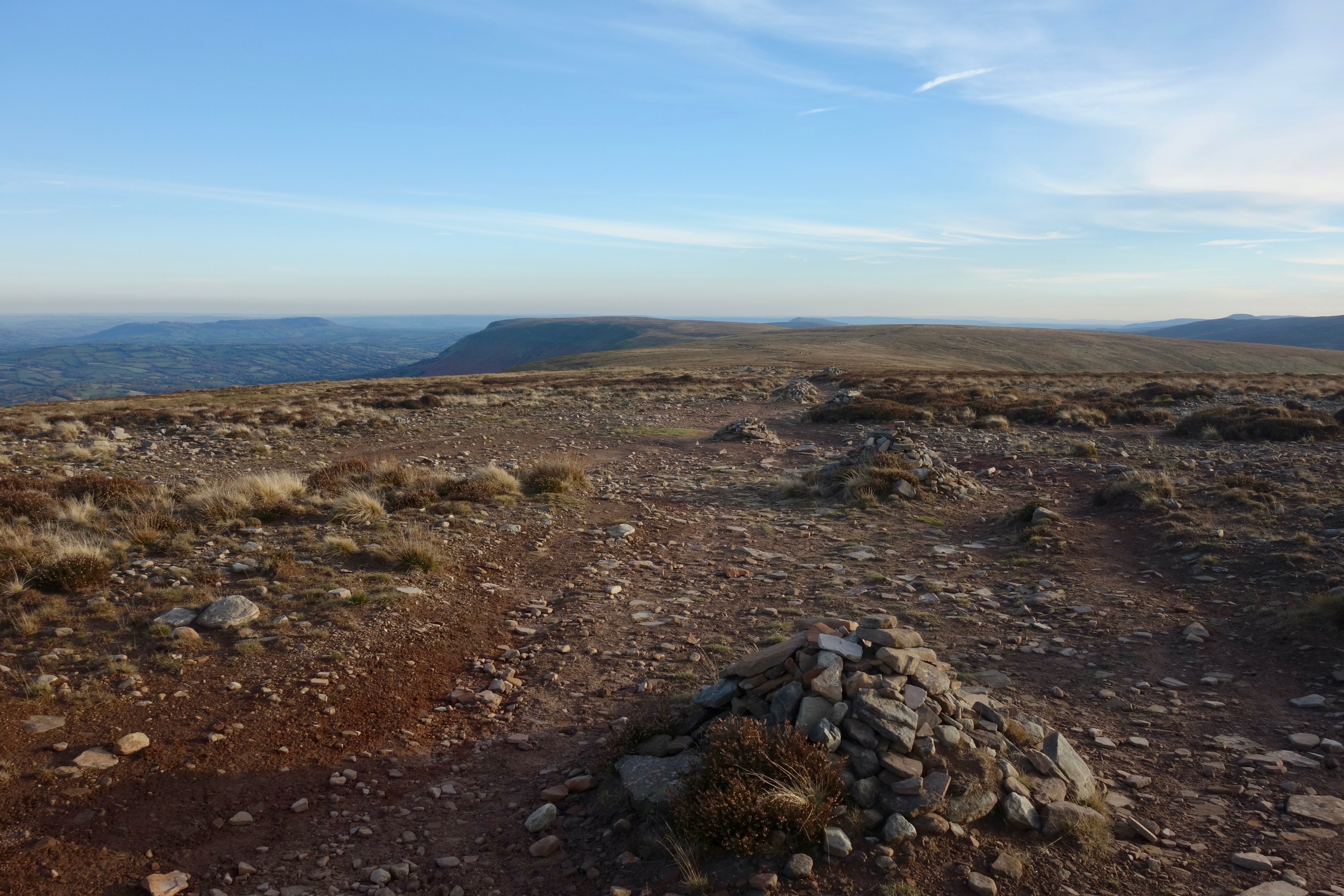
The walk we chose is a 14 mile ridge route starting at Gospel Pass a few miles S of Hay meandering S to the village of Crickhowell (map below). Having parked in the Car Park at the top of the pass we headed W uphill to ‘Twmpa’ aka ‘Lord Hereford’s Knob’, then headed SW along the fantastic ridge (I would like to say the views were great but they weren’t. We were in October fog from the get-go and only lifted briefly at lunchtime). The path flattened out on the scarp edge until we reached the three mile mark and our route turned roughly S – again following the ridge edge. A further two miles and we reached the highest point of the route at ‘Waun Fach‘ (2,600 ft). From here we turned right roughly W toward ‘Pen Trumeau‘. Some of the path is boggy but not too bad, particularly given we had a week of rain beforehand. Other parts of the path have been overhauled with a grit surface and drainage ditches, presumably to mitigate the impact of erosion. All in all this is pretty easy walking if wearing decent footwear. The fog briefly lifted and we were able to take in the really fabulous views. This place has grandeur. Then just as quickly we were again in the thick of it. We had map and compass but the paths are pretty obvious and the Viewranger app on iphone worked well throughout.

Not the greatest weather for photo opps
The saddle at six miles, a great place for a wild camp

At six miles we reached a small saddle which offers decent paths off the hill both E and W. This would make a great spot for a breezy wild camp. At seven miles we reached the highest part of ‘Mynydd Llysiau’ and the path continued S bearing right past ‘Pen Twyn Glas’, and at 9 miles ‘Pen Allt Mawr’ after which we took in the spur to the W. At 11 miles ‘Pen Cerrig-galch’ marks the last climb up (on a nicer day a great place to perch for a while) before the path meanders roughly S to the W of Table Mountain downhill all the way then dog-legging into pasture and woods before hitting a B road off which a small residential road leads into Crickhowell.

We really were hoping for better weather rather than a yomp through a low cloud base but it made for a mini adventure. I will certainly be back to walk this breathtaking route again when the weather is a little more predictable and the incredible views revealed in full. A late afternoon start and a wild camp 6 miles in really appeals.

Route starts at SO 235 350

Salomon ‘X Ultra 3 GTX’ Shoe

For the past few years my primary footwear for backpacking has been the Garmont ‘Trail Beast’ shoe which is supportive, has a wider than normal fit and is very resilient but isn’t that comfortable on descents. I have several pairs but as they wear out I was keen to find an alternative for my usual three season trips. I found the Salomon ‘X Ultra 3 GT’ Shoes on sale at £103.00 and bought my usual size 11 but importantly for my feet in the wider fitting. I have seen these shoes and the mid version for years but was wary as they are by repute better suited to a narrower foot. So the 2E width fitting looked like an option, particularly as my go-to review site outdoorgearlab had a great in depth and positive review of the shoe.

The X Ultra, its aggressive sole (centre) and the Trail Beast at rest in Southern France

My first impression was that the fit is snug but after an hour or so worn around the house I barely noticed this and, having now worn them almost continuously – casually and on a first seven mile outing, I am convinced these are an excellent shoe for me. Which is really good news as this model is the latest iteration of a Salomon classic, which suggests I will be able to buy these or something very like them in years to come whereas the Trail Beast isn’t currently available. I also wanted to try a shoe which, as long as the fit was good (the Ultra is snug) offered a few different features or benefits. The Ultra is a distinctly different offer to any of my previous shoes. Firstly it is lighter at 850 gm for a pair of size 11s (as compared to the Trail Beast at 1110 gm). Secondly it has deep lugs which the Trail Beast does not. This does provide great traction on loose ground or mud but in the wet on slippery rock the grip isn’t as good as a sticky Vibram sole. You do feel the bumps in the road with these and the lateral support is reasonable rather than great but the killer benefit is when you start walking down hill. These are excellent! Perhaps it is because they do narrow towards the toes (despite them being a wider fitting) or perhaps it’s the Quicklace system that equalizes when walking but the amazing comfort these offer on descents is just the best.

The ortholite insoles do a good job of securing the foot and the upper breathes well enough. The toes are as well protected as in the Trail Beast (unlike in the Terroc 330 shoe I had – now gone, which bruised both big toes so badly the nails fell off) and while I haven’t worn the Ultra in the rain and I’m sure they will be fine – but as with every other GTX lining I expect it to fail. I don’t get cold feet and have always found I walk my shoes dry. One benefit of the GTX lining I have found is the added warmth it provides in colder weather.
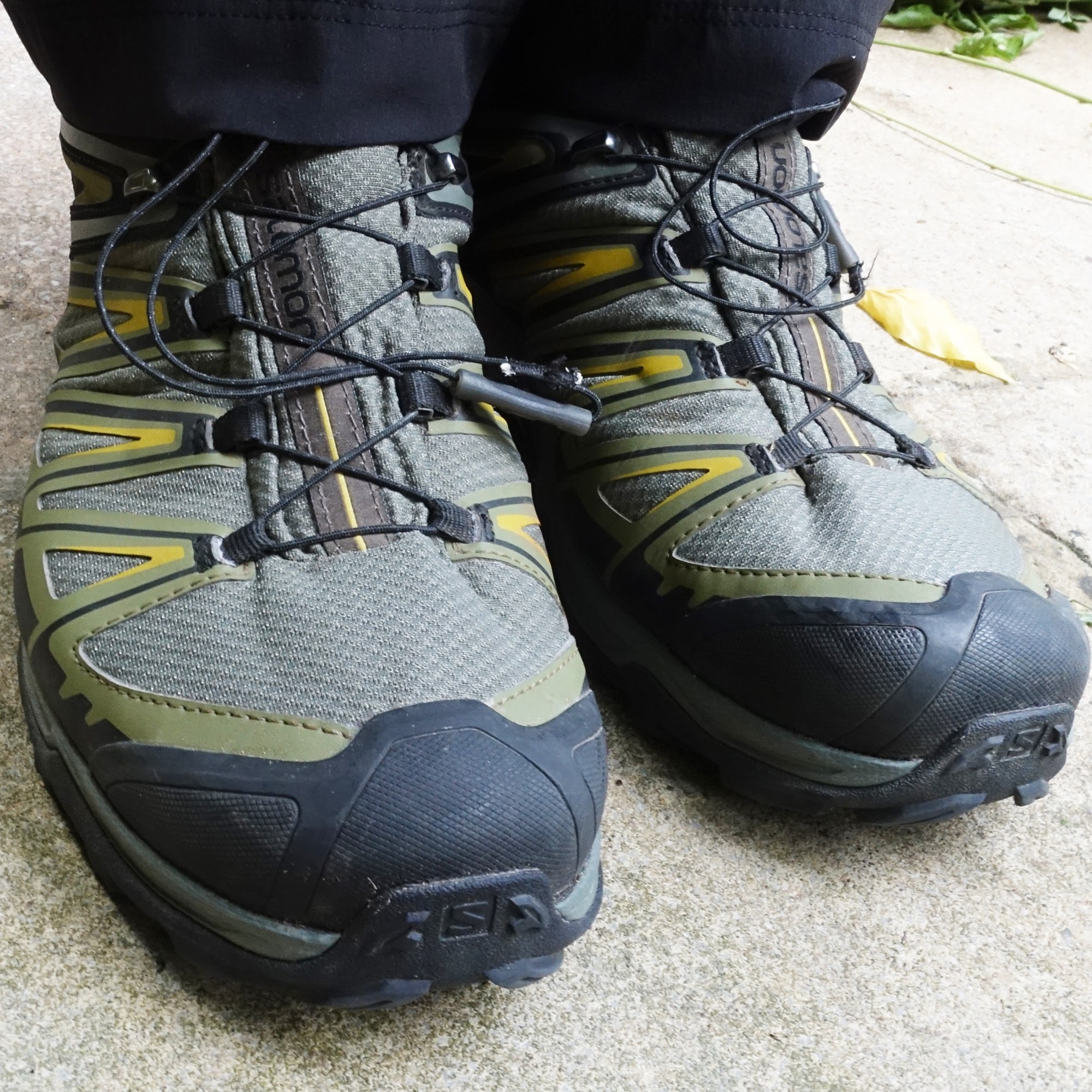
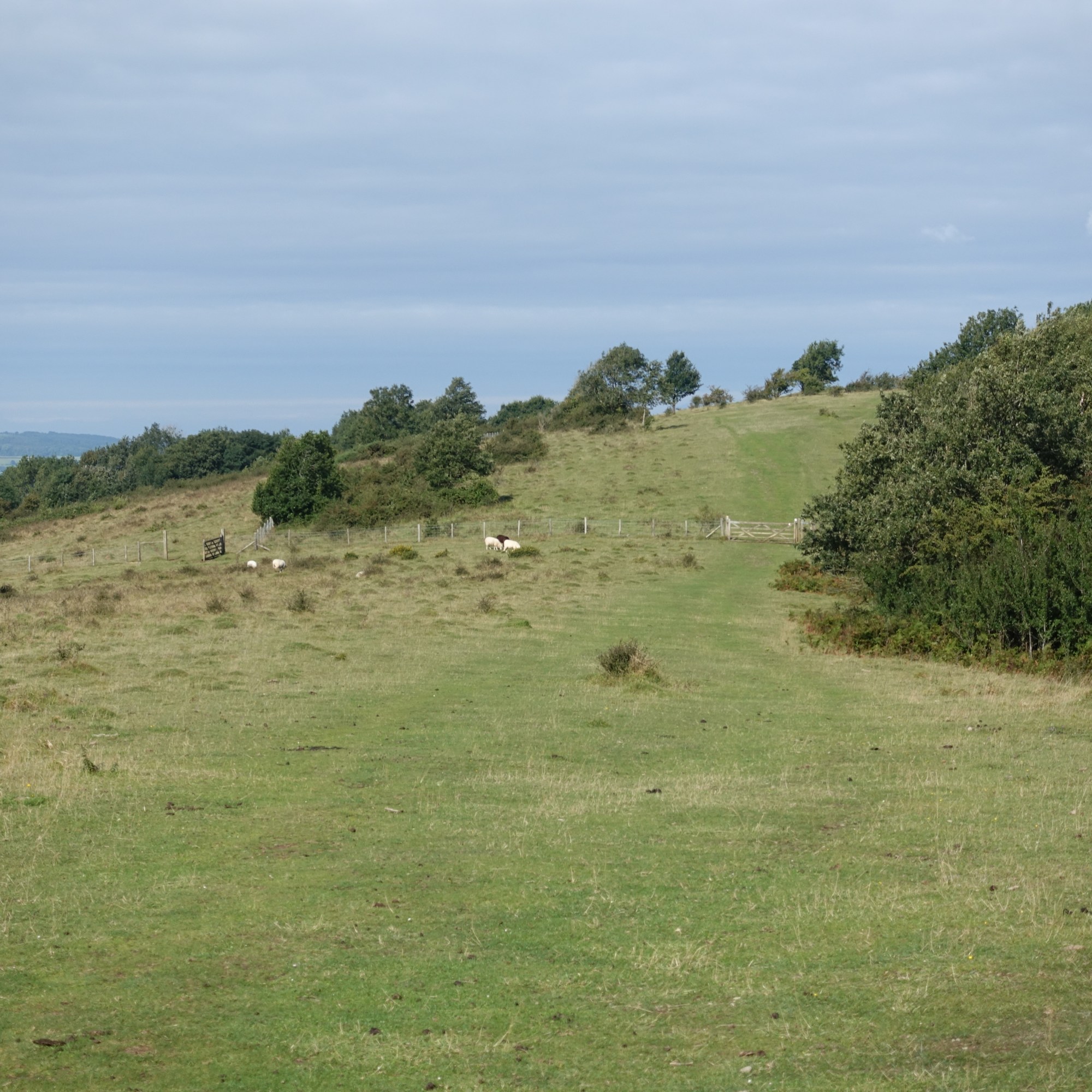
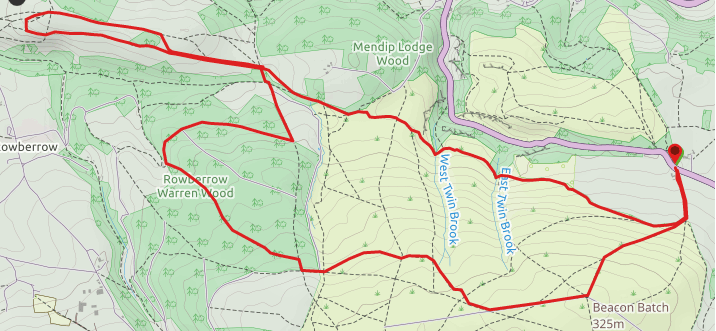
My first work out for the Ultra was a speedy seven mile foray in the Mendips (map below) which offered a nice variety of surfaces and inclines to give an initial idea of the shoe’s worth. The walk starts at the very Eastern end of Burrington Combe at Ellick House (Grid ref. ST49006 58014) and takes in Black Down and Beacon Batch (the highest point of the Mendip Hills), Dolebury Warren Iron Age Fort and a varied landscape in between of heathland, woodland and downland.

At then end of the walk I was pleasantly surprised. My feet felt fine. No pinching, rubbing or any other issue to note. In the Trail Beast I would have some soreness in the toes given the ground so I do think the Ultra is a really worthy replacement for my previous go-to. I do want to take these on a longer trip with a pack on to get a real sense of their worth or otherwise but so far so very very good.

‘Calern Plateau’ walk – Parc naturel régional des Préalpes d’Azur, France

DSC00702
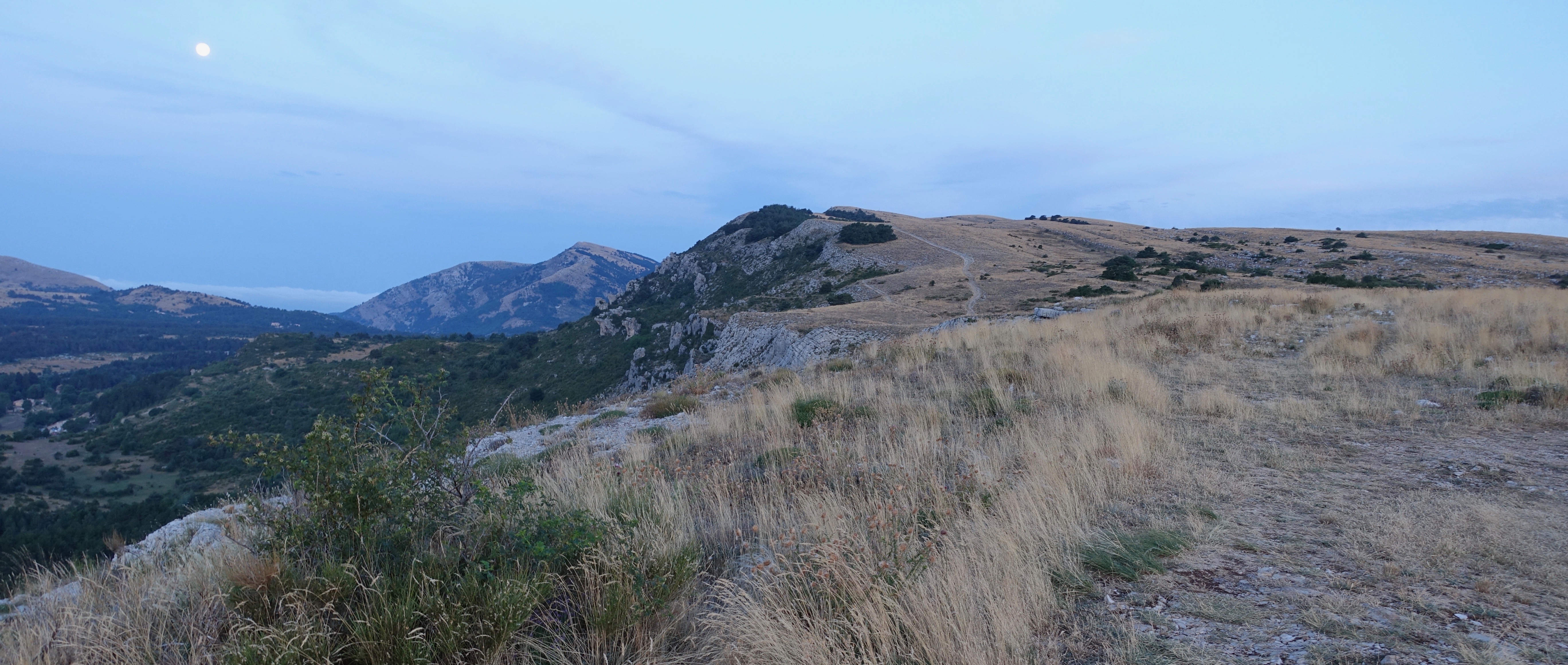
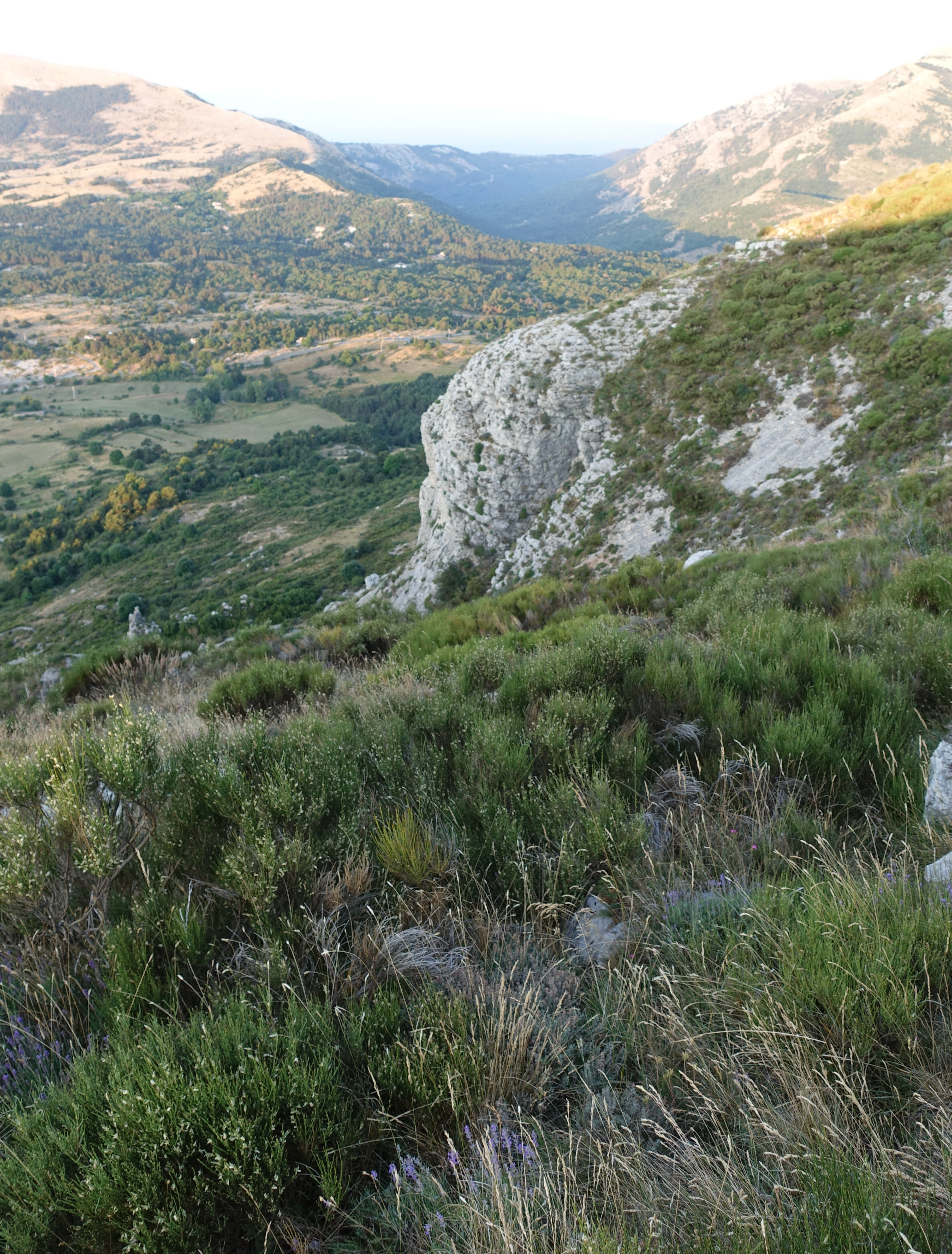
Dawn, looking West along the ridge to the wood above the village of Caussols and summit beyond

The joy of France is the incredible diversity of landscape, scale and mix of flora and fauna. Whenever I am there on family holidays I try to find the nearest walk that offers a little peace and quiet and something new.  The Calern Plateau is a Limestone plateau running E to W in the Parc naturel régional des Préalpes d’Azur, North of Grasse, twenty miles North of the Mediterranean at the very Southern limit of the Alpes Maritime, well within striking distance of Nice and Cannes.

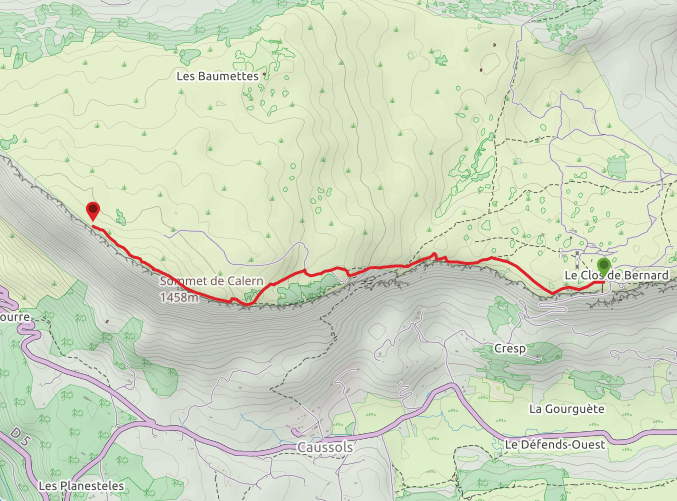
The walk is five miles in total (but could easily be extended) a ‘there and back’ along the reasonably level crest of the plateau providing extensive views from the highpoint ‘Sommet de Calern’ 1458m (4783 ft) and the solitude of the plateau. I arrived before dawn in the car park which is surrounded by various observatory buildings. Walking Westward (map below) I realised the benefit of an early start in mid July. The air was cool which suited me perfectly. After a few minutes the tarmac service road petered out and became a rough cart track following the crest before running away from the crest round a small wood and path which leads to the hamlet of Caussols in the valley below.

DSC00740
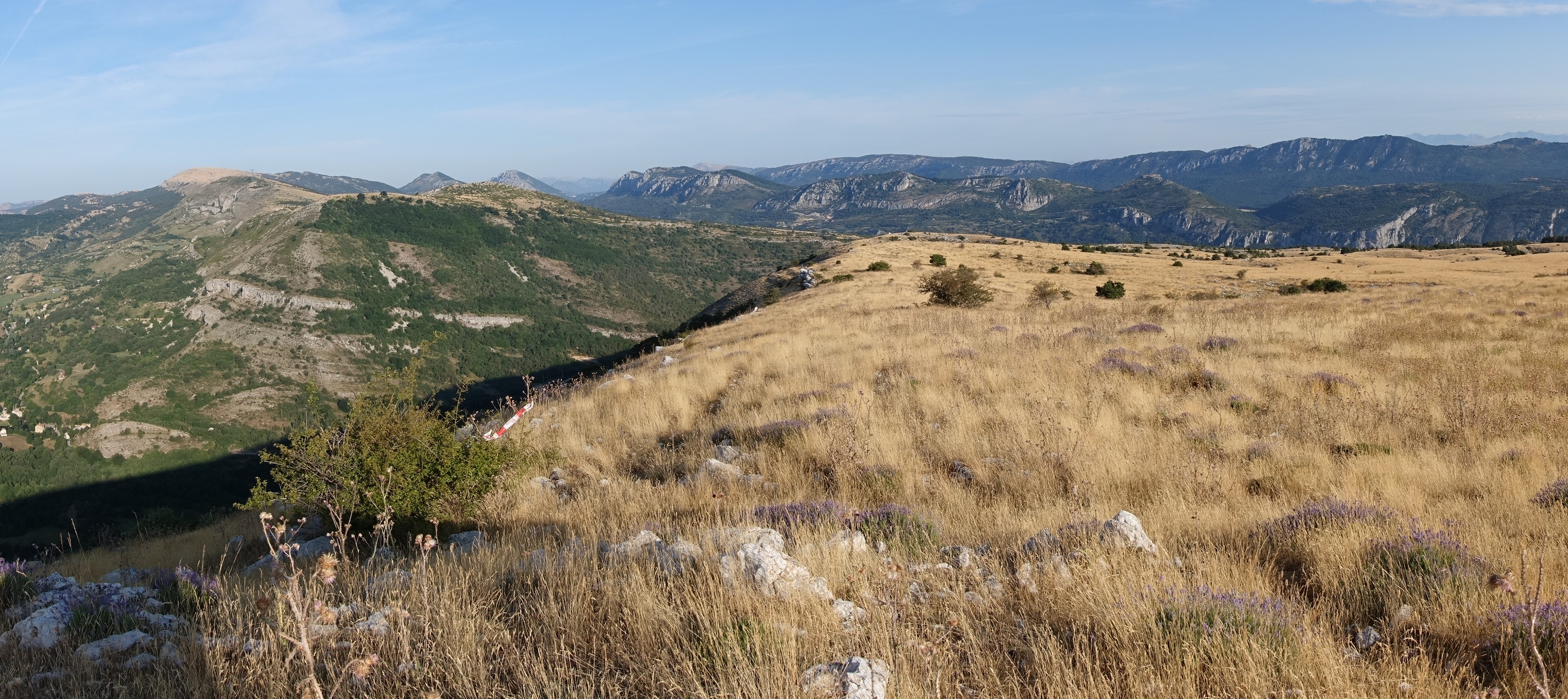
View North across the plateau to the Mercantour National Park

The plateau to the N is a sea of yellowing grass and wild lavender with the higher Alpes maritime as a backdrop and as the Sun rose the scent of lavender increased as did the the sound of a million bees and the number of butterflies – skippers, marbled Whites, Fritillaries and others. Turning off the track towards the summit the path is ill defined, winding through the Lavender, Scabious, Wild Dianthus and grasses. The views from the summit (higher than Ben Nevis) are fantastic.

dsc00782.jpg
View West from the summit
dsc00731.jpg
View South from the Summit

From the Summit I walked a while beyond the summit and found a spot to take in the sights and sounds. There were thousands of Swifts taking advantage of the millions of insects and the bees were in full voice. A magical place to sit and ponder a while. The going is quite easy but the ground rough in places, good walking shoes a minimum. Very hot in mid Summer, take mozi spray, the flies are an irritant by mid morning.

The next time I’m down there I will aim to stay further North in the Park or the Mercantour National Park to take full advantage of walks in this amazing landscape.

Screenshot 2019-07-29 at 13.17.27

‘Black Mountains’ walk – Herefordshire Wales Border

DSC03281.jpg
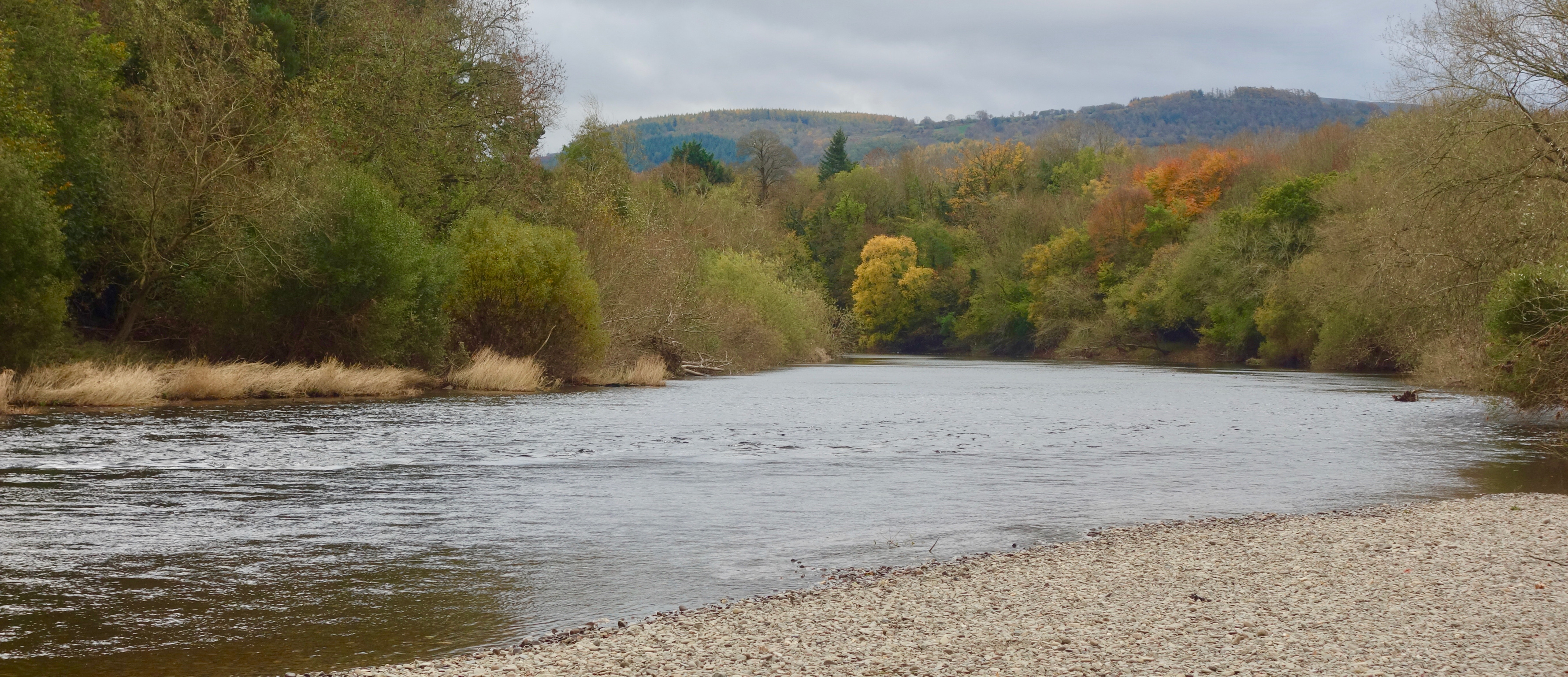
The River Wye just outside Hay-on-Wye

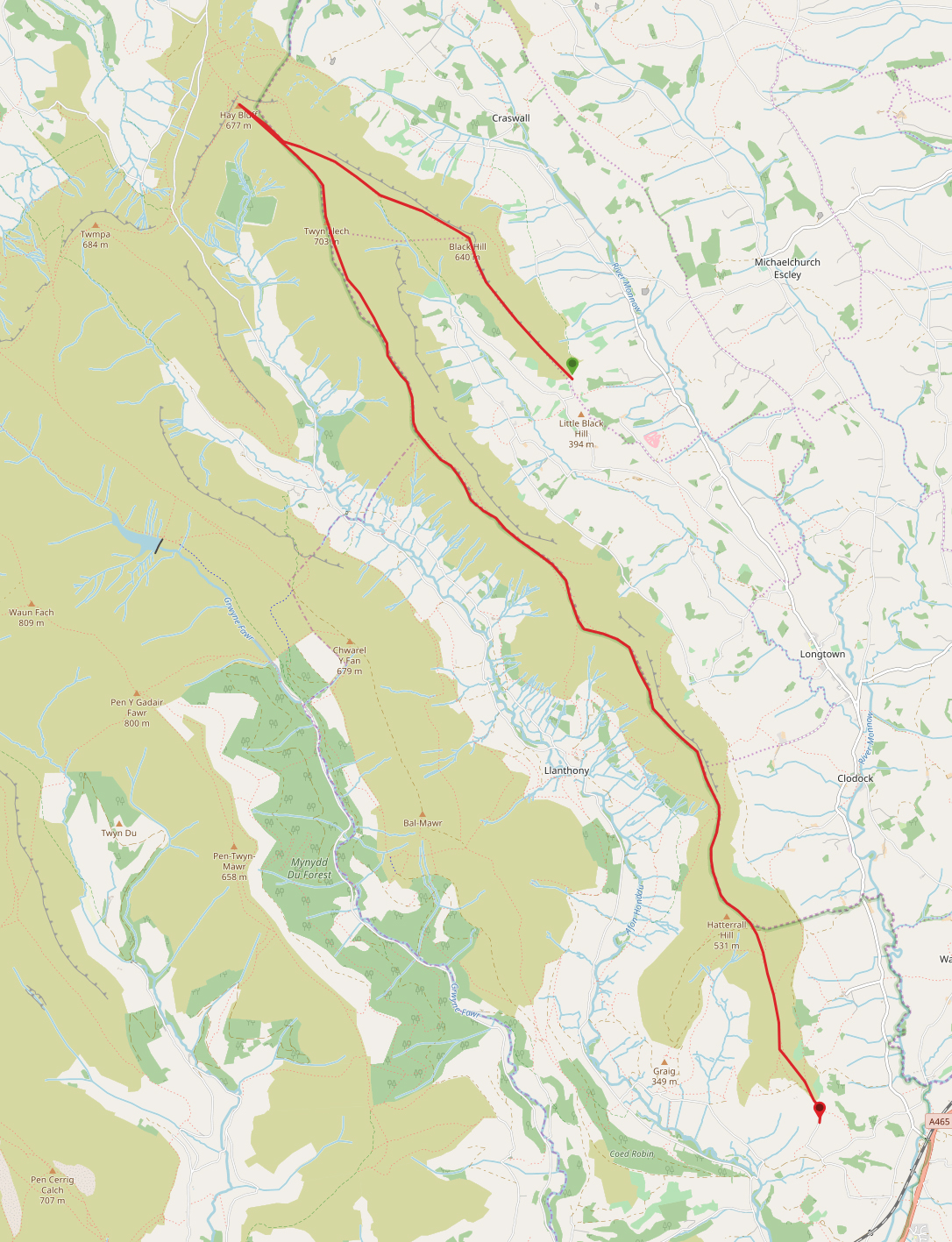
Each year three friends and I take a few days out and find somewhere to stay from which we can take decent days out on the hills. This year we chose the ‘Black Mountains‘ area covering the border between Herefordshire, England and Powys, Wales, with Hay-on-Wye as our base (the most delightful town full of amazing book shops, great pubs, the River Wye, a castle and lovely people). We wanted a lengthy hike in a dramatic landscape so chose a 14 mile hike along the high ridges East and west of the Olchon Valley as our preferred route (map below). The drive to the start point from Hay-on-Wye was tortuous. We chose to park a car at each end of our route which involved an hour of navigating twisting minor roads to park one then get to our start point in the car park under the ‘Cat’s Back’ and the ‘Black Hill’. We started at twelve noon, later than we would have liked given it was early November but decided that the route would take about five or six hours dependent on stops so we would only have an hour or so in the pitch black. With a couple of head torches between us it would be fine, the route simple.

DSC03246
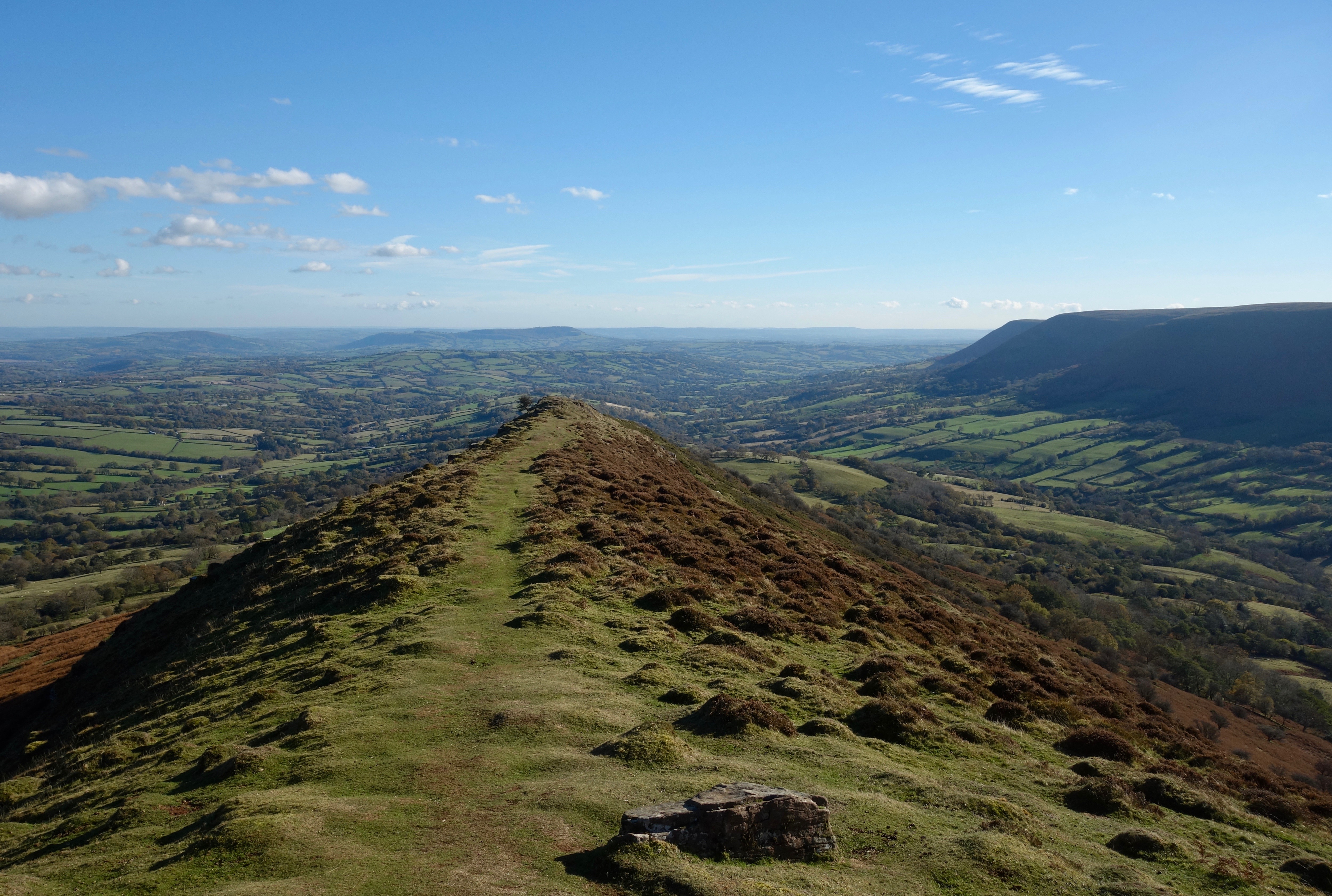
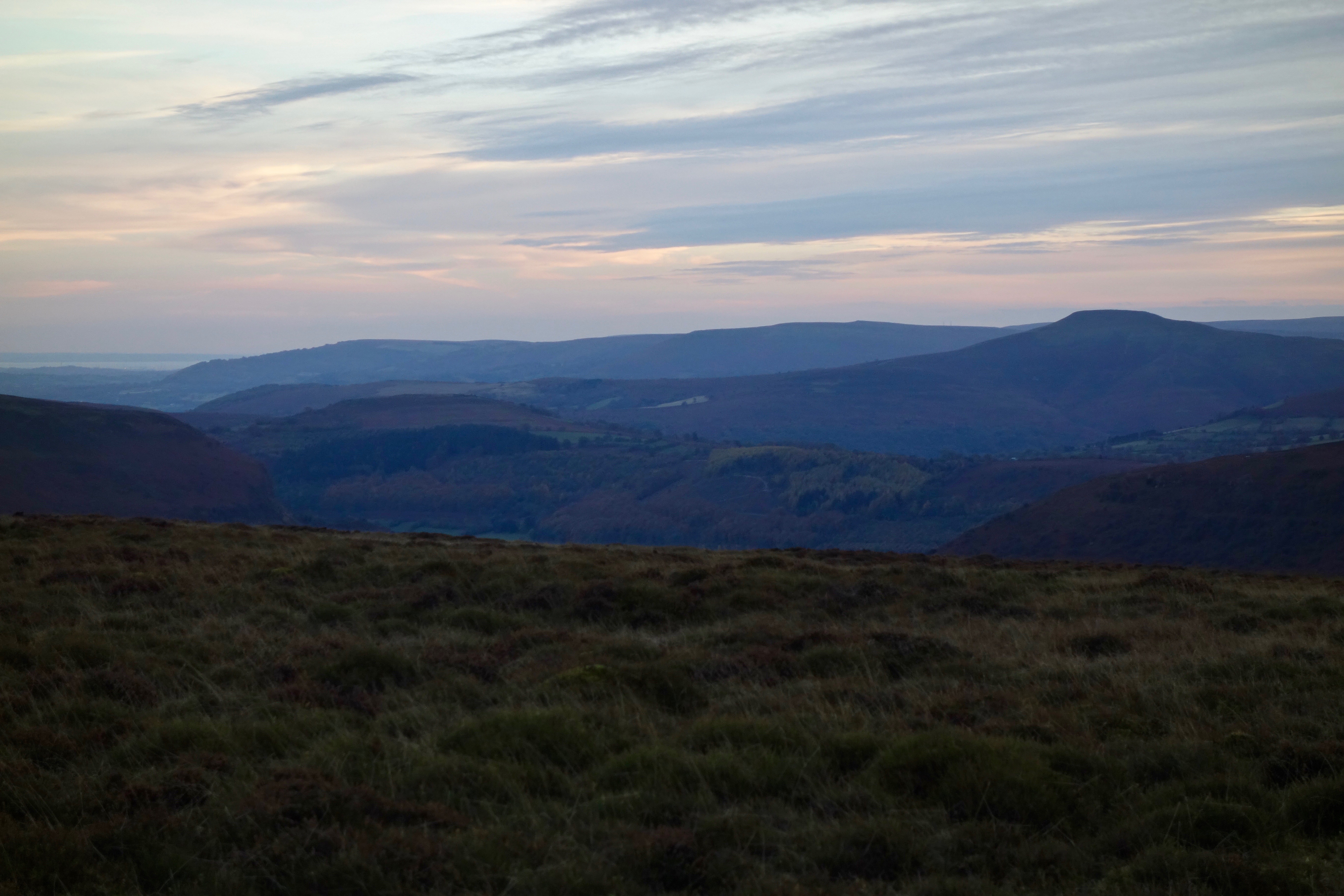
The view South East from the top of the ‘Cat’s Back’. The ridge to the right forms the second part of the walk.

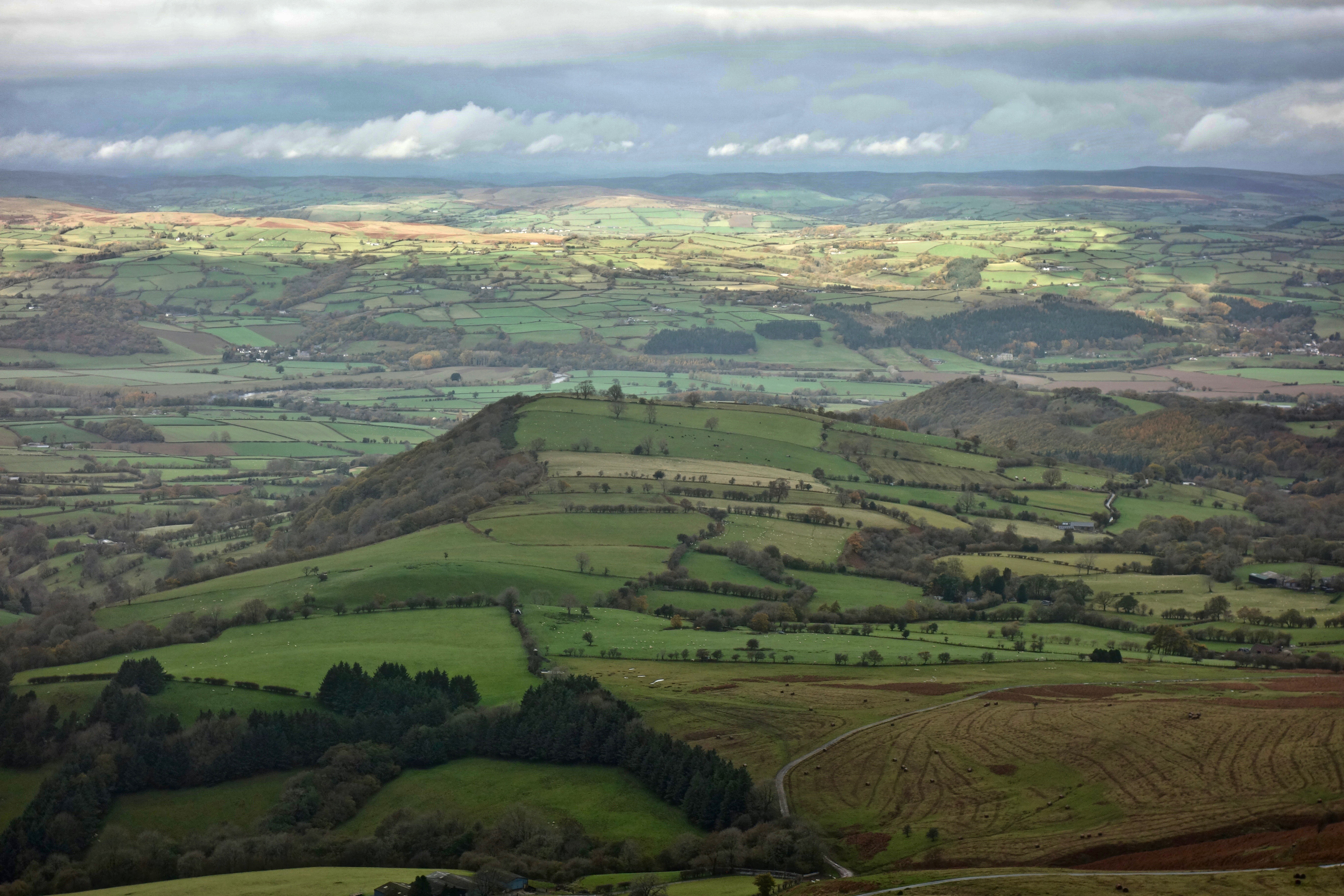
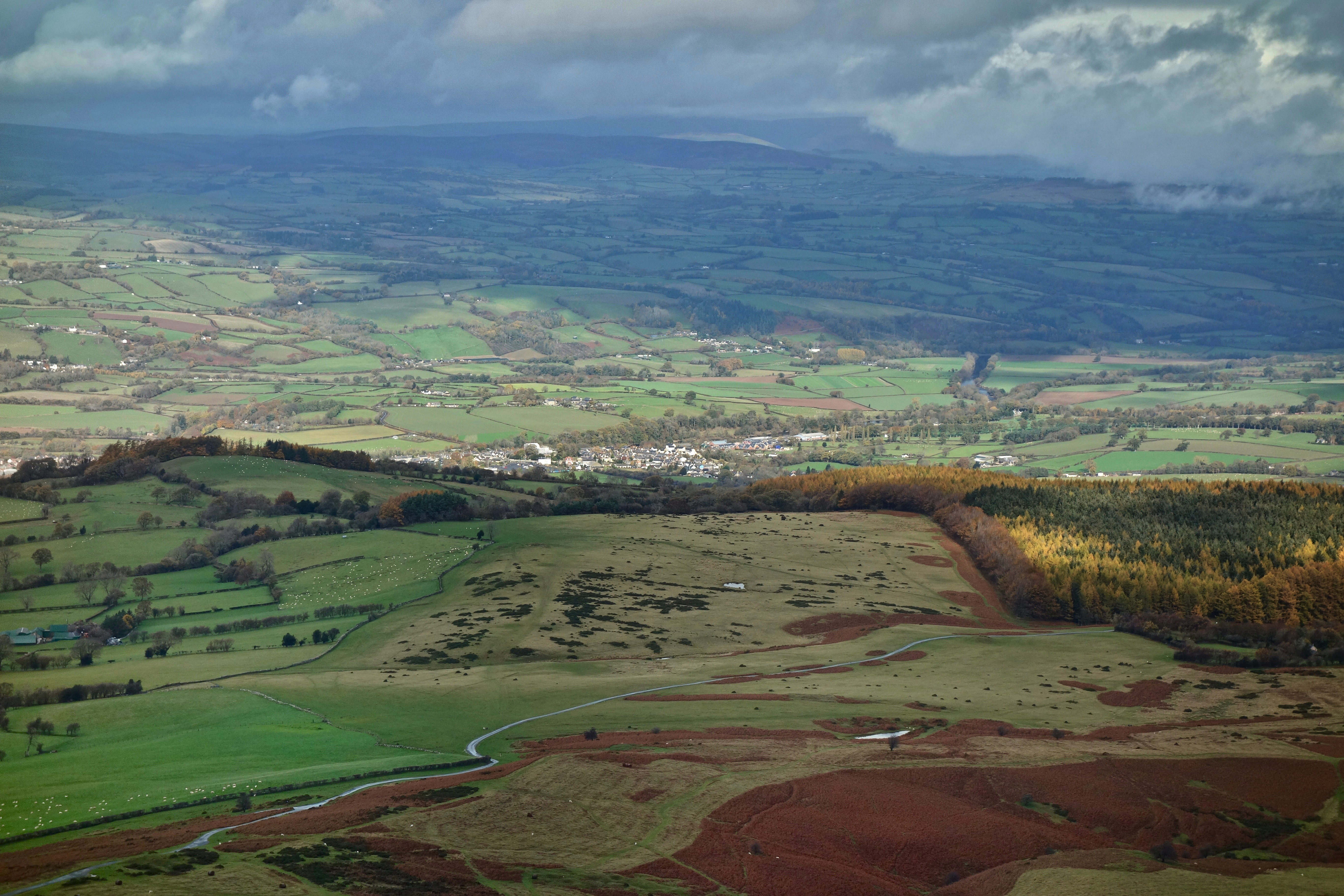
The climb up the Cat’s Back is a tough start but a brilliant way to get up high really quickly and appreciate the vast landscape, rising about 800 ft. The path flattens and gently climbs up to Hay Bluff at 2200 ft. We lingered to draw breath and take in the spectacular views for a while from Black Hill. We hadn’t enough time time to take in Hay Bluff and the ridge to the North but as it adds only twenty minutes or so to the whole I have included it as part of the walk and added some pics from Hay Bluff (which we walked to from Gospel Pass on another day). Having reached the head of the valley, we turned SE onto the 11 mile ridge route which picks up the ‘Offa’s Dyke Path’ over ‘Black Mountain’, the highest point of the route at about 2300 ft. Even in bright November sun the chill was noticeable after a while on the high exposed ridge. Gloves and extra layers went on as the sun began to sink to our right. We thought we could make out the Brecon Beacons in the gaps between the ridges. The path is excellent, one foot in Wales, the other in England. This is an upland bog and a great deal has been done to provide a firm, dry path across the boggier bits. Large slabs have been laid between stretches of scalping pathway. It makes the walk really enjoyable and rapid, not having to tackle interminable bog. It is also a classic route so the impact of heavy footfall is restricted to the defined pathway, rather than the creating side paths eroding the peaty soil.

A few of hours later, as we reached Hatterrall Hill, we were in near darkness and the torches went on. The lights of AvonMouth and Cardiff shone in the distance as we covered the last few miles to the tracks and small roads that led to Stanton where we had parked. We were lucky enough to come across a van delivering to Lower Pentwyn and in return for closing a gate the driver kindly allowed us to pile in the back and took us back to our car near the bridge North of Stanton.

An incredible walk with some of the best far-reaching views I have seen. I would love to repeat this in May or June with a longer warmer day to take the time so soak up the experience. Probably from Gospel Pass – getting to the start by cab – 20 mins from Hay, then staying overnight near Pandy or getting a cab from the pub there back to Hay.

I wore waterproof trail shoes, my friends boots. Trail shoes will do if it’s dryish. The temperature really dropped as it got darker, I’m glad we had layers.


DSC033772
‘Lord Hereford’s Knob’ or ‘Twmpa’ to the South West from Hay Bluff ridge

DSC03330
View to the North from Hay Bluff ridge

DSC033442
View to the North from Hay Bluff over Hay-on-Wye

DSC03259
Looking South East about a mile South of the ‘Black Mountain’ at 703m the highest point of the route

DSC03267

The Bristol Channel in the distance to the South, Table Mountain (I think – it sort of makes sense) to the right


Olchon Valley

‘Grand Luberon’ walk – Vaucluse, France

IMG_0694
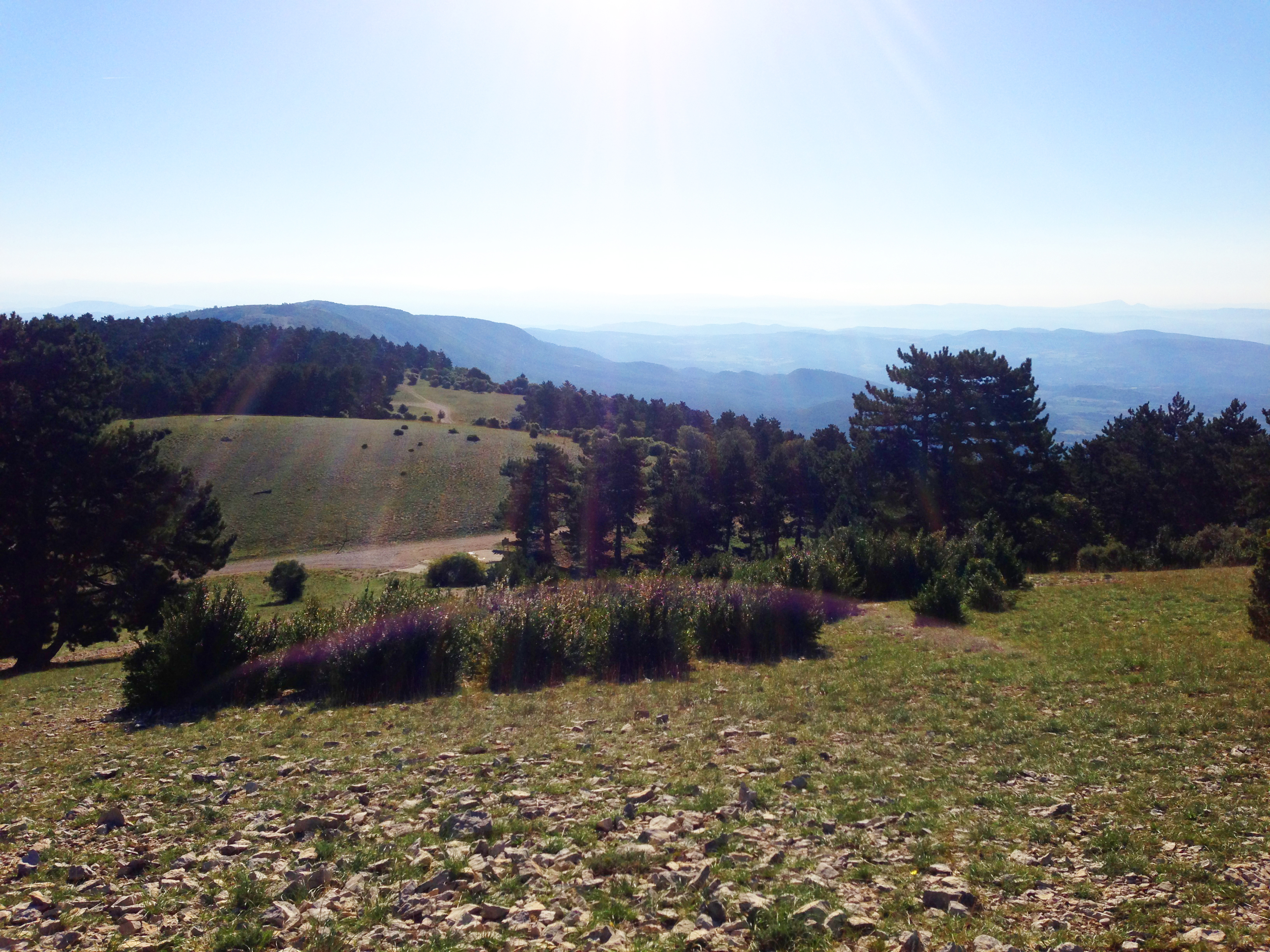
The path from Mourre Nègre stretching invitingly to the East 

The Luberon Massif is an undulating ridge in the Vaucluse Dept of France that stretches for about thirty miles East to West, the Petit Luberon to the West and the Grand Luberon to the East, the two divided by a narrow canyon, the ‘Combe de Lourmarin‘. The highest point of the Luberon is the Mourre Nègre, height 1125 m (3690 ft). And this was my goal.

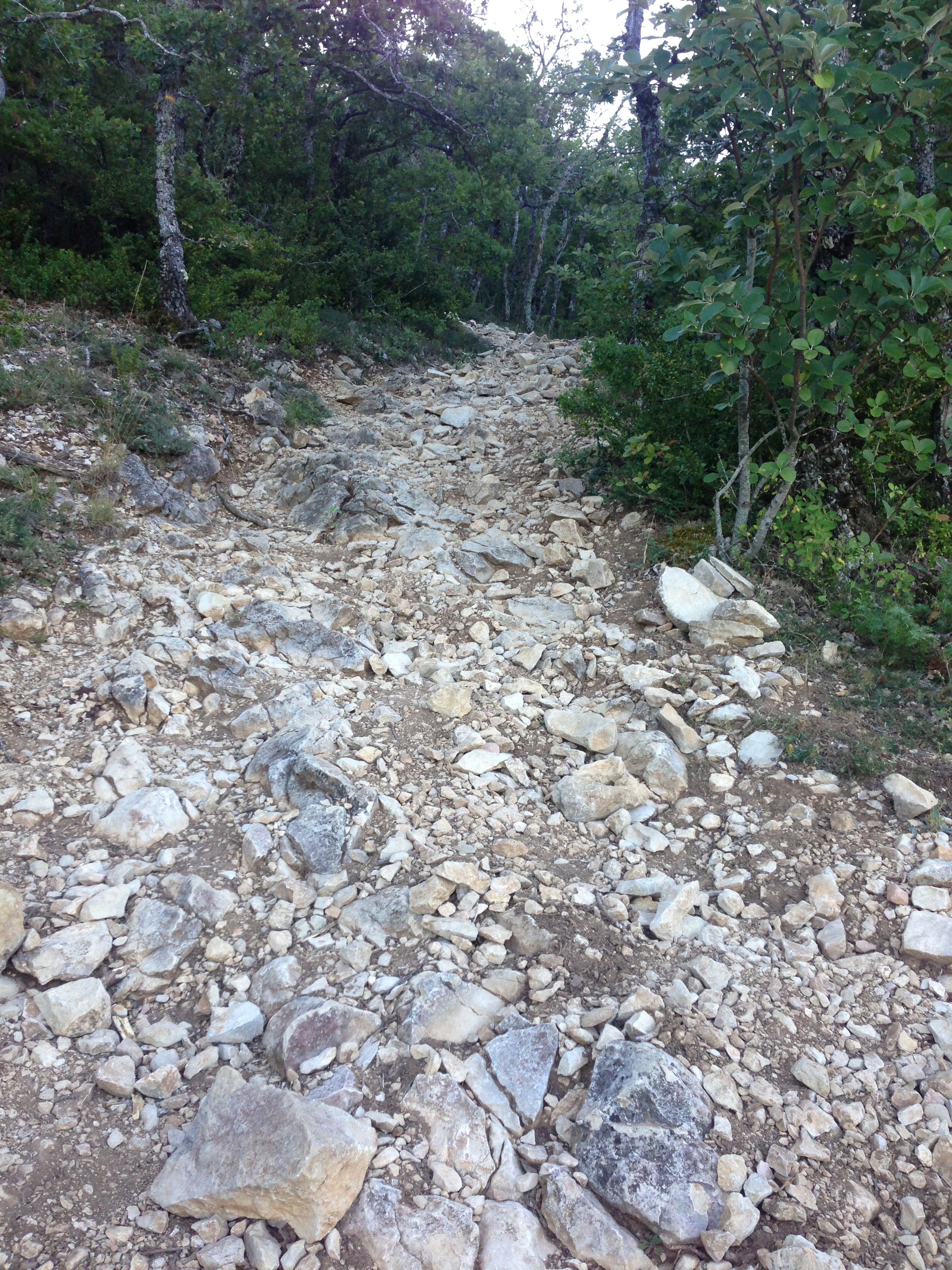
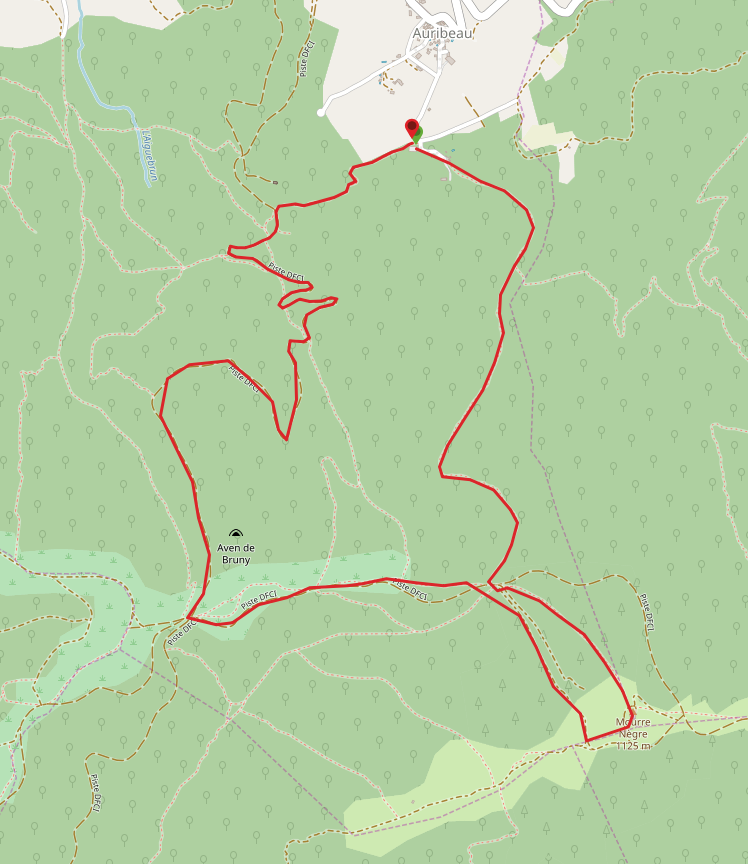
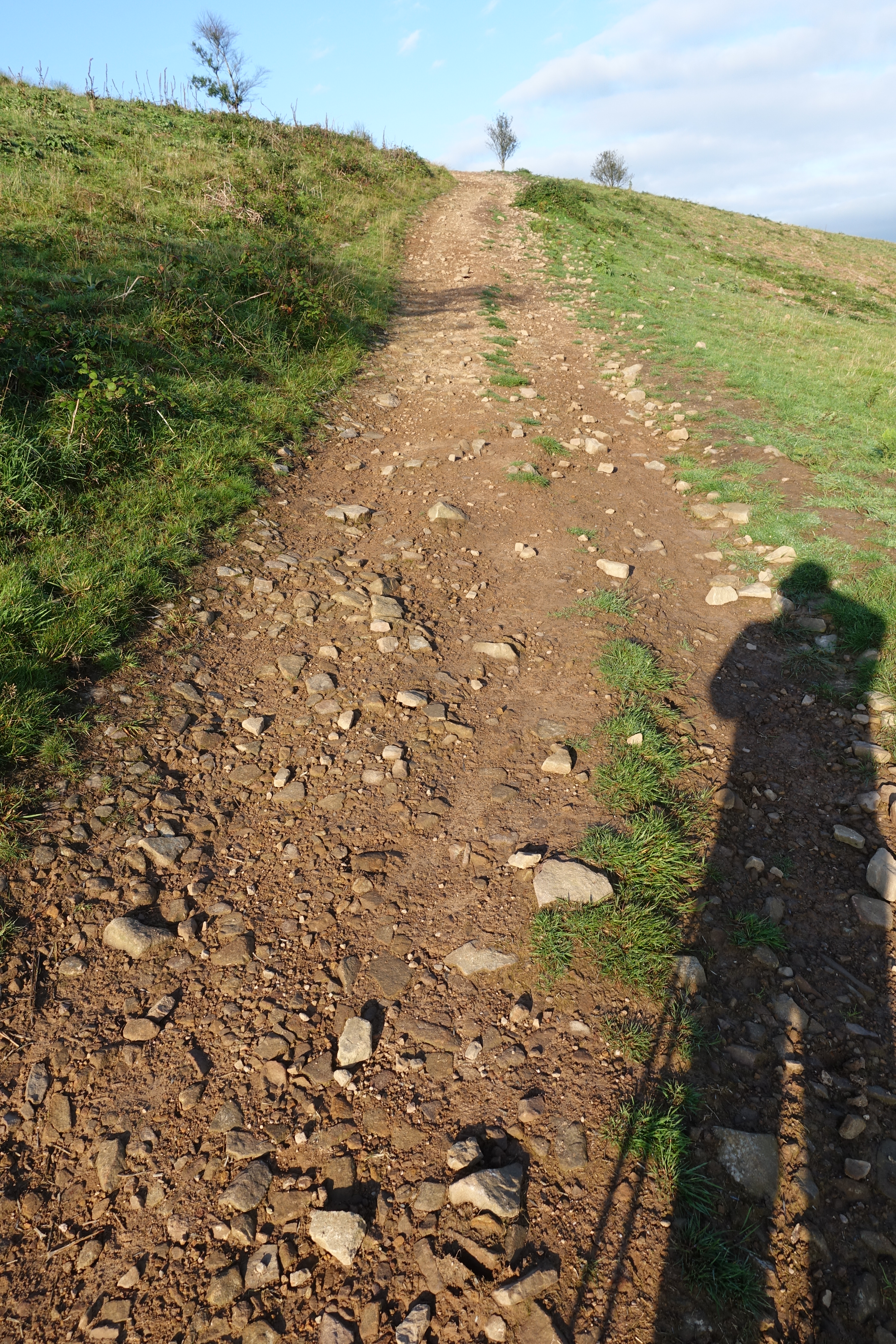
I started my 5 mile walk from the car park just to the South of the village of ‘Auribeau‘ and took the direct approach, straight up. I think this is one of the steepest paths I have ever walked (map below). It climbs more than 1,700 feet in about 1.5 miles as the crow flies. It was a real scramble. Subsequently I have found a great blog which describes the walk I would have liked to do and hope to in the future. I recommend it. It being August, I started at dawn in order to get the benefit of a cool morning while making my way up which was just as well. The path seemed more like a steep river bed than path proper but I have found this in France, some paths being almost impossible without scrambling to the point that I have had to turn back. But I laboured on until I disturbed a family of wild boar snuffling among the small oaks. I had no Idea what to do so I froze and waited until they moved off. Delightful to see but very large.

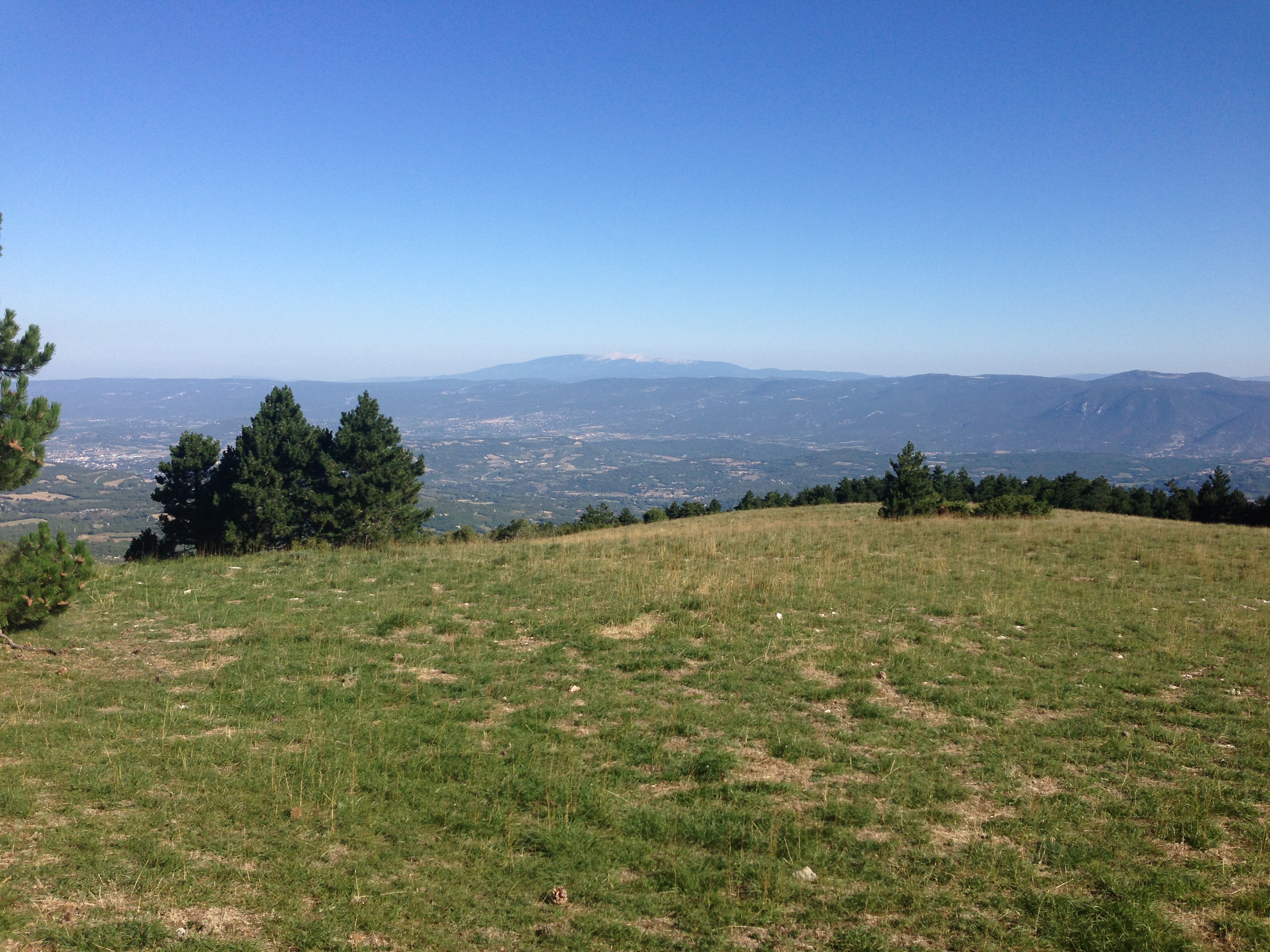
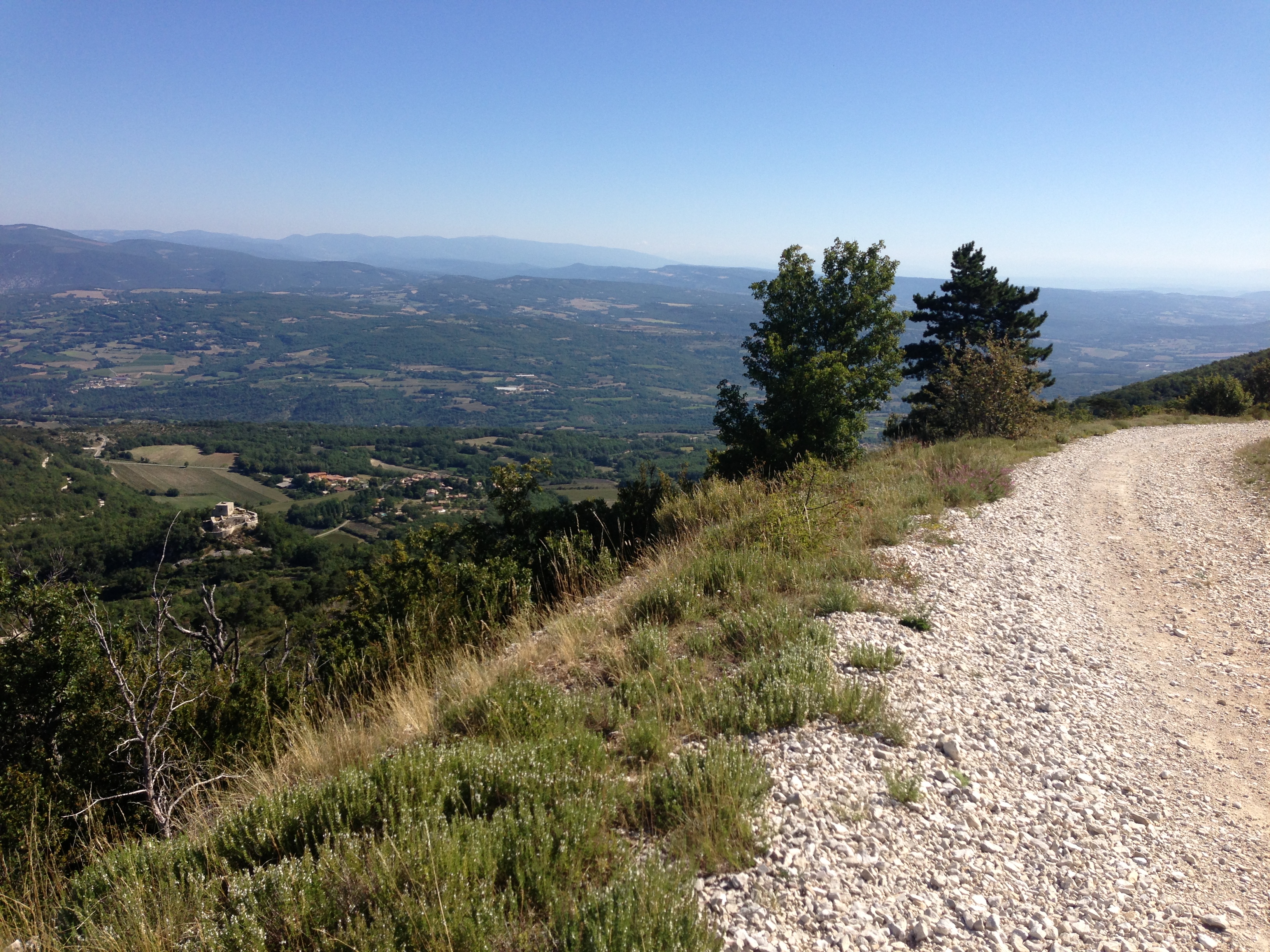
Having made it nearly to the ridge top I crossed an unmade access road into a fabulous, seemingly never ending alpine meadow interspersed with pine trees and fragrant flowers that stretched for miles into the morning sun to the East, the softer ground churned by the wild boar, the cool breeze providing relief after the hot path up. More Julie Andrews than Johnny Hallyday. The mountain is dominated by a massive radio tower but otherwise it is just a visual joy. The views are some of the best. The ridge is narrow so the country just opens up beneath your feet. And the clarity was amazing. I could make out Mont Ventoux to the North, about 25 miles away.

It was a special place to spend an hour or so soaking up the increasingly warmer sunshine. The ridge path disappeared to the undulating East and I so wanted to walk it all the way but could only walk a mile or so before having to turn back to take the longer track to Auribeau then back to do family holiday stuff. The long access road back down is easy if long. I just couldn’t face the descent on the same path I had taken up the mountain. My knees just aren’t that tough.

A fabulous walk but I wish I had researched the better approach. Take lots of water and poles, it’s a beast in the Summer. I wore decent trail shoes which were ideal for the terrain.
IMG_0700
The view to the North from the Ridge – the white summit of Mont Ventoux about 30 miles distant


IMG_0691
The ‘path’

IMG_0707
The delightfully slow access road back to Auribeau which wends it way past the castle (on the left)

Screen Shot 2018-10-30 at 17.21.14

IMG_0710
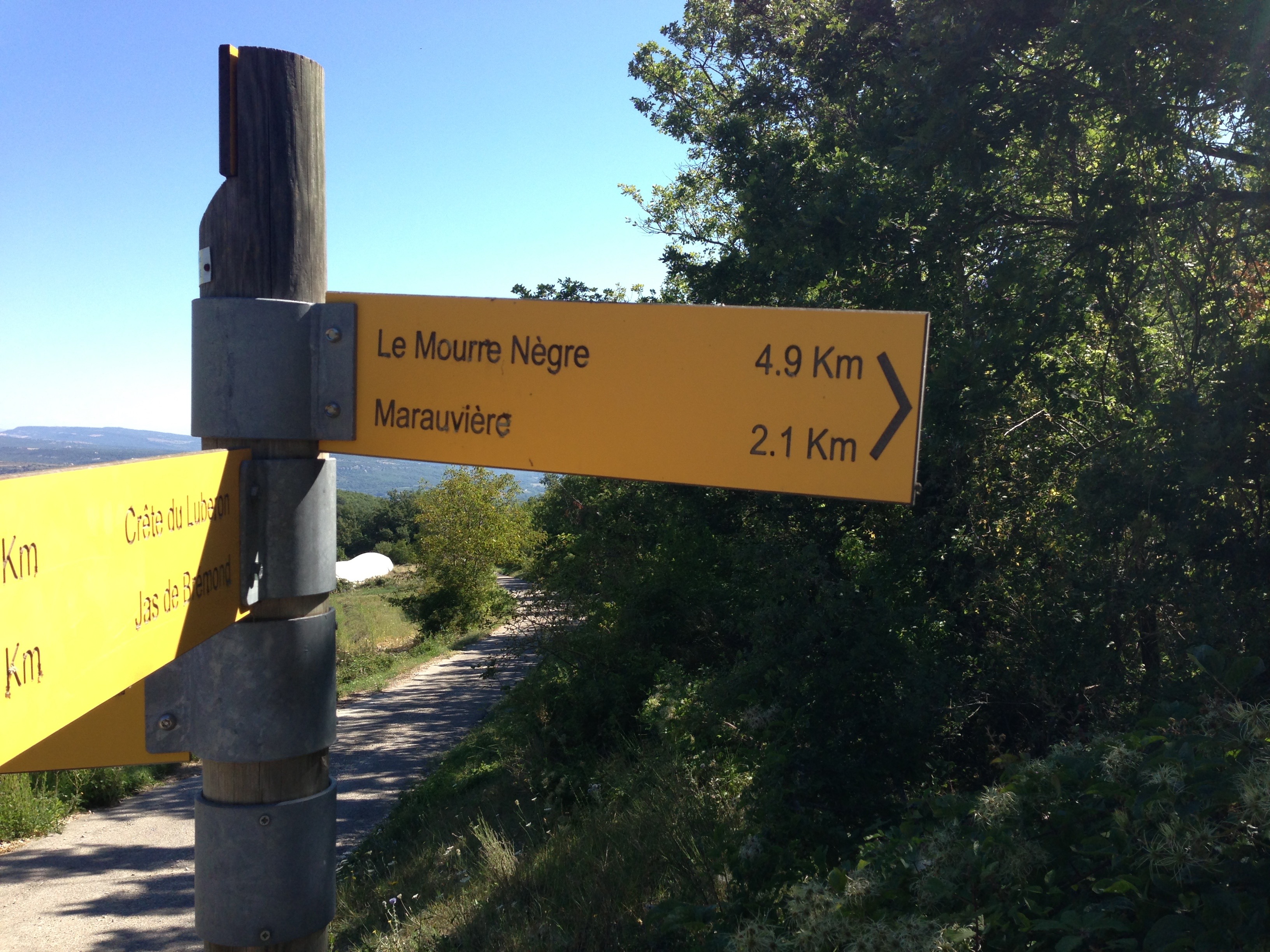
That’s 4.9 km ‘up’